
Get a safer, better‑shaped tree with expert crown reductionthat shortens height and spread by cutting back to strong laterals (not topping). You’ll lower wind leverage, lighten end‑weight, and protect unions while improving light, airflow, and curb appeal. Pros follow ANSI A300, assess species and site, set cut limits, and use clean reduction cuts, proper rigging, and careful cleanup. Aftercare includes deep watering, mulch, and a light three‑year cycle. Learn costs, timing, and how to hire the right certified arboristnext.
Optimize Tree Crown Reduction: Benefits and Best PracticesKey Takeaways
- Crown reduction selectively shortens height and spread by cutting to suitable laterals, preserving structure and avoiding topping.
- Reduction cuts target laterals at least one-third the parent branch’s diameter to maintain taper and load paths.
- Benefits include lowering wind leverage, reducing end-weight, and mitigating storm failure risk on overextended limbs.
- Follow ANSI A300/ISA techniques: cut outside the branch collar, use three-step removals, and sterilize tools between trees.
- Aftercare focuses on deep, infrequent watering, proper mulching, and scheduled light reductions on a three-year cycle.
What Is Tree Crown Reduction
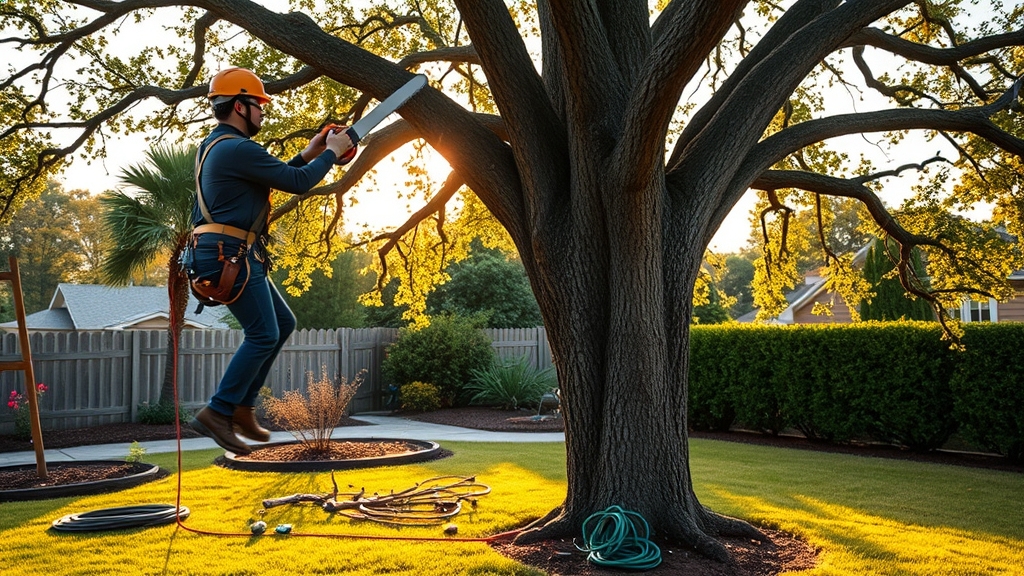
A tree crown reductionis a pruning technique that shortens a tree’s overall height and spread by selectively cutting backbranches to suitable lateral growth points.
Tree crown reduction shortens height and spread by pruning back to suitable lateral growth points.
You remove dominance from overly extended leaders, retain structurally sound secondaries, and preserve the tree’s natural architecture.
In Terminology Clarification, distinguish reduction from topping: you cut to laterals of at least one-third the parent branch diameter, not indiscriminately.
You’ll also differentiate reduction from crown thinning(which reduces density, not dimensions) and crown raising (which lifts clearance).
For Historical Background, note that modern reduction evolved from corrective arboriculture responding to the damage caused by topping in the mid-20th century.
Today, you assess species response, compartmentalization capacity, and target clearances, then specify reduction magnitude in meters or percentages, plus cut positions and diameter limits.
Benefits for Safety, Health, and Aesthetics
When you reduce a crown correctly, you lower risk by shortening overextended limbs, decreasing wind leverage, and improving clearance from roofs, lines, and walkways.
You also lighten end-weight, so unions experience less strain, mitigating failures during storms.
Strategic reduction sustains the tree’s natural architecture, preserving taper and load pathswhile maintaining sightlines and security lighting.
Health gains follow.
Cuts to appropriate laterals improve light penetration and airflow, drying leaf surfaces and reducing foliar disease pressure.
You’ll invigorate subordinate shoots, balance vigor, and protect root–shoot equilibrium, which stabilizes nutrient allocation.
By retaining scaffold structureand selective interior growth, you safeguard wildlife habitatinstead of stripping resources.
Aesthetically, you refine silhouette and proportion to the site, elevating curb appeal and, by extension, property value without sacrificing long-term canopy performance.
When to Choose Reduction Over Topping or Removal
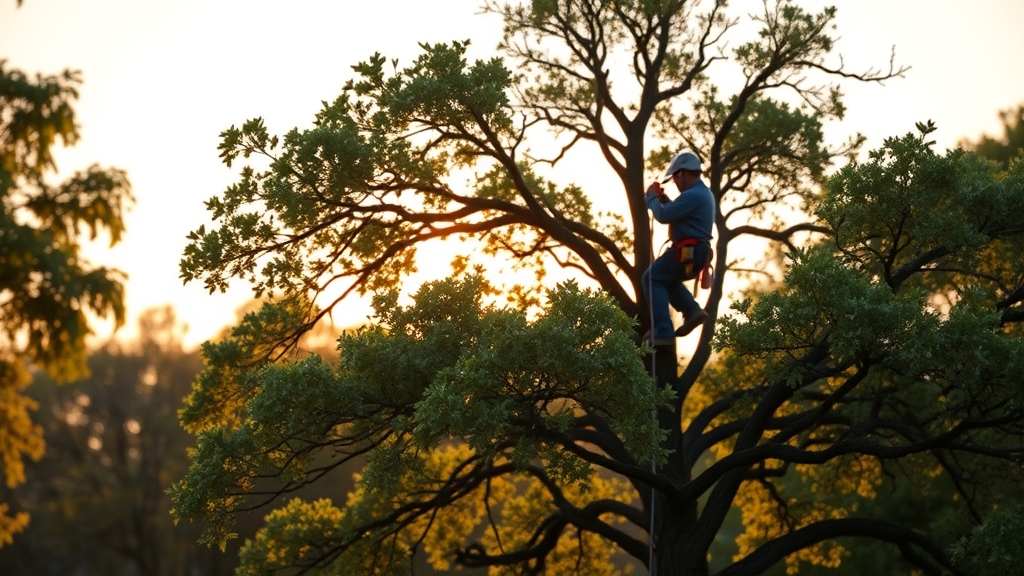
Choose crown reductionwhen you need to lower structural risk without disfiguring the tree.
You’ll target specific limbs to reduce leverage and wind load while keeping a stable, health-focused canopy balance.
This approach avoids topping’s damage and removal’s loss, preserving form, vigor, and safety.
Structural Risk Mitigation
Though toppingmight seem like a quick fix for an overgrown or hazardous canopy, strategic crown reductionis the safer, science-based way to lower structural risk while preserving the tree. You’ll target lever arms, shorten overextended leaders, and reestablish load paths to reduce failure probability without shocking the physiology. Use Wind Modelingto predict sail reduction benefits and prioritize cuts that diminish torsion at union points. Pair that with Lightning Protectionon high-value specimens to mitigate strike damage while maintaining structural integrity.
| Risk Signal | Your Objective | Precision Action |
| Overextended leaders | Reduce bending moments | Subordinate to laterals at 1/3 diameter |
| Included bark unions | Unload junctions | Shorten competing stems |
| Imbalanced sail | Normalize load | Reduce windward quadrants |
| Edge sail | Limit drag spikes | Thin, don’t strip |
| Target-rich zone | Lower consequence | Reduce toward setback limits |
Health-Focused Canopy Balance
Balancing canopy health means favoring reduction cutsthat keep living architectureintact instead of toppingthat severs it.
You choose reduction when the tree’s framework is sound but crown density, sail area, or asymmetry threatens function.
Reduction respects growth habits, preserves auxin flow, and maintains photosynthetic capacity, supporting microclimate regulation across your site.
Opt for reduction over removal when roots are stable, defects are compartmentalized, and targets can be managed by decreasing lever arms and end-weight.
You’ll retain habitat layers, promoting biodiversity enhancement while improving light penetration and airflow.
Avoid topping; it induces epicormic shoots, decay pathways, and chronic stress.
Reserve removal for irreparable root failure, active decline, or unmanageable targets.
Execute precise subordination and selective thinning to restore balance without sacrificing vigor.
Assessment: Species, Defects, and Site Constraints
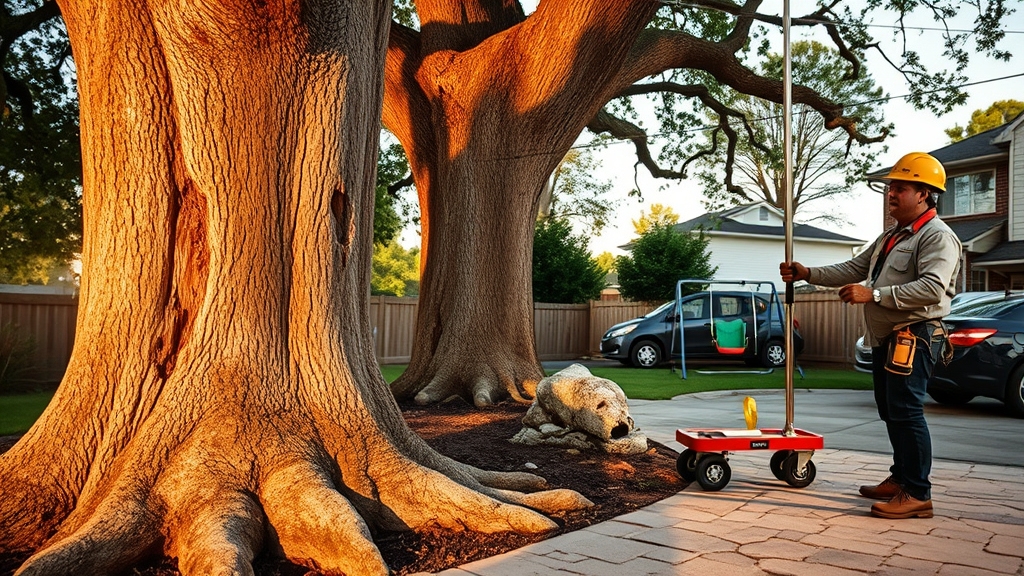
Before you cut a single branch, assess the tree’s species, structural defects, and site constraintsto set safe, realistic reduction goals.
Identify species-specific growth patterns, compartmentalization strength, and decay susceptibility; these dictate tolerance for reduction and expected sprouting.
Document defects: included bark, past topping wounds, shear planes, deadwood, and basal cavities. Probe with a mallet and, when indicated, use resistance tools to quantify residual wall thickness.
Map the site.
Perform microclimate mappingto locate prevailing wind corridors, heat loads, salt drift, and frost pockets.
Conduct substrate analysis: root plate depth, soil texture, compaction, drainage, and utilities. Verify targets, access, and clearances for structures, lines, and traffic.
With these constraints defined, set crown-reduction limits, load paths, and retention priorities aligned to risk and vigor.
Best-Practice Cutting Techniques and Standards
Even with clear reduction goals, you’ll only get durable results by making precise, standards-based cutsthat respect tree biology.
You’ll follow ANSI A300and ISA guidance: reduce to laterals at least one-third the diameter of the removed leader, keep live crown ratios healthy, and never top.
Place cuts just outside the branch collar to protect the branch protection zone.
Set cutting angles to mirror the branch bark ridge, not perpendicular to the stem.
Use three-step removalon heavy limbs to prevent tearing.
Favor reduction cuts over heading cutsto preserve architecture and vigor.
Maintain sharp, clean tools; perform tool sterilization between trees—and between suspect cuts—to limit pathogen transfer.
Inspect each cut’s outcome, verifying load paths, clearance, and regrowth potential before proceeding.
The Service Process: Pre-Work Planning to Cleanup
Though every site is different, you’ll run a tight, repeatable process from the first walkthrough to the final rake. Start with a structured assessment: identify targets, load paths, tie-in options, and protection zones.
Confirm scope, tolerances, and access during client communication so expectations, risk, and noise windows are clear. Map equipment logistics: truck placement, chipper orientation, staging for rigging, and contingency gear.
Before cutting, brief the crewon roles, escape routes, and radio codes. Install ground protection, isolate utilities, and tag fragile assets.
Establish drop zones and rigging anchors, then sequence cuts to control mass and maintain canopy symmetry. Keep the site tidy as you work. Finish by chipping, bucking, raking, and blowing. Walk the site with the client and verify outcomes against the plan.
Aftercare, Recovery, and Future Maintenance
After pruning, you’ll water deeply, protect the root zone, and avoid fertilizing until the tree stabilizes.
Over the next weeks, you’ll watch for stress signslike leaf scorch, early leaf drop, cankers, or dieback.
Then you’ll set a long-term maintenance plan with seasonal inspections, light structural pruning, and mulch and soil care to keep growth balanced.
Immediate Post-Pruning Care
Once you finish reducing the crown, shift to aftercarethat protects wounds and supports recovery.
Seal nothing; instead, prioritize clean cuts and immediate equipment sanitation to prevent pathogen transfer.
Hydrate the root zone deeply, not frequently, to drive roots downward.
Apply a thin, even mulch layer—no volcanoes—keeping it off the trunk flare.
If soil is compacted, aerate carefully outside the critical root zoneand avoid disrupting structural roots.
Balance nutrient input: use a slow-release, low-salt formulation calibrated to recent leaf-area loss.
Correct stake tension and guying so the canopy can move without tearing fresh unions.
Document cut locations, diameters, and objectives, then conduct a concise client walkthrough that sets expectations, outlines watering cadence, and schedules the next structural assessment and selective light-thinning, if needed.
Monitoring Stress Indicators
Regularly scan the canopy, shoots, and root zone for early stress signals so you can intervene before decline sets in.
Read leaf posture first: midday flagging, marginal scorch, or off-color chlorosis suggests hydraulic strain or nutrient imbalance.
Check twig turgorand bud viability; desiccated tips hint at Xylem Cavitation.
Listen for crackle in dry wood after hot, windy days—a proxy for embolism risk.
Track Phloem Integrity by inspecting bark for sunken patches, exudates, or sluggish callus along reduction cuts.
Probe moisture with a soil knife; confirm with a tensiometer, not guesswork.
Compare new shoot length and internode spacing against pre-reduction baselines.
Note asymmetric canopy density that implies localized vascular disruption.
Document findings with dated photos.
If indicators trend negative, adjust irrigation timing and canopy exposure promptly.
Long-Term Maintenance Plan
Ideally, you establish a multi‑year schedulethat protects vigor, guides structure, and limits regrowth stress.
In year one, prioritize recovery: optimize rooting conditions, balance canopy light, and set a precise Irrigation Strategythat tracks rainfall and evapotranspiration.
Pair that with targeted Soil Amendmentto correct pH, boost CEC, and improve porosity.
From year two onward, refine scaffold spacing, subordinate competing leaders, and time reductions to growth phases to minimize stored‑carbohydrate drawdown.
- Conduct seasonal structural assessments and record cut positions to prevent repetitive wounding.
- Calibrate your Irrigation Strategy quarterly; adjust emitters and runtime to soil texture and phenology.
- Schedule Soil Amendment applications post‑flush to support mycorrhizae and nutrient uptake.
- Set a three‑year reduction cycle: lighter, frequent cuts over heavy, infrequent pruning to stabilize biomechanics.
Costs, Scheduling, and Selecting a Certified Arborist
Curious what crown reduction will cost, how to time the work, and who to hire? Expect a professional range of $300–$1,800 per tree, scaling with size, access, canopy complexity, risk, and cleanup. Insist on itemized estimates: crew size, equipment, disposal, and follow-up. Demand credentials: ISA Certified Arborist, TRAQ where targets exist, and written scope aligned with ANSI A300.
Do strict Insurance Verification—general liability and workers’ comp—naming you as certificate holder. Compare references and before/after portfolios for species-specific competence. Schedule for dormancyor post-flush stabilization; avoid drought and nesting windows. Seek Flexible Scheduling that accommodates traffic control, neighbor notifications, and utility coordination.
Require clean cuts, crown reduction ratios, and protection zones. Finalize with a written maintenance interval and warranty on workmanship.
Frequently Asked Questions
Can Crown Reduction Improve Solar Panel Efficiency by Reducing Shade?
Yes. By selectively reducing overhanging limbs, you cut shading, boost solar access, and realize measurable energy gains. You’ll validate benefits with shade modeling, optimize trimming schedules, and preserve tree health while maximizing panel output across seasonal sun paths and critical production windows.
Are There Wildlife Nesting Laws Affecting Scheduling of Crown Reduction?
Yes. You must plan around nesting seasons and laws protecting nests, eggs, and protected species. Conduct preseason surveys, schedule outside peak breeding windows, document due diligence, and secure permits. When active nests appear, pause work and implement exclusion buffers under local regulations.
How Do HOAS or Municipalities Regulate Visible Canopy Height Changes?
HOAs and municipalities regulate visible canopy height changes through Height Ordinances and Permit Requirements. You’ll submit plans, justify objectives, and follow pruning standards. Expect review boards, neighbor notice, seasonal restrictions, and post‑work inspections, with fines or remediation for noncompliance.
What Insurance Coverage Should Homeowners Verify Before Tree Work Begins?
Verify the contractor’s general liability coverage limits, workers’ compensation for all crew, and additional insured status on a certificate. Confirm policy endorsements, exclusions, arborist-specific coverage, and current effective dates. Request written indemnification and a waiver of subrogation.
Can Reduced Crowns Affect Property Boundary or Neighbor Light-Right Disputes?
Yes. When you reduce crowns, you can mitigate Boundary Liability by limiting encroachment and evidence disputes. You’ll also improve neighbors’ Light Rights compliance, but document before/after conditions and obtain written agreements to prevent claims, misinterpretation, or unintended shading conflicts.
Final Thoughts
Expert crown reduction combines science, precision, and care—not topping, but targeted reshaping that keeps trees strong, balanced, and beautiful. By cutting back to proper laterals, you reduce storm risk, lighten end-weight, and preserve the natural structure that supports long-term health and curb appeal. The right technique protects both your property and the tree’s biology, ensuring strength and stability through every season.
For trusted, certified service in Blue Island, choose Prime Tree Care, Inc.OurISA-certified arboristsfollow ANSI A300 standards for safe, expertcrown reduction,tree pruning, andtree removal. We also offeremergency tree service,stump grinding, and comprehensivetree care solutionsacrossBlue Island.
Ready to restore safety and beauty to your trees?Schedule a certified inspection and detailed quote—contact Prime Tree Caretoday for expert, fully insured crown reduction done right.