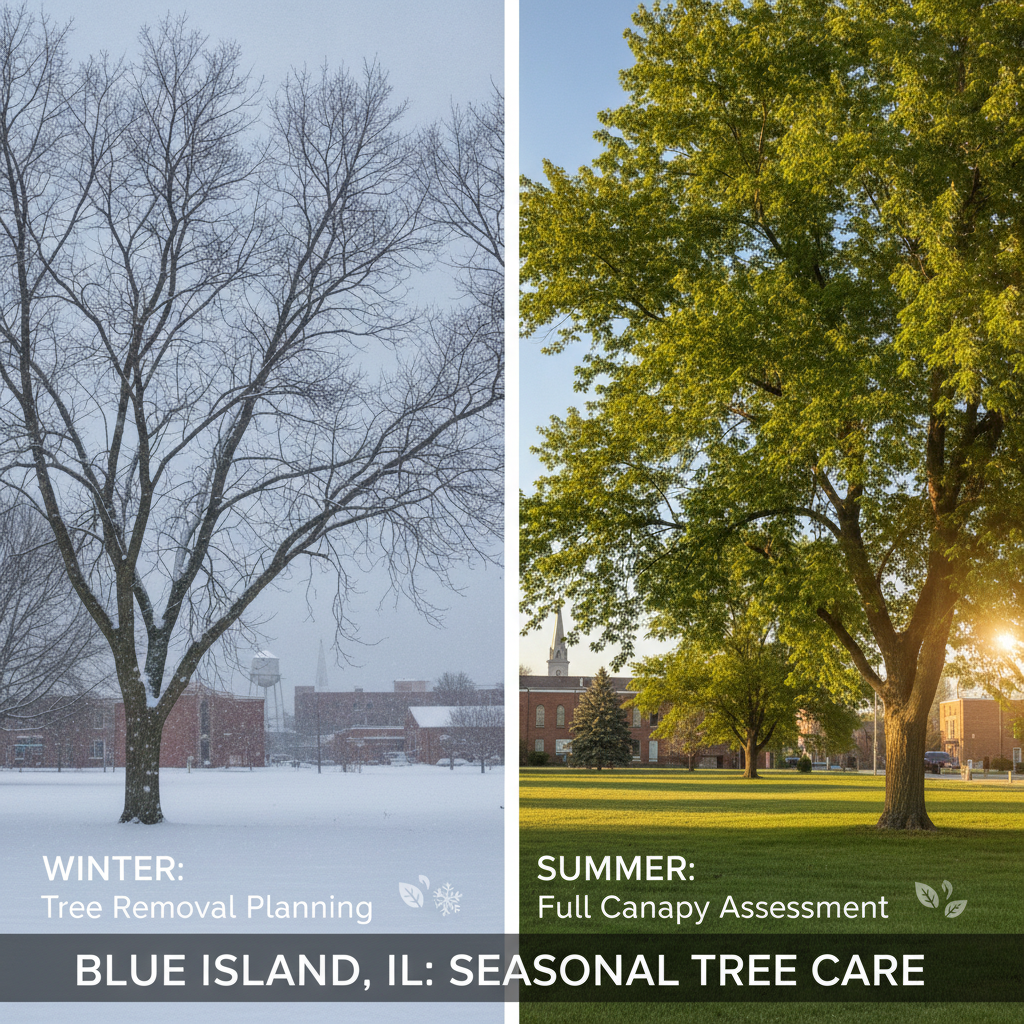
Regular pruning prevents hazards by removing dead, weak, or overextended branches and correcting poor attachments. It reduces wind sail, limits storm breakage, and improves visibility along streets and paths. Clean cuts below disease symptoms curb spread and promote proper wound closure. Retaining branch collars preserves structure, while routine inspections catch cracks and decay early. Thinning canopies allows airflow, lowers leverage on limbs, and minimizes debris. Healthier trees store more carbon and cool neighborhoods. The next points explain how this works in practice.
Key Takeaways
- Pruning removes dead, diseased, and weak branches before they fail, reducing falling limb incidents.
- Thinning and shortening overextended limbs lower wind sail and leverage, minimizing storm breakage.
- Clean, properly placed cuts promote wound closure, limiting decay spread and structural weakness.
- Raising and shaping canopies improves visibility for streets and paths, preventing collisions and near-misses.
- Routine inspections during pruning catch cracks and decay early, enabling low-cost corrective actions.
The Hidden Risks of Neglected Branches

Although overlooked by many property owners, neglected branches can escalate from minor nuisances to significant hazards. When deadwood accumulates, moisture and fungi accelerate branch decay, weakening fibers that once carried wind and weight safely.
Hidden cracks, cavities, and peeling bark often signal structural weakness that may not be obvious from the ground. As decay progresses, load distribution becomes uneven, increasing the likelihood of sudden breakage during storms or even under normal conditions.
Hidden cracks and peeling bark reveal unseen weakness; uneven loads invite sudden limb failure, even in calm weather
Electrical lines, roofs, and pedestrian areas are especially vulnerable when compromised limbs overhang them. Wildlife nesting within damaged wood can further destabilize already fragile sections.
Early detection matters: discoloration, sparse foliage, and oozing sap typically precede failure. Addressing these warning signs reduces liability, protects property, and preserves the overall integrity and stability of the tree.
How Pruning Strengthens Tree Structure

Prioritize selective pruning to guide growth and reinforce natural architecture. When cuts are planned with purpose, trees develop balanced crowns, well-spaced scaffold branches, and strong attachment points. This improves structural integrity by reducing weak unions, crowded leaders, and crossing limbs that abrade bark. Early attention to form prevents defects from becoming embedded in mature wood.
Effective pruning techniques focus on removing competing leaders, subordinating vigorous shoots, and thinning dense interior growth without over-cutting. Proper cut placement—just outside the branch collar—supports efficient wound closure and limits decay spread.
Reducing Storm Damage and Falling Limb Incidents

Harness thoughtful pruning to minimize storm-related failures by reducing wind sail, weight, and leverage on vulnerable limbs. Routine cuts remove deadwood and correct weak attachments, lowering the chance of breakage during high winds. A consistent branch inspection schedule aligns with storm preparedness by identifying cracks, decay pockets, and overextended limbs before they fail. Selective thinning preserves structure while allowing airflow through the canopy, decreasing torsion and uplift. Clearance from roofs and lines is achieved by shortening, not topping, to maintain health and stability.
| Focus Area | Practical Outcome |
| Deadwood removal | Fewer falling fragments |
| Reduce co-dominant conflicts | Stronger unions |
| Thin dense interior | Less sail effect |
| Shorten overextended limbs | Lower leverage |
| Inspect after storms | Early hazard detection |
Certified guidance guarantees appropriate cuts and timing.
Improving Visibility and Safe Sightlines
Beyond reducing storm damage, regular pruning also enhances visibility along streets, driveways, paths, and intersections.
By selectively removing low-hanging branches, dense interior shoots, and obstructive suckers, crews create clear lines of sight for drivers, cyclists, and pedestrians. This visibility enhancement reduces near-miss events at corners and improves reaction time where traffic merges or curves tighten.
Selective pruning opens sightlines, reducing near-misses and sharpening reactions at merges and tight curves.
Sightline optimization also benefits wayfinding and security.
Pruned canopies reveal signs, signals, house numbers, and trail markers, minimizing confusion and sudden stops. In public spaces, improved vistas deter concealment and allow lighting to perform as intended, decreasing shadowed zones.
Arborists achieve these outcomes by elevating crowns to appropriate clearance heights, thinning for light penetration without over-pruning, and scheduling maintenance before seasonal leaf flush expands foliage density.
Preventing Interference With Power Lines
Preventing conflicts between trees and power lines starts with adherence to clearance distance standards set by utilities and local codes.
Correct timing and species selection are important, but utility-friendly pruning methods such as directional pruning keep growth away from conductors.
This approach reduces outages, fire risk, and repeated corrective cuts.
Clearance Distance Standards
While trees add value to streets and yards, their proximity to energized lines demands strict clearance standards to avoid outages, arcing, and fire.
Clearance distance standards are set by clearance regulations, utility policies, and local codes, reflecting voltage class, species growth rate, and wind sway. They specify minimum separations both horizontally and vertically, as well as around service drops.
Seasonal growth, storm loading, and line sag are factored to guarantee buffers remain safe between maintenance cycles.
Pruning guidelines translate these standards into measurable objectives, such as target distances at time of trimming and expected regrowth intervals.
Inspectors document spans with the highest risk—fast-growing species, confined corridors, or weak-wooded trees—so schedules prioritize them.
Consistent adherence reduces service interruptions, liability, and emergency response events.
Utility-Friendly Pruning Methods
Utility-friendly pruning focuses on shaping tree growth away from energized conductors using targeted cuts that preserve tree health and line reliability. It prioritizes directional pruning techniques that guide future shoots away from wires, reducing regrowth toward hazards.
Crews assess species, growth rate, and conductor voltage, then select branch collars for precise removal, minimizing wounds and decay. Compliance with utility regulations guarantees consistent outcomes and documented safety practices.
- Directional pruning redirects branches laterally, avoiding disfiguring topping.
- V, L, and notch shapes establish safe airspace around lines.
- Cycle-based maintenance times cuts before rapid seasonal growth.
- Coordination with utilities aligns pruning techniques with local utility regulations.
These methods maintain clearance, lower outage risk, and protect public safety while preserving tree structure, energy resilience, and sightlines for inspections.
Stopping Pest Infestations at the Source
Although pests can attack any stressed tree, many infestations start with neglected structure and deadwood that invite insects and pathogens. Regular pruning removes decayed limbs, thin twig clusters, and bark traps where insects breed. By exposing sunlight and airflow, it disrupts habitat conditions and reduces entry points. Practical pest prevention techniques include timely removal of storm damage, proper cut placement outside the branch collar, and sanitation of tools between trees. Ongoing tree health monitoring detects early chewing, frass, exit holes, and sap bleed before populations surge.
| Sign to Observe | Action to Take |
| Dead twigs | Prune back to healthy union |
| Bark splits | Inspect cambium; sanitize tools |
| Sawdust frass | Trace to galleries; remove limb |
| Leaf skeletons | Reduce host density; prune lightly |
| Ant trails | Check for honeydew; remove infested shoots |
Limiting the Spread of Disease in the Canopy
Limiting disease begins with promptly removing infected limbs to reduce inoculum sources.
Clean cuts and proper disposal prevent pathogen spread to adjacent branches.
Improving airflow penetration through strategic thinning further suppresses moisture-driven fungi and bacteria in the canopy.
Remove Infected Limbs
Cut out infection before it spreads. A disciplined approach to removing diseased wood limits canopy-wide decline and secondary hazards.
Clear infected limb identification comes first: look for cankers, oozing sap, discolored bark, dieback, and brittle twigs. Once located, employ effective removal techniques.
Make clean cuts 10–12 inches below visible symptoms, sterilizing tools between cuts to avoid transfer. Avoid flush cuts; retain the branch collar to support proper sealing.
Bag and dispose of contaminated material; never compost diseased debris. Schedule follow-up inspections to confirm containment and to detect new infections early.
- Identify symptoms: cankers, leaf wilt, streaked sapwood
- Plan cuts below infection; protect the branch collar
- Disinfect tools between every cut to prevent spread
- Remove and dispose of debris promptly and safely
Improve Airflow Penetration
Thin congested interior growth to move air through the canopy and dry foliage faster after rain or irrigation. This targeted thinning reduces leaf wetness duration, which limits fungal germination and bacterial spread.
By opening branch junctions and removing crossing shoots, canopy management improves light penetration and air exchange without overexposing scaffold limbs.
Airflow benefits include lower humidity pockets, fewer pathogen-friendly microclimates, and faster evaporation after dew events. Clean cuts at branch collars maintain natural defenses while preserving structural balance.
Practitioners should avoid lion-tailing; retaining interior foliage in spaced clusters keeps aerodynamic stability. Species habits matter: dense, epicormic-prone trees need more frequent, lighter passes.
Seasonal timing also counts—prune during dry periods to reduce infection risk. Consistent, modest interventions sustain ventilation, discourage disease, and reduce hazard potential.
Encouraging Balanced, Healthy Growth
Although pruning often focuses on removing defects, its greater value lies in guiding even, vigorous structure. By selectively shortening dominant leaders and thinning crowded interiors, a practitioner promotes balanced growth and a healthy canopy that distributes weight uniformly. This reduces leverage on limbs, lowers breakage risk, and supports strong branch attachments.
Consistent attention to branch spacing and proportional crown shape helps trees allocate resources efficiently, improving resilience to wind, snow, and everyday loads.
- Redirects vigor from overextended limbs to understory branches for symmetry
- Maintains clear branch hierarchies, limiting co-dominant stems and weak unions
- Encourages light penetration that fuels interior shoots, sustaining canopy depth
- Keeps crown proportions aligned with trunk strength, reducing structural stress
Balanced pruning builds trees that grow predictably, withstand strain, and remain safer.
Timing Pruning for Maximum Safety Benefits
Building balanced structure is only part of safety; when cuts are made determines how well a tree responds and how risks are reduced. Seasonal timing guides wound closure, pest pressure, and limb stability during storms. Late winter to early spring, before bud break, typically offers strong recovery. Summer pruning can moderate vigor and reduce sudden limb failure by lowering sail effect. Aligning pruning frequency with species growth rates and site conditions prevents hazardous overgrowth without stressing the tree.
| Season | Primary Benefit | Key Caution |
| Late Winter | Faster closure | Avoid severe cold snaps |
| Late Spring/Early Summer | Controls vigor | Do not over-thin canopy |
| Late Summer | Shapes before dormancy | Limit cuts in drought |
Routine schedules anchored to seasonal timing help distribute work, reduce large corrective cuts, and improve long-term structural resilience.
Identifying Weak, Dead, or Crossing Limbs
Many visible cues signal limbs that elevate risk and should be prioritized for removal. In weak limb identification, structure and attachment reveal the problem: narrow V-shaped crotches, included bark, and elongated levers under past storm loading.
Prioritize removal: narrow V-crotches, included bark, elongated storm-levered limbs signal weak attachments.
Dead limb assessment focuses on brittle texture, absent buds, peeling bark, and fungal conks. Crossing or rubbing branches abrade bark, inviting decay and creating future fracture points. Observers should scan from trunk outward, comparing symmetry, foliage density, and branch angles to isolate defects before they propagate.
- Split crotches with included bark indicate poor attachment and future failure.
- Branches lacking live buds or flexible twigs signify dead wood.
- Crossing limbs that rub remove protective bark and accelerate decay.
- Long, overextended laterals beyond the canopy dripline act as levers.
Safety Practices for Homeowners and Pros
Spotting weak, dead, or crossing limbs is only the first step; managing them demands disciplined safety practices. Effective pruning begins with homeowner awareness: evaluating tree stability, establishing a drop zone, and recognizing when height, proximity to utilities, or decay exceeds personal skill.
Proper PPE—helmet, eye and ear protection, gloves, chainsaw chaps, and sturdy boots—reduces preventable injuries. Ladders should be secured and never used for chainsaw work; ground-based pole tools with insulated handles are safer near conductors. Cuts follow three-step techniques to prevent bark tearing, with tools kept sharp and disinfected.
Professionals apply rigorous protocols. Professional training covers aerial rescue readiness, rope and saddle systems, load control with lines, and communication hand signals.
Work zones are barricaded, equipment inspected, and weather risks continuously monitored.
Cost Savings Through Preventative Maintenance
While the benefits aren’t always immediate, preventative tree maintenance reliably lowers lifetime costs by reducing failures and emergency interventions.
Scheduled pruning limits limb weight, improves structure, and reduces storm breakage, which cuts cleanup and urgent callouts. It supports cost efficiency by shifting spending from reactive fixes to predictable tasks that fit maintenance budgets.
Scheduled pruning reduces storm breakage and urgent callouts, shifting costs from emergencies to predictable maintenance.
Inspections catch defects early, allowing low-cost corrections instead of expensive removals or property repairs. Right-sized pruning cycles also optimize crew time and equipment use.
- Fewer emergency callouts and premium labor rates
- Reduced property damage from falling limbs and debris
- Smaller, planned invoices aligned with maintenance budgets
- Extended service life of trees, delaying costly removals
Long-Term Tree Health and Community Safety
Because trees are long-lived infrastructure, consistent pruning and inspection underpin lasting health and public safety. Routine crown thinning reduces wind sail, removes weak unions, and guides structure, extending tree longevity while lowering failure risk near sidewalks, schools, and utilities. Clear sightlines aid drivers and pedestrians. Managed canopies also reduce storm debris, helping emergency access and community resilience during outages.
| Practice | Benefit | Timeframe |
| Structural pruning | Strong branch architecture | Early years |
| Clearance pruning | Safer roads and lines | Ongoing |
| Deadwood removal | Fewer falling hazards | Seasonal |
| Health inspection | Early pest detection | Annual |
A documented cycle aligns budgets with risk priorities. Certified arborists select cuts that preserve photosynthetic capacity and wound closure. Over time, healthier trees store more carbon, cool streets, and anchor neighborhood identity without imposing preventable hazards.
Frequently Asked Questions
How Does Pruning Impact Property Insurance Premiums or Coverage Eligibility?
Pruning can lower property insurance premiums and improve coverage eligibility by reducing risk of limb failure and storm damage.
Insurers may offer insurance savings when maintenance records show routine pruning by certified arborists. Coverage benefits can include fewer exclusions related to neglect and smoother claims handling.
Carriers often assess tree condition during underwriting; documented pruning demonstrates risk mitigation, supports favorable inspections, and helps prevent policy nonrenewal tied to hazardous vegetation or unmanaged overgrowth.
Are There Local Permits or Ordinances Governing Residential Tree Pruning?
Yes. Many municipalities enforce local regulations and pruning guidelines for residential trees.
Homeowners may need permits for work on protected species, heritage trees, or those near public rights‑of‑way and power lines. Ordinances often set seasons, diameter thresholds, and approved methods to prevent improper cuts. Violations can incur fines or require remediation.
Residents should consult city codes, urban forestry departments, or utility companies, and verify HOA rules, before hiring arborists or initiating pruning activities.
What Certifications Should I Seek When Hiring a Pruning Professional?
They should look for arborists with certification types such as ISA Certified Arborist, ISA Tree Worker/Climber Specialist, and TCIA Certified Treecare Safety Professional.
Additional professional qualifications include TRAQ (Tree Risk Assessment Qualification), electrical hazard awareness, and first-aid/CPR.
Verification of insurance (liability and workers’ compensation), references, and adherence to ANSI A300 pruning standards is essential.
Membership in ISA or TCIA signals ongoing education and ethics.
Written estimates and safety plans further demonstrate professionalism.
How Can Pruning Waste Be Recycled or Composted Responsibly?
Pruning waste can be managed by adopting composting methods and recycling options suited to material type.
Leaves and small twigs compost quickly when shredded, balanced with nitrogen-rich greens, and kept moist and aerated. Larger branches can be chipped for mulch, pathway cover, or carbon-rich compost feedstock.
Disease-free wood is suitable for biochar or municipal green-waste programs. Invasive or diseased material should be bagged, solarized, or disposed through approved facilities to prevent spread.
Does Pruning Affect Wildlife Habitats or Nesting Seasons Regulations?
Yes, pruning can affect wildlife habitats and is often regulated during nesting seasons.
Observers note that trimming can alter nesting behavior and cause habitat disruption if done during active breeding periods. Many regions require surveys for nests before work and restrict cutting during peak seasons.
Professionals typically schedule pruning in dormant periods, use minimal-impact techniques, retain cavity limbs when safe, and consult local regulations to protect birds, bats, and pollinators while maintaining tree health.
Final Thoughts
Regular, well-timed pruning is one of the simplest ways to prevent avoidable hazards—removing dead, weak, and overextended limbs before they fail, improving sightlines, and keeping canopies wind-resilient. Clean, collar-aware cuts limit decay, and routine inspections catch cracks and disease early so you avoid costly emergencies later. Healthier, well-managed trees also boost curb appeal, comfort, and neighborhood safety.
For expert, standards-based care in Blue Island, trust Prime Tree Care, Inc. Our ISA-certified team follows ANSI A300 pruning best practices and can integrate pruning with hazard assessments and storm prep. Explore our tree pruning and full services, see our local work in Blue Island, or learn more about emergency readiness.
Ready to reduce risk and strengthen your canopy? Get a certified assessment and clear plan today—contact Prime Tree Care for a free, no-obligation quote.