
Prune when growth and weather align. For deciduous trees, cut in late winterbefore bud swell to speed healing and build strong structure. Shape evergreens lightlyafter spring flush hardens. Prune old-wood bloomers right after flowers fade; prune new-wood shrubs in dormancy. On fruit trees and vines, thin by about one-thirdand match crop load to resources to boost fruit quality. Watch buds, sap, and forecasts; avoid heat, drought, and freezes. Clean, collar cuts and sharp, sanitized tools make all the difference—there’s more.
Key Takeaways
- Prune during late dormancy—after the coldest snaps, before bud swell—to maximize wound sealing and direct spring vigor.
- Time cuts after flowering for old-wood shrubs; prune new-wood bloomers in dormancy to boost next season’s blooms.
- Avoid pruning during heat, drought, active sap flow, or right after hard freezes; wait two to three mild days post-freeze.
- Prioritize safety and plant health: remove dead, diseased, rubbing, or competing limbs first with clean collar cuts and sanitized sharp tools.
- Choose dry, stable weather windows to speed wound drying and reduce disease; in spring, prune ahead of warm, dry fronts.
Why Timing Matters for Healthy Pruning
Although pruning seems simple, timingdrives how well a plant heals and grows.
You’re not just cutting; you’re orchestrating physiology.
Prune when the plant can compartmentalize woundsfast, and you reduce disease ingress and desiccation.
Miss that window and you force inefficient energy allocation, slow callus formation, and unnecessary stress.
Match cuts to growth phases.
When buds charge, the plant rebalances hormones; trim then to steer shoot density and direct carbohydrates to priority scaffolds.
If you need flowering, schedule cuts after bloomto protect next season’s bud set while still optimizing energy allocation.
Heat spikes, drought, or recent transplanting? Delay—stress stacking compounds damage.
Time also supports pest disruption.
Well-timed sanitation cuts remove oviposition sites, interrupt life cycles, and deny pathogens fresh portals.
Deciduous Trees: Dormant-Season Cuts for Strong Structure

You’ll get the best results by pruning deciduous trees in late winter, when wounds seal quickly and structure is easy to see.
Focus first on a strong leader, balanced scaffold branches, and removal of crossing, weak, or competing limbs.
Make clean cutsat the branch collar, use three-cut removal for larger limbs, and avoid flush cuts or stubs.
Optimal Dormant Timing
When should you make the most important cuts on deciduous trees? Target late dormancy—after the coldest snaps but before bud swell. You’ll exploit maximum carbohydrate reserves, crisp branch visibility, and minimal pathogen activity.
In cold climates, that’s typically late winter; in milder zones, late winter to very early spring. Avoid midwinter polar frontsthat can desiccate fresh wounds, and skip thaws followed by rapid freezes.
Align operations with crew scheduling and municipal permitting. Secure permits early, confirm utility clearances, and slot crews when streets are quiet and soils are firm to prevent compaction.
Favor dry, wind-stable days: below-freezing nights, above-freezing afternoons, and low precipitation probability.Monitor degree-day trends and seven‑day forecasts. If buds begin to silver or scale tips loosen, you’re at the last safe window.
Structural Pruning Priorities
With timing set, focus cuts on building a stable, resilient framework.
Start by establishing a clear central leaderand balanced scaffold whorls.
Prioritize hazard elimination: remove dead, diseased, and rubbing limbsfirst to reduce failure risk.
Next, enforce branch hierarchy.
Select well-spaced primary scaffolds with strong, near-ideal attachment angles; demote or remove codominant leadersto prevent splitting.
Retain subordinate laterals that maintain sap flow and taper, but shorten vigorous competitors to keep the leader dominant.
Target a consistent vertical spacing between scaffolds and favor radial distribution around the trunk.
Suppress steep, upright watersproutsthat steal apical control.
Maintain proportion: keep scaffold diameter under half the trunk diameter at the point of attachment.
Finish by refining symmetry, ensuring light penetrates evenly without creating large voids.
Proper Cut Techniques
Cut decisively and place every cut to guide growth, not just remove wood. In dormancy, you sculpt structure. Read the bark collar—don’t cut flush, don’t leave stubs. Set precise cut angles: match the branch bark ridge and exit just outside the collar so the tree seals fast and evenly. For limbs, use the three-cut method: undercut, top cut, then final collar cut. Keep tools clean, razor-sharp, and sized for the wood.
| Principle | Action |
| Find bark collar | Stop just outside it |
| Align cut angles | Mirror branch bark ridge |
| Use three-cut removal | Prevent tearing and rips |
| Reduce, don’t top | Shift vigor to laterals |
| Finish smooth | No ridges, no stubs |
Target weak unions first. Favor subordinate cuts to balance crowns and preempt storm failure.
Evergreen Shrubs: Light Touches and Seasonal Windows
You’ll get the best results by timing light pruningjust after spring growth hardens or in late winter for most species.
Focus on minimal shaping cutsthat tip back wayward shoots without exposing bare interiors.
Keep tools sharp, make clean cuts, and stop before you remove more than a third.
Best Seasonal Timing
As seasons shift, evergreen shrubsrespond best to light, well-timed pruning.
You’ll gain the cleanest response by aligning cuts with growth pulses and local conditions.
Late winter to early spring, just before bud swell, is prime in many regions—energy’s poised, and disease pressure is low.
Confirm your frost dates and watch for microclimate variation: south-facing walls, wind corridors, and slope aspects can advance or delay safe windows by weeks.
If winter burn or desiccation appears, wait until new growth reveals living tissue, then tidy lightly.
After the first flush hardens, a modest summer touchkeeps form without provoking soft, frost-prone shoots.
Avoid late-fall cuts; they invite cold injury and sap loss.
Always time interventions to weather patterns, not the calendar.
Minimal Shaping Cuts
While growth stirs but before buds burst, make only small, deliberate nipsto guide evergreen shrubs.
Use sharp bypass shearsand remove no more than a fingertip’s length at a time.
Target outward-facing budsto direct vigor, preserving visual balance and the plant’s natural silhouette.
Work from the outside in, stepping back every few cuts to assess symmetry and light penetration.
Trim errant leaders first, then shorten competing tips to maintain layered structure.
Leave interior spurs and discreet cones; they’re habitat features for birds and beneficial insects.
Cut just above a bud or side shoot at a slight angle, never leaving stubs.
Avoid shearing planes; instead, feather edgesso new growth blends.
Stop once outlines read clean, airflow improves, and the framework remains poised for seasonal flush.
Flowering Shrubs: Prune by Bloom Time to Protect Next Year’s Buds
When should you reach for the pruners on flowering shrubs?
Right after bloom if they flower on old wood, and during late winterif they bloom on new wood.
You’ll protect next year’s buds by identifying wood age before you cut.
Use bloom mapping across seasons: record first flower, peak, and fade for each shrub.
Then schedule pruning within two weeks of petal drop for old-wood bloomers like lilac, forsythia, and azalea.
For new-wood types—panicle hydrangea, rose-of-Sharon, and spirea—prune while dormant to stimulate vigorous flowering wood.
Prioritize Pollinator protection: finish major cuts before primary forage windows, and avoid removing nectar-rich shoots during active flights.
Make reduction cuts to outward buds, remove dead or crossing wood, and thin selectively to admit light without stripping structure.
Fruit Trees and Vines: Maximize Yield With Seasonal Strategies
Even before buds swell, plan your cuts and trainingto direct energy into fruit, not excess wood.
Before buds swell, map your cuts to channel vigor into fruit, not wood.
Prioritize scaffold strength, light penetration, and renewal wood.
On apples and pears, favor spur-bearing laterals; on peaches and nectarines, replace older fruiting woodwith one-year shoots.
For grapes, commit to disciplined trellis training: select canes or spurs, balance node counts, and maintain a narrow fruiting zone.
Remove shaded, pendant growth that steals carbohydrates without ripening.
- 1) Thin, don’t shear: reduce density by a third to halve disease pressure and boost pollinator attraction with well-lit bloom clusters.
- 2) Set crop load: leave only what roots and leaves can mature; quality outruns quantity.
- 3) Time summer touch-ups: pinch watersprouts, tip vigorous shoots, and redirect vigor into fruit size and sugar.
Reading Plant Cues: Buds, Sap Flow, and Weather Signals
Because wood responds to season and stress, you should read the plantbefore you cut.
Track bud firmness with your fingertips: tight, resilient budssignal dormancy; softening scales and swelling tips announce imminent growth.
Pair that with sap pressure cues.
In late winter, a nick that beads quicklymeans pressure is rising; delay major shaping to avoid bleed and energy loss.
Observe cambial color on a shallow scrape—bright, moist tissue shows active flow, while dull tissue suggests deeper rest.
Watch weather signals.
After a hard freeze, wait for two to three mild days so vessels rehydrate and bark flexes.
In maritime springs, prune ahead of warm, dry fronts to speed wound drying.
On drought-stressed wood, postpone reductions until soil moisture recovers and buds firm again.
Clean Cuts and Tools: Techniques That Prevent Stress and Disease
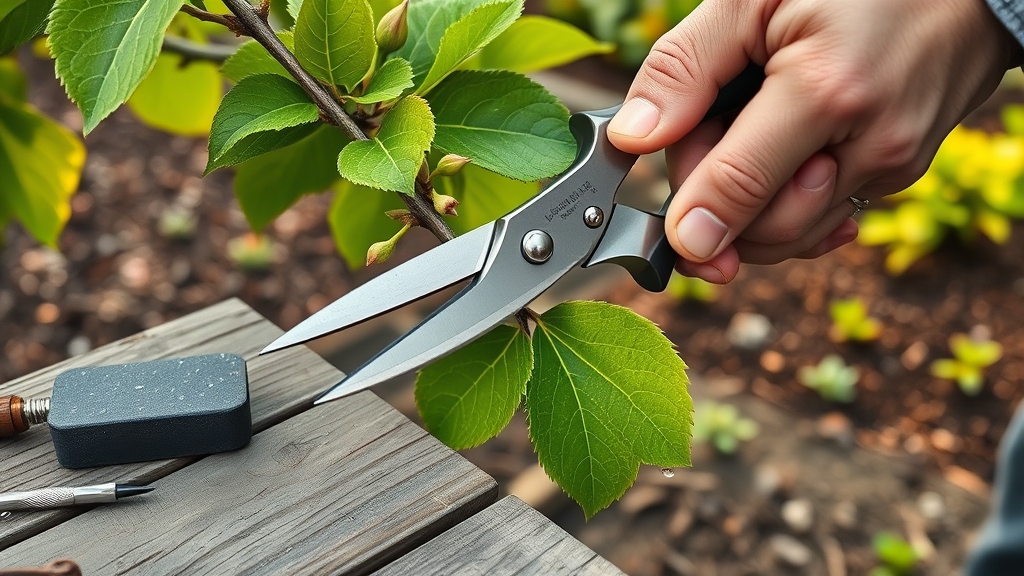
Although timing and plant cuesguide you, clean cutsand sharp toolskeep wounds small and defenses strong.
Prioritize blade sharpeningbefore every session; a keen edgeslices cleanly, reducing crush zones that invite pathogens.
Pair that with disciplined tool sanitationbetween plants to halt cross-infection.
Make pruning cuts just outside the branch collar, angling slightly to shed water; never leave stubs or carve flush.
1) Sharpen and test: Hone at the factory bevel, finish with a strop, then test on paper; resharpen at the first drag.
2) Sanitize consistently: Wipe blades with 70% isopropyl or flame-sterilize steel; refresh between specimens and after any diseased tissue.
3) Execute precision cuts: Support weight, undercut, then top-cut to prevent tearing; finish with a smooth, collar-respecting pass.
Frequently Asked Questions
How Do Pruning Regulations Vary by City or Homeowners Association Rules?
They vary widely. You’ll navigate Permit Requirements, inspection windows, and disposal protocols by city, while HOAs overlay seasonal timing, tool limits, and Species Restrictions. Verify protected trees, utility easements, and sightline rules. Document cuts, retain approvals, and anticipate fines.
Can I Compost Diseased Branches Without Spreading Pathogens?
Yes, but only if you manage Hot composting at 55–65°C for several days, turning regularly. Otherwise, prioritize Pathogen containment: chip and solarize, deep-bury, or dispose offsite. Avoid cool piles; they’re unreliable and risk spore or vector persistence.
What Personal Protective Equipment Is Best for Pruning Safety?
Prioritize a hard hat, Eye Protection with side shields, hearing protection, and a snug harness for climbing. Wear Cut Resistant Gloves, steel-toe boots with grip, and chainsaw chaps. Secure clothing, maintain sharp tools, and inspect gear before cutting.
How Do I Dispose of Large Limbs Sustainably or Legally?
Dispose large limbs by contacting municipal yard-waste pickup, arranging Chipper Rental, or hauling to a certified composting facility. You can mill straight sections, cure logs for projects, or schedule Firewood Donation with shelters, community wood banks, or park maintenance crews.
Are There Smartphone Apps That Identify Branches Safe to Prune?
Yes. You can use apps like PlantSnap, LeafSnap, and iNaturalist, but their Identification Accuracy varies. Pair them with ArborCheck or TreeSnap for Real time Guidance. Validate cuts using ANSI A300 standards and your saw’s reach limits.
Prune for Optimal Plant Health and AestheticsFinal Thoughts
Perfect timing turns pruning from guesswork into growth strategy. By cutting during dormancy, you build strong structure; by waiting for bloom fade or flush hardening, you protect next season’s beauty and fruit. Every clean, collar-respecting cut improves circulation, reduces stress, and keeps your trees balanced for decades. When weather, sap, and sharp tools align, results show fast—and last longer.
For certified precision in Blue Island, trust Prime Tree Care, Inc.OurISA-certified arboristsfollow ANSI A300standards for safe, species-specific pruning that strengthens structure and enhances curb appeal. We handlefruit tree pruning,ornamental shaping,crown reduction, andseasonal tree carethroughout the year.
Want your trees pruned at the perfect time?Schedule a consultation with our certified arborists today—visitPrime Tree Careand keep your landscape healthy, beautiful, and perfectly timed for growth.