Planting a tree feels simple. You pick something pretty, dig a hole, water it, and wait. But anyone who has watched a poorly chosen tree buckle a sidewalk, drop messy fruit on a parking lot, or die after two winters knows the real story is more complicated. The best planting decisions happen before a shovel ever touches soil. They start with understanding your site, your climate, and what you actually want that tree to do for the next thirty or fifty years.
This guide is written for homeowners, small business owners, and developers who want planting choices that hold up over time. In a region with cold winters, humid summers, compacted clay soils, and plenty of wind, the right species and the right placement make a huge difference. If you have ever searched for Tree Service Blue Island IL, chances are you were dealing with a tree problem that began as a planting problem years earlier. We will walk through how to read your site, which tree types tend to perform well in northern Illinois conditions, how to space and install them, and how to keep them healthy once they are in the ground. Whether you are landscaping a small yard, softening a storefront, or planning a streetscape for a new development, these practical principles will help you avoid expensive mistakes and build a canopy that earns its place.
Start With the Site, Not the Tree
The most common planting mistake is falling in love with a species at the nursery before evaluating the spot where it will live. Begin by walking the property and noting sun exposure, drainage, soil type, and overhead and underground constraints. A spot that gets full afternoon sun behaves very differently from a shaded north-facing corner, and low areas that hold water after rain can drown roots that would thrive on higher ground.
Next, look up and down. Overhead wires, rooflines, and signage limit mature height, while buried utilities, irrigation lines, and septic fields limit root space. Many professionals recommend contacting the utility locating service before digging, and it is worth confirming this with your local requirements. Finally, think about purpose. Do you want summer shade, a privacy screen, seasonal color, or a windbreak? Naming the job first narrows the field and keeps you from choosing a tree that looks lovely in a photo but fights the site every season. For tricky locations, an experienced local crew offering Tree Service Blue Island IL can help you judge conditions before you buy.
Reading Your Soil and Drainage
Much of the Chicago region sits on heavy clay soils that compact easily and drain slowly. Urban and suburban lots add another layer of trouble, because construction often strips topsoil and leaves behind compacted fill, rubble, and subsoil mixed together. A tree planted into that mess may sit in a bathtub of wet clay in spring and a brick of dry clay in August.
A simple percolation test tells you a lot. Dig a hole about a foot deep, fill it with water, let it drain, then fill it again and time how long it takes to empty. If water is still standing after many hours, choose species that tolerate wet feet, or improve the site by planting on a slight mound and breaking up compaction across a wide area rather than only inside the hole. Soil pH matters too. Some popular trees, such as pin oak, develop yellow leaves in alkaline soil because they cannot absorb iron. A basic soil test from your county extension office is inexpensive and can save you from a slow, frustrating decline.
Tough Shade Trees That Handle Local Conditions
If your priority is big, dependable shade, several native and well-adapted species stand out. Bur oak and swamp white oak are long-lived, tolerate heavy soil, and handle urban stress better than many of their relatives. Hackberry is famously tough, shrugging off wind, drought, and poor soil. Kentucky coffeetree offers an open, interesting structure and sheds clean in fall. Sugar maple can be gorgeous but sulks in compacted, salted, or reflected-heat sites, so reserve it for roomy lawns rather than tight strips.
It also helps to diversify. Past experience with widespread pest outbreaks that wiped out entire rows of a single species taught many communities a hard lesson. Mixing genera across a property or block protects your investment, because one pest or disease rarely takes out everything. A reputable Blue Island IL tree service company can often recommend species that have performed well on nearby lots, which is more valuable than any generic plant list because it reflects real results in your actual microclimate.
Smaller Ornamental Choices for Tight Yards
Not every property has room for a hundred-foot giant. Small yards, courtyards, and storefront planters call for compact trees that deliver interest without overwhelming the space. Serviceberry is a standout, offering white spring blooms, edible summer fruit, and brilliant fall color in a manageable size. Redbud brings early pink flowers and heart-shaped leaves. Crabapples remain popular, though you should choose disease-resistant cultivars to avoid scab and unsightly leaf drop. Japanese tree lilac tolerates city conditions and blooms later in the season, extending the show.
For year-round structure, consider evergreens in the right spot. Eastern white pine is attractive but wants space and dislikes road salt, while arborvitae works as a fast screen but can suffer winter burn in exposed, windy locations. Whatever you choose, check the mature width as carefully as the height. A tree that looks tidy at five feet can crowd a doorway, scrape siding, or shade out a garden bed within a decade if you ignore the label.
Choosing Trees for Streetscapes and Commercial Frontage
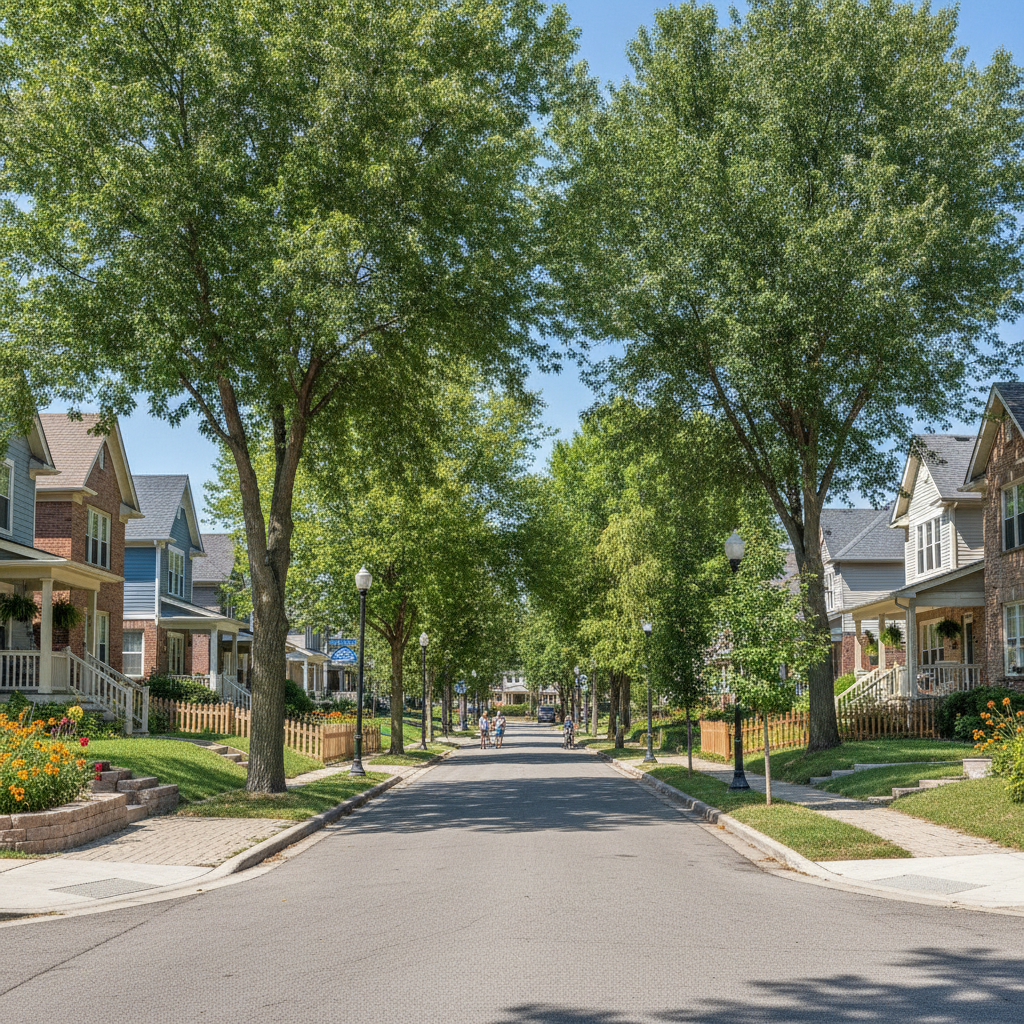
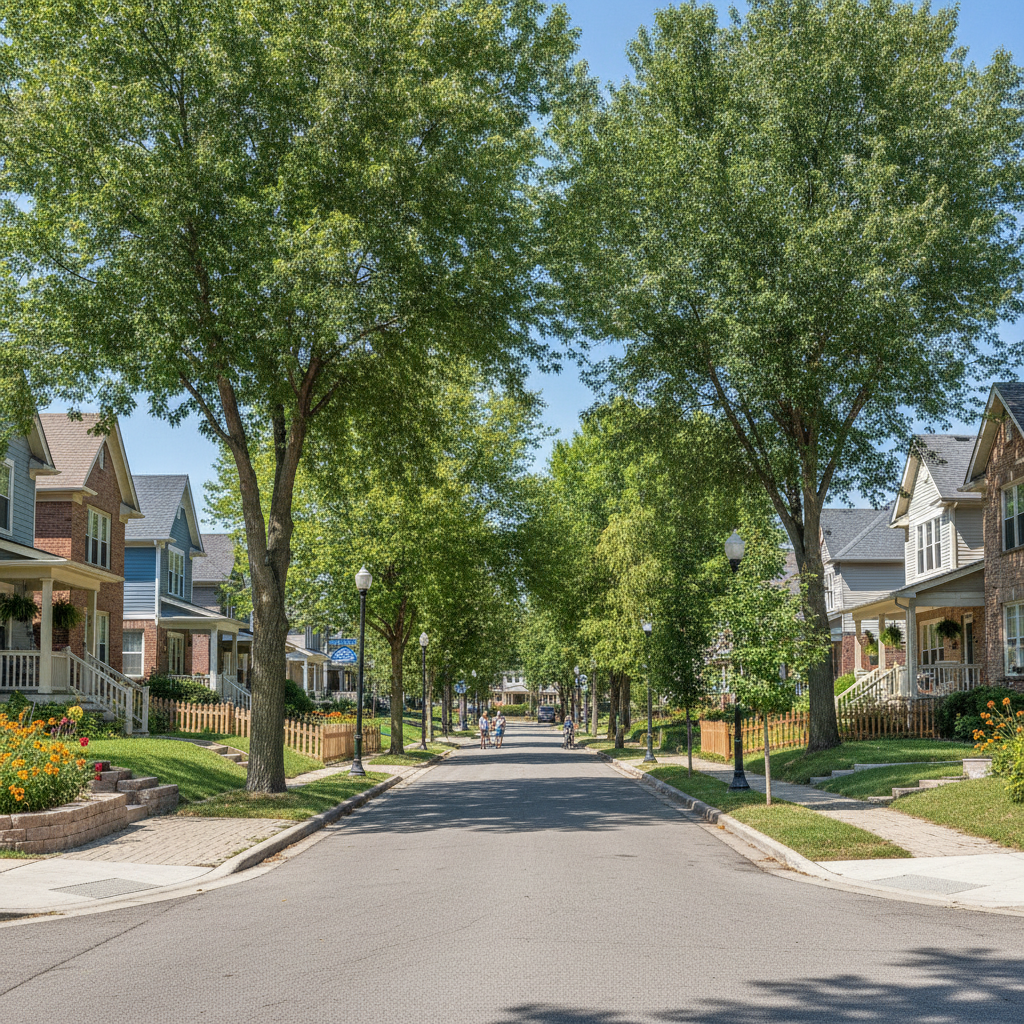
Streetscapes are the hardest environment a tree will ever face. Roots compete with pavement, soil volume is tiny, de-icing salt splashes up every winter, and reflected heat from asphalt bakes the canopy in summer. For business owners and developers, the goal is a tree that survives these stresses while staying out of the way of signage, sightlines, and delivery traffic.
Look for species rated for urban tolerance, with strong branch structure and minimal litter. Honeylocust in thornless, fruitless forms, ginkgo (male selections only), and certain elms bred for disease resistance are common performers. Avoid brittle, fast-growing species that shed limbs in storms and create liability. Soil volume is the secret ingredient: structural soil cells or generous planting strips can double a tree’s lifespan. Understanding How Seasonal Weather in Blue Island IL Impacts Tree Removal Planning also helps you think ahead, since harsh winters and storms shape which street trees age gracefully and which become hazards that eventually need to come down.
Right Tree, Right Place: A Quick Comparison
Matching a tree to its job is easier when you can see the tradeoffs side by side. The table below summarizes how several common choices compare. Treat the details as general guidance rather than guarantees, since results vary with soil, exposure, and care.
| Tree | Best Use | Space Needed | Main Watch-Out |
|---|---|---|---|
| Swamp white oak | Large lawns, parks | Wide, open area | Slow to establish |
| Hackberry | Tough sites, streets | Moderate to large | Witches’ broom growth |
| Serviceberry | Small yards, entries | Compact | Birds love the fruit |
| Thornless honeylocust | Commercial frontage | Moderate | Needs light pruning |
| Eastern redbud | Accent, spring color | Compact to moderate | Shorter lifespan |
Spacing and Placement That Prevents Future Conflicts
Spacing errors cause more long-term headaches than almost any other planting mistake. A common rule of thumb is to plant large shade trees well away from buildings, often twenty feet or more, and to keep medium trees roughly fifteen feet out, though exact recommendations vary by species and local guidelines. Think about mature canopy and root spread, not the sapling in the pot.
Keep trees clear of driveways, septic systems, foundations, and utility corridors. Leave room for equipment access, because a tree that blocks the only path to your backyard will complicate every future maintenance job. For commercial lots, consider snow-plow storage areas, fire lanes, and visibility at entrances. Staggering trees rather than lining them up in a rigid row looks more natural and reduces the risk that one failure creates a gap. Mark planting spots with flags or stakes for a week or two and look at them from several angles, inside and outside the property, before you commit.
Planting Techniques That Set Roots Up for Success
How you plant matters as much as what you plant. Dig a hole two to three times as wide as the root ball but no deeper than it is tall. The root flare, where the trunk widens at the base, should sit at or slightly above ground level. Burying it is one of the most frequent and fatal errors, leading to girdling roots and slow decline.
Remove wire baskets, twine, and burlap from the top and sides of the root ball once it is in the hole. Loosen any circling roots on container-grown trees so they grow outward instead of strangling the trunk. Backfill with the native soil you removed, since amending only the hole can create a pot effect where roots refuse to leave. Water deeply right away, then add two to three inches of mulch in a wide ring, keeping it a few inches away from the trunk. Staking is usually unnecessary unless the tree is top-heavy or exposed, and any stakes should come off after the first year.
Timing and Sizing Your Purchase
In northern climates, spring and early fall are generally the best planting windows. Spring planting gives roots a full growing season to establish before winter, while fall planting benefits from warm soil and cooler air, as long as the tree has several weeks to settle in before the ground freezes. Midsummer planting can work with diligent watering but adds stress.
Bigger is not always better. Large, mature-looking trees cost more, take longer to recover from transplant shock, and often get overtaken by smaller trees planted at the same time. A trunk diameter of one to two inches usually strikes a good balance between instant impact and quick establishment. When buying, inspect the trunk for wounds, check that the main stem has a clear central leader, and look for healthy, fibrous roots. Reputable nurseries welcome these questions, and buying from a local grower often means the stock is already acclimated to regional conditions.
Caring for Young Trees in the First Three Years
The first few years decide whether a tree becomes an asset or a replacement project. Watering is the big one. Newly planted trees generally need a slow, deep soak about once a week during dry stretches, rather than a daily sprinkle that encourages shallow roots. Check the soil a few inches down before watering, because overwatering heavy clay is just as dangerous as neglect.
Refresh mulch each year, protect trunks from mower and string trimmer damage, and wrap or guard thin-barked species against winter sunscald and rodent gnawing. Begin structural pruning early, removing crossing or competing branches while wounds are small and the tree can seal them quickly. Good structure in youth prevents splitting and storm failure later. Professional oversight pays off here, which is why guidance on Why Licensed Arborist Oversight Matters for Tree Work in Blue Island IL is worth reading before you hire anyone to prune or shape your new plantings.
Common Planting Mistakes to Avoid
A handful of errors show up again and again. Planting too deep tops the list, followed closely by choosing species for looks alone without checking size or hardiness. Many owners also plant too close to structures, install trees under power lines, or pile mulch against the trunk in a so-called volcano that traps moisture and invites rot.
- Ignoring mature size and planting too close to buildings or pavement
- Choosing a single species for an entire row or property
- Burying the root flare or leaving wire and twine in place
- Overwatering clay soil or letting new trees dry out completely
- Skipping early structural pruning until problems appear
Each of these is easy to prevent with a little planning. Most of the trees that eventually need removal started life with a flaw that a better planting decision would have avoided, so a few hours of preparation today can save thousands of dollars and plenty of frustration down the road.
Planning Your Next Planting Project
Good tree planting is a long game. The decisions you make about species, spacing, soil, and early care ripple forward for decades, shaping how your yard feels, how your storefront looks, and how safely your property weathers storms. Start with an honest read of your site, match the tree to the job, install it carefully, and give it steady attention through those critical first years.
For homeowners, that might mean a bur oak in the open back lawn and a serviceberry by the patio. For small business owners and developers, it could mean a diverse mix of urban-tolerant street trees with generous root space and clear sightlines. In every case, local knowledge helps, since conditions that work in one neighborhood may not translate to the next. If you want a second opinion before you buy or dig, reach out to a trusted local professional offering Tree Service in Blue Island, IL and ask for an on-site assessment. A short visit can confirm whether your chosen spot, species, and timing line up, and it can flag hidden problems like buried utilities or poor drainage before they become costly surprises. Plant thoughtfully, and the shade, color, and curb appeal you build today will keep paying you back for generations.