
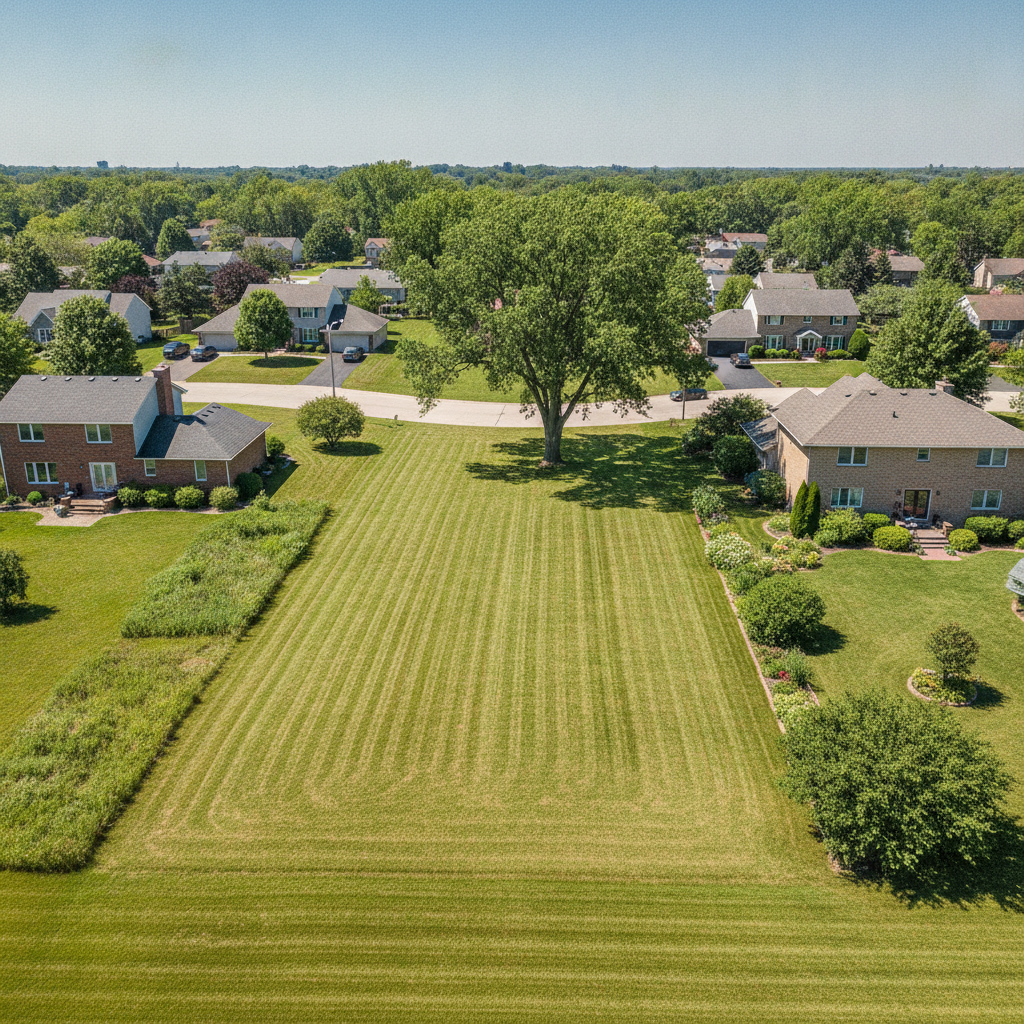
Not every tree job is the same size, and that is the first thing worth understanding before you pick up the phone. Some properties have one stubborn oak leaning over the garage. Others have a half-acre of overgrown brush, scrub trees, and stumps standing between an owner and a finished building plan. When you start searching for a tree removal company Blue Island IL property owners can rely on, the real question is not just who to call but what kind of job you actually have. Is it a single-tree removal, or is it full lot clearing?
The difference matters more than most people expect. Single-tree removal is a targeted, precise operation focused on one specimen and the space around it. Lot clearing is a land-management project that involves equipment, debris logistics, grading considerations, and often multiple phases. The planning, the crew size, the machinery, the timeline, and the cleanup all change depending on which one you need.
In this guide, we break down how each service works, where they overlap, and how to decide which one fits your property. Whether you own a small business lot, are preparing land for development, or just want to know what you are paying for, the goal is to help you ask better questions and avoid scope surprises.
Two Different Jobs With Two Different Goals
It helps to start with intent. Single-tree removal solves a specific problem: a dead trunk, a storm-damaged limb structure, a tree crowding a foundation, or a species that has simply outgrown its spot. The goal is to take out one tree safely while protecting everything around it, from rooflines to fences to neighboring plantings.
Lot clearing has a broader goal. You are changing the character of an entire parcel. That might mean removing dozens of trees, thick underbrush, fallen timber, old fence lines, and leftover stumps so the land can host a building, a parking area, a storage yard, or a fresh landscape design. Our team at Prime Tree Care, Inc sees both types of requests regularly, and the first conversation is always about the outcome you want rather than the equipment you assume you need.
Getting that goal clear early prevents the most common frustration in this industry: a quote built for one job when the property really needs the other.
How Single-Tree Removal Actually Works
A single-tree job looks simple from the sidewalk, but the planning behind it is detailed. A trained crew first assesses the lean, the weight distribution, the condition of the wood, and everything within the fall zone. If there is a house, a shed, power lines, or a neighbor’s fence nearby, the tree usually cannot simply be felled in one piece.
Instead, climbers often work from the top down, rigging and lowering sections of the trunk and limbs with ropes and friction devices. This sectional approach protects structures and landscaping, and it is the reason single-tree work can be surprisingly labor-intensive despite involving just one tree.
After the wood is down, the crew processes it into manageable pieces, hauls the debris, and addresses the stump according to your preference. Stump grinding is a separate step in many cases, so ask whether it is included. For a homeowner dealing with one hazardous tree, this focused approach is usually the fastest, least disruptive, and most cost-predictable route.
What Full Lot Clearing Involves From Start to Finish
Lot clearing is closer to a small construction phase than a tree job. It usually begins with a site walk to identify what stays, what goes, where the property lines run, and where equipment can safely enter. Trees you want to keep, such as a healthy shade tree near the street, get protected with marked boundaries before any machinery moves.
From there, crews typically work in stages. Larger trees are felled or sectioned, brush and small growth are cut, and woody material is processed on site or hauled away. Heavy equipment such as skid steers, excavators, or forestry mulchers may be used to move material and handle stumps and roots efficiently.
The final phase is finishing the ground so the next contractor can start work. Depending on your plans, that could mean rough grading, removing root balls, or leaving a mulched surface. Because every parcel differs in size, density, and access, lot clearing timelines vary widely. A tidy quarter-acre may take a few days, while a dense, neglected lot can stretch much longer.
Choosing Between the Two for Your Property
A simple way to decide is to look at the footprint of the problem. If the issue lives in one place, say a diseased tree behind the house, single-tree removal is almost certainly the right fit. If the problem is the land itself, such as an overgrown corner lot you plan to build on, you are in lot-clearing territory.
Some situations fall in the middle. Three or four trees in a backyard that all need to come out can be handled as a bundled removal rather than full clearing. A reputable Tree Removal Company Blue Island IL property owners call will walk the site, count the trees, evaluate access, and tell you honestly which category you fall into instead of upselling you into a bigger project.
If a crew proposes heavy equipment for what looks like a one-tree job, or hand tools only for a overgrown acre, ask them to explain the reasoning. The right method should match the real scope.
Side-by-Side Comparison at a Glance
Seeing the two services next to each other makes the differences easier to absorb. The table below summarizes the typical contrasts, though actual details always depend on your site.
| Factor | Single-Tree Removal | Lot Clearing |
|---|---|---|
| Primary goal | Remove one hazardous or unwanted tree | Prepare an entire parcel for new use |
| Typical method | Climbing, rigging, sectional lowering | Heavy equipment plus crews |
| Timeline | Often a single day | Days to weeks, in phases |
| Cleanup scale | One tree’s worth of debris | Large volume of wood and brush |
| Ground finish | Stump left, ground, or removed | Stumps, roots, and rough grade handled |
| Best for | Homeowners with one problem tree | Developers, builders, land buyers |
Access, Equipment, and Site Conditions That Change the Plan
Where your property sits and how crews can reach it shapes the method more than most owners realize. A wide-open lot with a gravel drive invites mulchers and skid steers. A tight residential lot with a narrow gate may force crews to carry equipment by hand or rely on climbing and rigging, even for substantial work.
Soil conditions matter too. Wet ground limits heavy machinery because rutting can damage the land and make later grading harder. Slopes introduce stability concerns, and nearby utilities, fences, or structures narrow the safe working zones. Reliable Tree Service in Blue Island, IL providers will point these constraints out before work starts, not after a machine is stuck.
You can help by clearing vehicles from the work area, marking sprinkler heads or buried lines you know about, and telling the crew about anything fragile on the property. Good communication on site conditions is one of the simplest ways to keep a project on schedule and on budget.
Permits, Property Lines, and Paperwork Basics
Larger clearing projects tend to involve more paperwork than a single removal. Many municipalities have rules about removing trees above a certain size, working near protected areas, or disturbing soil on a development site. Requirements vary by location, so it is smart to confirm with local officials before work begins instead of assuming nothing applies.
Property boundaries deserve attention as well. Trees that straddle a line may be shared responsibility, and removing one without your neighbor’s agreement can create disputes. If you are unsure where your boundary runs, a survey is far cheaper than a conflict.
For businesses and developers, it also pays to ask a contractor about insurance coverage and how they handle damage claims. Clearing involves heavy equipment and large falling timber, so documentation protects everyone involved. Single-tree jobs carry fewer formalities, but you should still ask for proof of coverage before anyone climbs your tree.
What to Do With the Wood and Debris
Every removal project ends with a pile of material, and what happens to it affects both cost and your yard. For a single tree, the options are straightforward: haul it away, chip the limbs, or leave cut logs for firewood. Many homeowners keep chips as free mulch for garden beds.
Lot clearing creates a far larger volume, so the strategy matters. Some crews mulch brush on site and spread it across the parcel as erosion control or ground cover. Others haul everything to a processing facility. Usable logs may be sold, milled, or donated, which can offset part of the project cost in the right circumstances.
Ask your contractor early whether debris removal is included in the quote or billed separately. This single question clears up a surprising number of billing disagreements. Also be clear about whether you want mulch left behind, because a thick layer of wood chips can complicate later construction or planting if it is not planned for.
Stumps, Roots, and Preparing the Ground
Cutting a tree down is only half the story. The stump and root system remain, and how you handle them depends on what comes next. If you plan to replant or simply regain lawn space, grinding the stump below grade is usually enough. The roots decay in place over time without causing trouble.
If you are building, the standard changes. Foundations, driveways, and utility trenches need stable ground, and decomposing roots can create voids that settle unevenly. In those cases, contractors often remove root balls entirely and backfill with compacted material.
This is where a careful plan prevents costly rework. Tell your clearing crew what the land will become, and ask your builder or engineer what ground condition they require. For guidance on keeping remaining trees balanced after a major clearing, this Blue Island IL Guide to Correcting Tree Canopy Imbalance Before It Becomes a Problem is a useful read for trees left standing near the cleared area.
When Urgency Changes the Rules
Sometimes the decision is made for you. A storm splits a trunk, a limb crashes onto a roof, or a root plate lifts and a tree starts to lean. These moments call for fast, focused removal of the dangerous tree, not a broad clearing project. The priority shifts from planning for the future to making the site safe right now.
Even in urgent situations, a few steps help. Keep people and vehicles away from the damaged tree, avoid touching anything near downed lines, and document the damage with photos for insurance. Then bring in professionals equipped for hazardous work rather than attempting a risky cut yourself.
Knowing the warning signs early can save you from reaching that point. This resource on After the Storm: How Blue Island IL Homeowners Can Spot an Emergency Tree Risk Before It Gets Worse walks through what to look for once the weather settles.
Budgeting and Comparing Quotes the Smart Way
Pricing differs widely between the two services, and it is rarely apples to apples. Single-tree quotes hinge on size, condition, access, and hazards. Lot-clearing quotes hinge on acreage, tree density, terrain, debris volume, and the finish you need. Because so many variables apply, costs vary widely, and you should be cautious of any estimate offered without seeing the site.
When comparing bids, look past the bottom line. Check whether each quote covers stump work, debris hauling, and final grading, since one contractor’s low price may simply leave out what another includes. Request a written scope so you can compare line by line.
It also helps to ask about phasing. On a large parcel, you might clear only the building pad now and save the remainder for later, spreading the expense. A thoughtful contractor will offer options like this instead of pushing the largest possible job, and that flexibility is a good sign of an honest operation.
Your Next Steps
Deciding between lot clearing and single-tree removal comes down to understanding your real goal. If one tree is causing the trouble, a focused removal is the efficient, predictable answer. If you are reshaping a whole parcel for building, parking, or a new landscape, clearing is the right tool, and it deserves the planning that comes with a larger project.
Before you hire anyone, walk your property with a clear picture of what you want it to look like afterward. Note which trees you want to keep, where equipment can enter, and what the ground needs to be like for whatever comes next. Ask contractors to explain their method, spell out what is included in the price, and confirm insurance and permit responsibilities in writing.
Honest scoping is the thread running through every good tree project. The best crews match the job to the property, not the other way around, and they tell you plainly when a smaller solution will do. Whether you are a homeowner with one leaning oak, a small business owner expanding a lot, or a developer prepping land, taking time to define the scope up front saves money, avoids delays, and protects the trees and structures you want to keep. Start with a site visit, gather a couple of detailed quotes, and choose the team that communicates clearly and treats your property with care.