
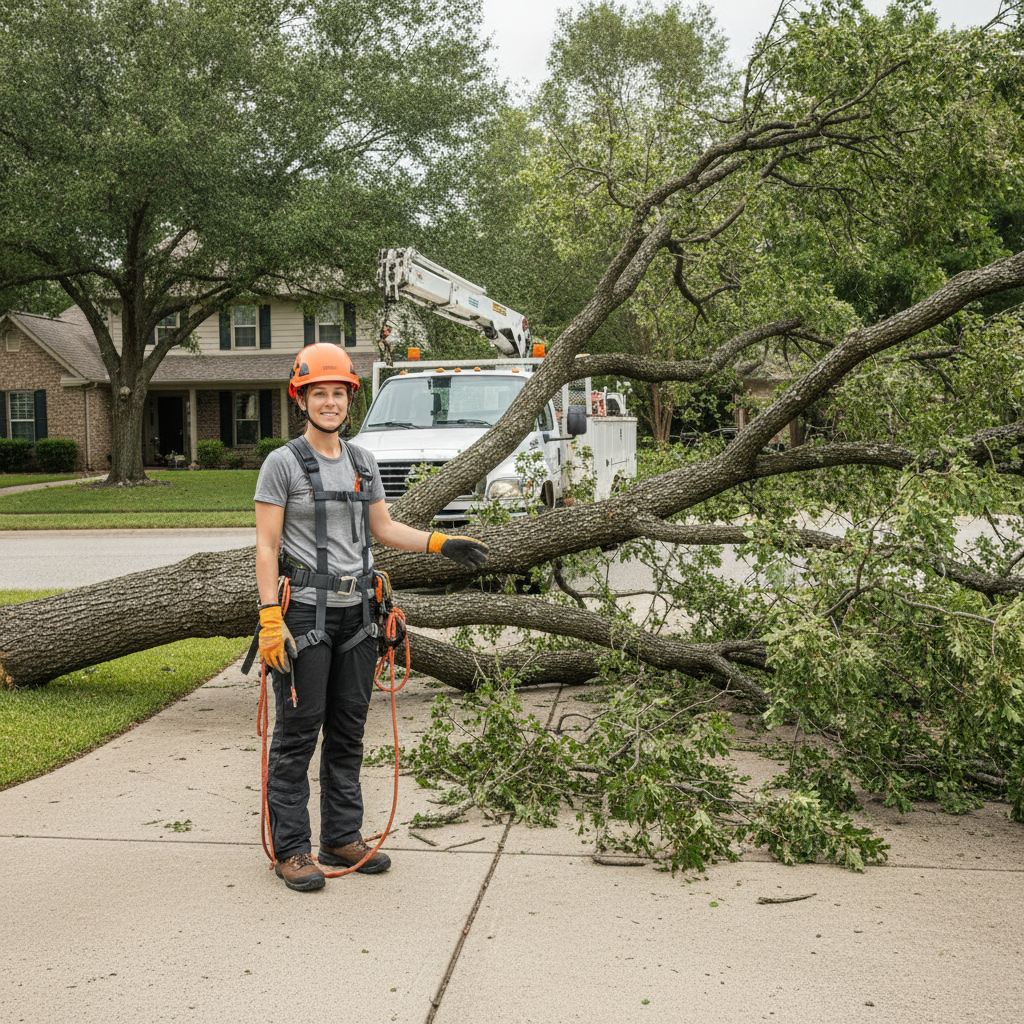
When a limb crashes through a roof or a storm drops a trunk across your driveway, you do not have time to browse around. You need help fast, and you need it from a crew that knows what it is doing. Finding the best emergency tree service Blue Island has to offer comes down to knowing what to look for before disaster strikes, because the worst time to vet a contractor is at 2 a.m. with wind still howling.
Whether you run a small business with a parking lot full of customers, manage a property, or simply own a home with mature trees, a fallen or leaning tree is more than an eyesore. It is a liability. Power lines, structures, vehicles, and people are all at risk when a tree fails. Acting quickly and choosing the right professionals can mean the difference between a manageable cleanup and a very expensive insurance headache.
In this guide, we walk through what counts as a tree emergency, what qualities separate great contractors from risky ones, how pricing works, and how to prepare your property so you are never caught off guard. Think of it as a practical playbook you can bookmark now and use when you need it most. By the end, you will know exactly how to evaluate your options with confidence, ask smarter questions, and protect both your property and your wallet when the unexpected happens.
Best Emergency Tree Service Blue Island Residents Can Trust
Trust is the foundation of any emergency service call. When you are stressed and the situation is urgent, it is tempting to hire the first truck that shows up. Unfortunately, storm-chasing operators sometimes knock on doors after severe weather offering cheap quotes, only to leave jobs half finished or damage property further. For related information, see emergency tree care.
A trustworthy provider answers the phone around the clock, gives you a realistic arrival window, and explains the plan before touching a saw. They carry proper licensing and insurance, and they are happy to show proof. Local roots matter too, since a company with a physical presence and years of community history has a reputation to protect. If you want a starting point for emergency tree care, look for crews who handle both urgent removals and larger clearing projects, because that range signals real equipment and real experience.
Ask for references, check online reviews, and pay attention to how professionally they communicate during that very first call. Clear, calm answers are a great sign that the crew will handle the job the same way.
Best Emergency Tree Service Blue Island, IL: What Sets Pros Apart
Professional tree crews differ from general handymen in training, equipment, and safety culture. Working with a tree under tension, such as one pinned by another tree or leaning on a structure, requires an understanding of load, rigging, and controlled cuts. One wrong move can send a trunk in an unexpected direction. For related information, see Best Emergency Tree Service Blue Island.
Look for certified arborists on staff, or at minimum a crew leader with documented training. Proper gear includes bucket trucks, cranes or rigging systems, chippers, stump grinders, and protective equipment for every worker. Ask how they secure the work zone and protect landscaping, fences, and rooftops during removal.
Another hallmark of a true professional is the willingness to say no. If a tree is too dangerous to touch without utility company involvement, a reputable contractor will tell you to wait for the power company rather than risk lives for a quick payment. Honesty about limits is a stronger credential than any sales pitch. Finally, a pro will document the damage with photos, which helps tremendously when you file an insurance claim later.
Best Emergency Tree Service Blue Island, Illinois: Reading the Signs
Not every tree problem is a true emergency, and knowing the difference saves money. A genuine emergency involves immediate danger to people or property. That includes a tree resting on a house, a limb tangled in power lines, a trunk blocking an access road, or a split tree that could fall at any moment.
Urgent but not critical situations include hanging branches, partial splits, or trees leaning after saturated soil shifts. These deserve a prompt visit within days. When you search for the Best Emergency Tree Service Blue Island area businesses recommend, ask whether they offer both rapid response and scheduled pruning, since preventive work often avoids the emergency in the first place.
Warning signs worth watching before a storm include dead branches, mushrooms at the base, cracks in the trunk, uneven leaf growth, and roots lifting the soil. Catching these early lets you schedule routine work at normal rates instead of paying emergency premiums later.
What Counts as a Tree Emergency
Understanding emergency categories helps you decide how fast to act and what to tell the dispatcher. Clear information lets a crew bring the right equipment on the first trip, which speeds up the entire response.
- A tree or large limb has fallen on a home, garage, vehicle, or fence.
- Branches are touching or tangled in electrical lines (stay far away and call the utility first).
- A tree blocks a driveway, road, or entrance to a business.
- A tree is visibly leaning, cracked, or uprooted after high winds or flooding.
- A large broken branch is hanging above a walkway, play area, or parking space.
When you call, describe the tree size, location, what it is touching, and whether anyone is at risk. Send photos by text if possible. This helps the crew assess urgency and prepare. Never attempt to cut a loaded or tangled tree yourself. Tension in a fallen trunk can release violently, and chainsaw injuries from storm cleanup send thousands of people to emergency rooms every year.
Questions to Ask Before You Hire
A few smart questions reveal a lot about a contractor. Even in an emergency, a two minute phone conversation can protect you from costly mistakes. Start with licensing and insurance. Ask specifically about general liability and workers compensation coverage, since uninsured injuries on your property can become your financial responsibility.
Next, ask about the scope of work. Does the quote include debris hauling, wood chipping, and stump handling, or only the cut and drop? Many homeowners are surprised by a pile of logs left in the yard after an unclear estimate. Request a written quote whenever possible, even a simple text or email confirming the price and tasks.
Finally, ask how soon they can arrive and whether they can tarp a damaged roof or secure the area temporarily. A company that offers temporary protection shows it understands the full scope of an emergency, not just the tree itself. Also ask about payment terms and accepted methods, so there are no surprises when the work wraps up.
Understanding Emergency Tree Service Pricing
Emergency work typically costs more than scheduled service because crews mobilize quickly, work odd hours, and face greater risk. That said, price should never be the only factor. The cheapest quote often hides missing insurance or skipped cleanup. Below is a general guide to what influences cost and typical ranges, though actual prices vary by tree size, access, and conditions.
| Service Type | Typical Range | Main Cost Factors |
|---|---|---|
| Fallen limb removal | $300 to $900 | Size, access, hauling |
| Full tree removal after storm | $800 to $3,000 | Height, structure damage, crane use |
| Tree on roof or structure | $1,500 to $5,000+ | Rigging, tarping, risk level |
| Stump grinding add-on | $150 to $600 | Diameter, root spread |
Always confirm what the number includes before work begins.
Insurance, Liability, and Claims
Many homeowner and commercial property policies cover storm-related tree damage, especially when a tree strikes a covered structure. Coverage details differ, so review your policy before you need it. Typically, insurers cover removal when a tree damages a building, fence, or vehicle, but may not cover removal of a tree that falls without causing damage.
Document everything. Take photos and video of the tree, the damage, and the surrounding area before any cleanup starts. Keep receipts and written estimates. A professional crew can supply an itemized invoice and notes describing the work performed, which makes the claim process smoother.
For small business owners, liability is an additional concern. If a fallen tree injures a customer or damages a neighbor’s property, your coverage and your contractor’s coverage both come into play. Hiring an insured professional shifts much of that risk away from you and keeps your legal exposure low. Contact your insurance agent right away, since most policies have reporting deadlines after a loss.
Safety Steps While You Wait for the Crew
Your actions in the first hour can prevent injuries. Start by keeping everyone away from the damaged tree, including children and pets. Fallen trees can shift, and partially broken limbs can drop without warning. Treat any downed line as live and stay at least thirty feet away.
- Call 911 if anyone is hurt or if power lines are involved.
- Contact your utility company about downed or tangled lines.
- Shut off gas, water, or electricity if the tree has damaged those systems.
- Take photos from a safe distance for insurance records.
- Move vehicles only if the path is clear and safe.
Resist the urge to climb on a damaged roof or cut the tree yourself. Wait for trained professionals who have the proper tools and protective gear. A calm, cautious approach keeps a bad situation from becoming a tragic one.
Preventive Care That Reduces Emergencies
The best emergency is the one that never happens. Regular maintenance dramatically lowers the odds of a sudden failure. Annual or biannual inspections by a qualified arborist can spot disease, decay, and structural weakness long before a storm exposes them.
Strategic pruning removes dead wood, thins overly dense canopies so wind passes through more easily, and corrects poor branch structure. Trees near buildings, parking areas, and power lines deserve extra attention. Proper mulching, watering during drought, and avoiding root damage from construction also keep trees healthier and more stable.
Think of tree care like car maintenance. A modest investment in routine service avoids the large, urgent bill that comes from neglect. For commercial properties, a documented maintenance schedule can also demonstrate due diligence if a liability question ever arises. Healthy, well-maintained trees add value, shade, and curb appeal while keeping everyone below them safer.
Choosing a Local Partner Before the Storm
The smartest move you can make is to build a relationship with a reliable crew before you need one. Save a trusted company’s number in your phone, review their services, and even schedule a routine inspection so they already know your property. When an emergency strikes, you skip the guesswork and make one confident call.
Research local options by reading recent reviews, checking business listings, and confirming credentials. A company like Prime Tree Care, Inc shows how a locally rooted business can be easy to find, easy to vet through public feedback, and ready to respond when conditions turn ugly.
During your search, pay attention to response time, communication style, and transparency about pricing. Those early impressions predict how the crew will act during a crisis. Taking an hour now to compare providers can save you days of stress later, and it puts you in a far stronger position when severe weather arrives.
Your Next Steps
Tree emergencies are stressful, but they do not have to be chaotic. The recipe for a smooth outcome is simple: know what qualifies as an emergency, vet contractors for licensing, insurance, and experience, understand how pricing works, and keep everyone safe while you wait for help. Every one of those steps becomes easier when you prepare ahead of time rather than scrambling in the middle of a storm.
Start by walking your property and noting any trees that look weak, dead, or too close to structures. Schedule an inspection for anything questionable. Save the contact information of a dependable crew, confirm their insurance, and review your own policy so you know what is covered. Document your trees with photos while they are healthy, since before and after images can support a future claim.
Finding the best emergency tree service Blue Island offers is ultimately about trust, speed, and professionalism working together. When you choose a crew that communicates clearly, works safely, and treats your property with respect, you turn a frightening event into a manageable one. Take a few minutes this week to make your plan, and you will be ready long before the next storm rolls through.