
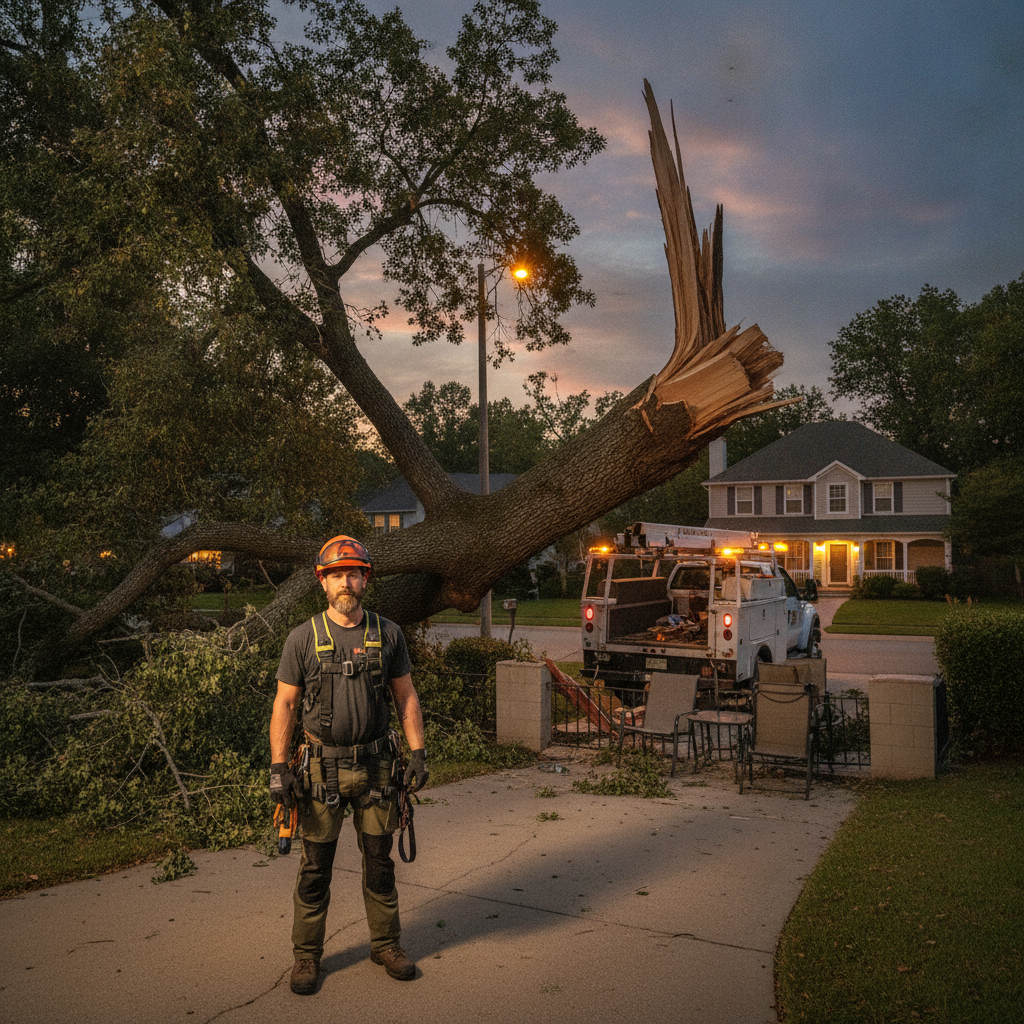
A storm rolls through at midnight, and by sunrise a massive limb is resting on your roof, or worse, an entire trunk is blocking your driveway. In that moment, you do not need a quote a week from now. You need a 24-Hour Emergency Tree Service that picks up the phone, shows up fast, and handles the danger safely. Fallen trees can damage homes, cut power, block roads, and injure people, which is why quick, professional action matters so much.
This guide is written for homeowners, small business owners, property managers, and anyone who wants to be prepared before the next big storm hits. We will walk through what counts as a tree emergency, what to do in the first few minutes, how crews work, what it costs, and how insurance fits in. We will also cover prevention, because the best emergency is the one that never happens.
Whether you manage a storefront with mature trees out front or a family home with a century-old oak in the yard, knowing your options ahead of time takes the panic out of a crisis. Keep this guide handy, share it with neighbors, and use it to make smart decisions when the wind picks up and the clock starts ticking.
Emergency Tree Services in Blue Island
When a tree comes down unexpectedly, local expertise makes a real difference. Crews who work in this part of the Chicago area understand the soil, the common species, and the types of storms that roll off Lake Michigan and across the southland. They know which streets flood, which alleys are tight, and which utility lines run low through older neighborhoods. For related information, see tree services.
Reliable tree services should offer round-the-clock dispatch, trained climbers, proper rigging equipment, and a clear process for assessing danger before any cutting begins. A true 24-Hour Emergency Tree Service does not treat nights and weekends as an afterthought. It staffs for them, because storms do not follow business hours.
Look for crews who carry liability insurance and workers compensation, since emergency work is inherently risky. Ask whether they provide on-site safety assessments, whether they can coordinate with utility companies, and whether they can tarp a damaged roof if needed. The right provider treats your emergency like their own.
24-Hour Emergency Tree Service in Blue Island, IL
What does a genuine 24-Hour Emergency Tree Service look like in practice? It starts with a live dispatcher, not a voicemail box. You describe the situation, the dispatcher asks key questions about location, size, and hazards, and a crew is routed to your address with an estimated arrival time. For related information, see tree removal and cleanup services.
For small business owners, this speed protects revenue. A downed tree blocking a parking lot or entrance can shut your doors for the day. Property managers face similar pressure, since tenants expect fast action and liability concerns grow with every hour a hazard sits unaddressed.
In the Chicago suburbs, severe thunderstorms, derechos, ice storms, and heavy snow are the usual culprits. Crews working locally often keep trucks stocked and ready during storm season, which cuts response time dramatically. If you are researching providers, ask how many emergency calls they handle each year. Experience with high-volume storm response shows they can triage properly and prioritize the most dangerous situations first.
24-Hour Emergency Tree Service in Blue Island, Illinois
Cleanup is often the part people forget to plan for. Removing a fallen tree is only half the job. Branches, root balls, sawdust, and scattered debris can linger for weeks if your provider does not include hauling. That is why it helps to choose a company offering complete tree removal and cleanup services so you are not left with a pile of logs and a headache.
A full-service emergency response typically includes stabilizing the hazard, cutting the tree into manageable sections, removing it from structures or roadways, and clearing debris from the site. Some crews also offer stump grinding, log splitting, and yard restoration once the immediate danger has passed.
Before work begins, confirm what the quote includes. A clear scope prevents surprise charges and keeps everyone aligned. Ask about disposal fees, equipment access, and whether the crew will rake and blow the area clean. Detailed communication up front is the hallmark of a professional operation and a good sign that your 24-Hour Emergency Tree Service partner respects your property.
What Counts as a Tree Emergency?
Not every tree problem needs a midnight call, but some absolutely do. A real emergency involves immediate danger to people, property, or critical access. Knowing the difference saves money and keeps crews available for the situations that truly cannot wait.
- A tree or large limb resting on a house, garage, or vehicle
- A tree tangled in or leaning against power lines
- A trunk blocking a driveway, street, or business entrance
- A leaning tree with exposed roots or fresh soil cracks after a storm
- Large hanging branches that could drop at any moment
Situations like a dead tree standing far from structures or a minor broken twig can usually wait for a regular appointment. When in doubt, call and describe what you see. A good dispatcher will help you decide whether it needs immediate attention or can be scheduled within a day or two.
What to Do Before the Crew Arrives
Your first priority is safety. Move everyone away from the damaged tree, especially if it is leaning or if limbs are hanging overhead. Keep children and pets indoors, and do not walk beneath compromised branches, even if they look stable. Wood under tension can snap without warning.
If a tree is touching or near a power line, treat the line as live. Stay at least 30 feet away and call your utility provider and emergency services. Never attempt to move branches that are in contact with wires, and never drive over downed lines.
Once everyone is safe, document the damage. Take clear photos from several angles before anything is moved, since your insurance company will want evidence. Note the time the damage occurred and any weather conditions. If water is entering your home through a damaged roof, place buckets and move valuables when it is safe to do so. These simple steps protect both people and your future claim.
How a Professional Emergency Crew Works
Professional crews follow a structured process, even in chaotic conditions. The first step is a hazard assessment. The crew leader walks the site, identifies tension points, checks for utility conflicts, and decides how to remove the tree without causing further damage.
Next comes the plan. Depending on access, the team may use ropes and rigging to lower sections carefully, or a crane or bucket truck for larger trees over structures. Sections are cut in a deliberate order so the weight shifts predictably, reducing the chance of a secondary collapse.
After the tree is removed, the crew inspects what remains. They look for cracked limbs, damaged roots, and other trees weakened by the same storm. A thorough 24-Hour Emergency Tree Service will flag these risks and recommend follow-up work. If you are curious about the team behind the work, you can review feedback on the company profile for Prime Tree Care, Inc to see how customers describe their experience.
Typical Costs and Factors That Affect Pricing
Emergency work usually costs more than scheduled work, and that is reasonable. Crews are mobilized outside normal hours, working in hazardous conditions, and often handling complex rigging. Still, pricing should be transparent. The table below outlines the main factors that influence what you pay.
| Factor | How It Affects the Price |
|---|---|
| Tree size and species | Larger, denser trees take more time and equipment |
| Location and access | Tight yards or backyards may require rigging or cranes |
| Structure damage | Trees on roofs need careful, slower removal |
| Time of response | Nights, weekends, and holidays often carry premiums |
| Debris cleanup and hauling | Full cleanup adds labor and disposal costs |
Insurance Claims and Documentation
Many homeowners policies cover tree removal when a tree damages a covered structure, such as a house, garage, or fence. Coverage often does not apply if a tree falls without hitting anything, though some policies include limited debris removal allowances. Read your policy or call your agent before the next storm so you know what to expect.
Good documentation speeds up claims. Keep your photos, take notes on the date and time, and save all receipts and invoices from your 24-Hour Emergency Tree Service. Ask the crew for a written description of the work performed, including what was removed and why it was an emergency.
Business owners should check commercial property coverage as well, including business interruption provisions if a fallen tree forces you to close temporarily. Adjusters appreciate clear, organized records, and a professional crew will usually provide them without being asked.
How to Choose a Trustworthy Provider
Storm chaos attracts unqualified operators who knock on doors offering quick cash deals. Be careful. A legitimate provider has a physical business presence, proof of insurance, and a track record you can verify. Never pay in full upfront, and be wary of anyone pressuring you to sign immediately.
- Ask for proof of liability insurance and workers compensation
- Request a written estimate that lists the scope of work
- Check online reviews and ask about local references
- Confirm that they have trained, certified climbers on staff
- Verify that dispatch is truly available around the clock
A reputable company will welcome these questions. If a provider gets defensive or vague, move on. Your property and your safety are too valuable to trust to someone who cannot answer basic questions about their business.
Preventing Tree Emergencies Before They Start
Many emergencies are preventable. Regular inspections by a certified arborist can catch structural weaknesses, disease, decay, and root problems before a storm exposes them. Proactive pruning removes dead wood, reduces wind resistance, and keeps branches clear of rooflines and power lines.
Watch for warning signs throughout the year. Mushrooms growing at the base, large dead branches, cracks in the trunk, leaning that is new or worsening, and thinning canopies all point to trouble. Trees stressed by drought, construction, or compacted soil are especially vulnerable.
Schedule an annual walk-through, ideally in late winter or early spring before storm season ramps up. For commercial properties, this small investment protects customers, employees, and your bottom line. Think of it as insurance that you control. A little attention now can spare you from needing a 24-Hour Emergency Tree Service at the worst possible moment.
Seasonal Storm Preparation Checklist
Preparation takes the stress out of emergencies. Before storm season, save the number of a trusted provider in your phone so you are not scrambling online while branches are crashing around you. Share it with family members, employees, and neighbors.
- Inspect trees near your home, garage, and parking areas each spring
- Trim branches that hang over roofs or touch utility lines through a qualified pro
- Keep photos of your property in good condition for comparison
- Review your insurance coverage and deductibles annually
- Keep a flashlight, charged phone, and basic first aid kit accessible
After any major storm, walk your property carefully and look up. Damage is not always obvious from the ground, and hanging limbs can drop days later. If something looks suspicious, have a professional take a look before it becomes an emergency.
Final Thoughts
Tree emergencies are stressful, but they do not have to be chaotic. The key is knowing what qualifies as an emergency, keeping everyone safe while you wait, and choosing a provider who treats your situation with urgency and care. A dependable 24-Hour Emergency Tree Service gives you a single call that starts the solution, from the first safety assessment through the final cleanup.
Remember the main takeaways. Put safety first and stay away from anything touching power lines. Document damage with clear photos before anything is moved. Ask potential providers about insurance, experience, and what their quote includes. Understand your own policy before a storm, not after. And invest in prevention, because routine inspections and pruning are far cheaper than emergency removal.
Whether you own a home, run a shop, or manage multiple properties, a little preparation goes a long way. Save a trusted number today, walk your property this week, and make a plan with your family or team. When the next storm arrives, you will already know exactly what to do, who to call, and how to get back to normal as quickly and safely as possible.