
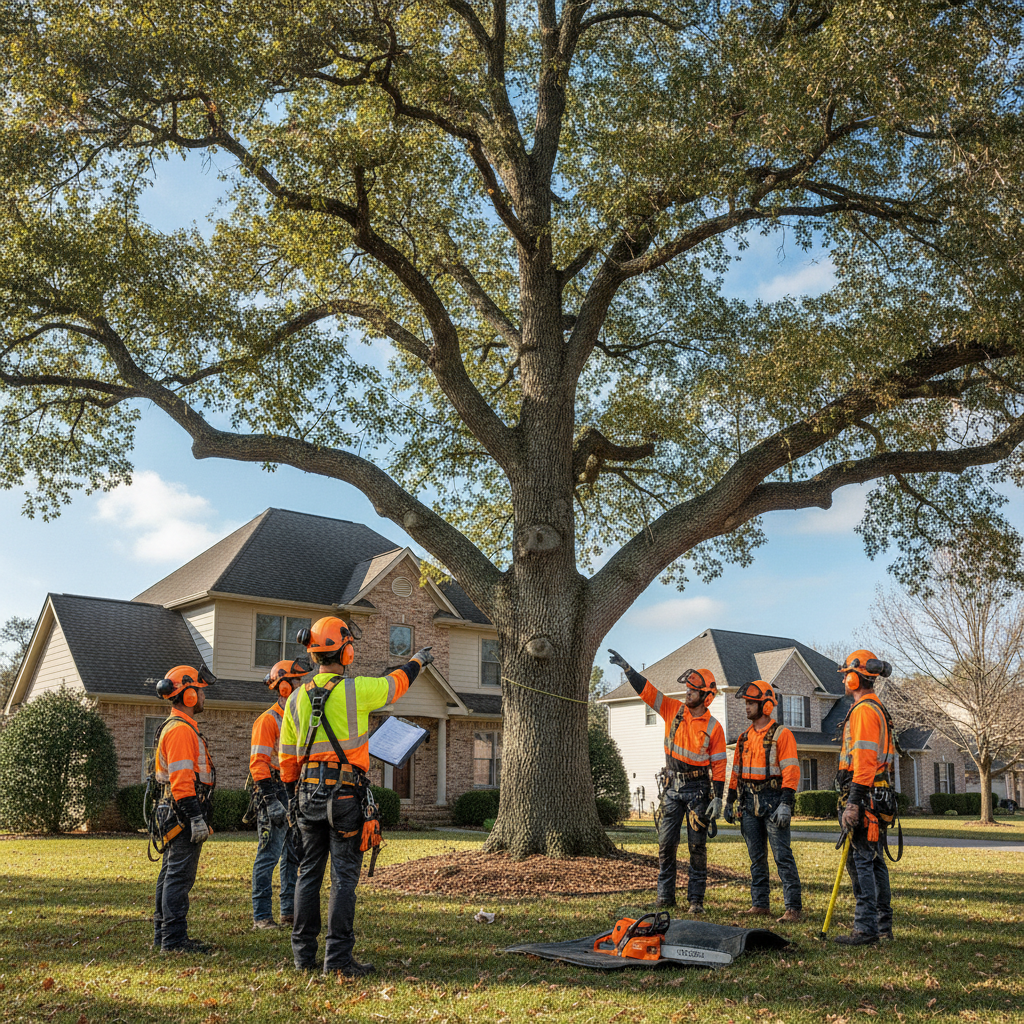
A big tree coming down is one of the most dramatic things that can happen on a property. Done right, it clears space, protects your home, and removes a hazard. Done wrong, it can mean a crushed fence, a damaged roof, a lawsuit, or a bill that keeps growing. Homeowners, landlords, and small business owners all face the same challenge: how to avoid tree removal mistakes when the market is full of companies with similar promises and wildly different results. Some crews are insured professionals with real training. Others are a truck, a chainsaw, and a cheap quote. The difference is not always obvious until something goes wrong.
This guide walks through the most common errors people make when hiring, from skipping insurance checks to falling for rock-bottom pricing. You will learn what questions to ask, which warning signs to watch for, and how to compare estimates fairly. Whether you are dealing with a storm-damaged oak, a dead ash tree, or a commercial lot that needs clearing, a little preparation goes a long way. Think of this as a practical checklist you can use before you ever sign an estimate. By the end, you will know how to protect your property, your wallet, and your peace of mind.
Avoid Tree Removal Mistakes in Blue Island
The first step to avoid tree removal mistakes is understanding why they happen so often. Most people hire in a hurry. A branch crashes through the yard after a storm, a neighbor complains about a leaning trunk, or an insurance adjuster flags a hazard, and suddenly the homeowner has a day or two to find help. Pressure leads to shortcuts, and shortcuts are where bad hires slip through. For related information, see tree removal.
A smarter approach is to treat the decision like any other major home service purchase. Gather at least three written estimates, ask each company the same questions, and compare the answers side by side. Reliable professionals expect this and welcome it. When you need dependable tree removal, the best providers explain their process clearly, walk the property with you, and point out risks you may not have noticed, such as nearby power lines, root systems under a driveway, or a shared property line.
Take your time where you can. Even a day of research beats weeks of regret.
Common Hiring Errors for Tree Removal in Blue Island, IL
Across the region, the same handful of hiring errors show up again and again. Knowing them in advance lets you sidestep them. Here are the ones that cause the most expensive trouble: For related information, see Prime Tree Care, Inc.
- Hiring the first company that answers the phone without comparing estimates.
- Accepting a verbal quote instead of a detailed written one.
- Choosing solely on price, which usually signals cut corners on safety or insurance.
- Paying the full amount upfront before any work begins.
- Skipping a check of reviews, references, and past work.
- Ignoring whether the company handles cleanup and debris hauling.
Each of these seems minor in the moment. Together, they explain why so many property owners end up with half-finished jobs, surprise charges, or damage nobody wants to take responsibility for. The fix is simple: slow down, ask questions, and get everything in writing before a single branch is cut.
Choosing a Tree Removal Company in Blue Island, Illinois
Choosing well starts with knowing what a qualified company looks like. A solid operation has a physical business presence, trained crew members, proper equipment, and a track record you can verify. Many local operators also offer a range of services beyond felling trees, such as pruning, stump grinding, and storm response. A company like Prime Tree Care, Inc that offers pruning alongside removal can often advise whether a tree truly needs to come down or whether careful trimming could save it. For additional service details and local availability, readers can visit our site.
That kind of honest assessment is a good sign. A company that recommends removal for every tree it sees may be more interested in the invoice than in your yard. Ask the estimator to explain why removal is necessary, what risks the tree poses, and what alternatives exist. If the answer is vague, pushy, or full of scare tactics, keep looking. The best contractors educate rather than pressure, and they leave you feeling informed instead of rushed.
Skipping Proof of Insurance and Licensing
This is the single most costly mistake on the list. Tree work is among the most dangerous jobs in the country, and accidents happen even to skilled crews. If an uninsured worker falls from your tree, you could be on the hook for medical bills. If a dropped limb crushes your neighbor’s car, the claim may land on your homeowner’s policy.
Always request a certificate of insurance and confirm two coverages: general liability and workers’ compensation. Do not just accept a photo of a document. Call the insurance carrier listed to verify the policy is active and covers the dates of your job. Ask about any local permits or licenses required for tree work in your municipality, since some trees on protected or public land need approval before removal.
A legitimate company will provide this paperwork quickly and without complaint. If an estimator dodges, delays, or gets defensive, treat it as a hard stop. No discount is worth that level of exposure.
Falling for the Lowest Price
Everyone loves a bargain, but tree work is a field where the cheapest bid often becomes the most expensive result. Rock-bottom pricing usually means one of several things: no insurance, untrained labor, worn-out equipment, or a plan to inflate the price once the job is underway. Some operators quote low to win the job, then add fees for cleanup, hauling, or “unexpected complications.”
Instead of chasing the lowest number, compare what each quote actually includes. A fair estimate should itemize the work: the number of trees, the height and condition of each, the cutting method, debris removal, stump handling, and total cost. When two quotes differ by hundreds of dollars, find out why. Often the higher bid includes insurance, proper rigging, and cleanup, while the lower one leaves those out.
Value is about what you get for the money, not how little you spend. Paying a fair price to a qualified crew is almost always cheaper than repairing the damage from a careless one.
Ignoring Reviews and Local Reputation
A company’s reputation tells you what a sales pitch never will. Read recent reviews on multiple platforms and look for patterns rather than isolated comments. One angry review can be an outlier. Ten reviews mentioning no-shows, damaged lawns, or surprise charges are a pattern. Likewise, consistent praise for punctuality, clean job sites, and honest pricing is a strong signal.
Do not stop at star ratings. Read how the business responds to criticism. Professionals reply calmly and offer to fix problems, while questionable operators argue or ignore complaints entirely. Ask each company for two or three recent references and actually call them. Neighbors and community groups are another valuable source, since locals tend to remember who did good work on a nearby street.
Be cautious of companies with no online footprint, no address, or a name that changes often. Established businesses want their work to be seen and remembered, and they have little to hide.
Overlooking Cleanup and Stump Details
Many homeowners assume cleanup is automatic, only to find a mountain of logs and branches left in the yard. Before you agree to anything, clarify exactly what happens after the tree is down. Will the crew haul away all debris, or just the large pieces? Will they chip the branches and leave mulch, rake the area, or leave sawdust behind? Is wood left for firewood if you want it?
Stumps are the other common surprise. Some quotes cover only the trunk, leaving a stump that costs extra to grind later, and an unremoved stump can attract pests, regrow shoots, and block future landscaping. Ask whether grinding is included and how deep it goes. Also ask about roots near foundations, sidewalks, or sewer lines, since aggressive grinding near them can cause damage.
Getting these details in writing prevents the awkward conversation later where you are told that cleanup was never part of the deal.
Red Flags Versus Green Flags
Sometimes the quickest way to avoid tree removal mistakes is to keep a simple comparison in mind. The table below sums up behaviors that separate trustworthy companies from risky ones, so you can spot them during the first phone call or estimate visit.
| Area | Green Flag | Red Flag |
|---|---|---|
| Insurance | Provides certificate on request | Avoids or delays the question |
| Estimate | Written and itemized | Verbal or one lump number |
| Payment | Paid on completion | Demands full cash upfront |
| Approach | Explains options and risks | Pressures with scare tactics |
| Equipment | Proper rigging and safety gear | Basic saw and no protection |
Questions to Ask Before You Sign
A short list of smart questions can reveal almost everything you need to know. Treat the estimate visit like a brief interview, and note how each company responds. Confident professionals answer clearly and without irritation.
- Can you show proof of general liability and workers’ compensation coverage?
- Is there a certified arborist on the team or supervising the job?
- What is your plan for protecting my lawn, roof, fences, and utility lines?
- Does the price include debris hauling, cleanup, and stump work?
- How long will the job take, and what happens if weather delays it?
- Do you offer a written contract with a clear scope and total price?
Pay attention to more than the answers. A company that listens, takes notes, and asks you questions in return is usually one that cares about the outcome. If you would like to see what a well-organized provider looks like, visit our site and compare how clearly services and contact details are presented.
Timing, Weather, and Emergency Situations
Timing affects both price and safety. Booking in the off-season, typically late fall through winter for many regions, can mean lower rates and more flexible scheduling because demand is lighter. Dormant trees are also easier to assess since the structure is visible without leaves. Waiting until a tree is visibly failing, on the other hand, can turn a routine job into a rush job.
Emergencies are the biggest trap. After a major storm, out-of-town crews often appear going door to door, offering immediate service at inflated prices and requesting cash upfront. Be wary of anyone who knocks unsolicited. If a tree has fallen on your home, call your insurance company first, then contact a trusted local business that can respond safely.
Keep a vetted contact saved before you ever need one. Having a reliable name on hand turns a stressful emergency into a manageable phone call. Also watch the forecast, since high winds and saturated soil make removal riskier and may justify rescheduling.
Putting It All Together
Choosing the right company is mostly about discipline. Verify insurance, demand written estimates, compare scope instead of just price, read the reviews, and clarify cleanup before work starts. None of these steps are complicated, but skipping any one can turn a simple job into a costly headache. The more you treat tree work like the serious, high-risk service it is, the better your results will be.
If you want a local option to include in your comparison, you can review the business profile for Prime Tree Care, Inc and read what past customers have said. Use the same checklist on every company you consider, and let the facts guide your decision instead of urgency or a low number on a quote.
Final Thoughts
Hiring a tree service does not have to be stressful, but it does deserve real attention. The biggest regrets people share almost always trace back to the same few decisions: hiring too fast, trusting a verbal promise, choosing the cheapest bidder, or never checking insurance. Each of those errors is easy to prevent with a little preparation and a willingness to ask direct questions. When you commit to avoid tree removal mistakes before the first branch is cut, you protect your property, your neighbors, and your budget all at once.
Start by gathering several written estimates and comparing exactly what each one includes. Confirm that every company carries active liability and workers’ compensation coverage, and verify it yourself. Read reviews for patterns, call references, and pay attention to how each estimator treats you. The professionals worth hiring explain their process, respect your questions, and put everything in writing without hesitation.
Remember that a tree is a long-term part of your landscape and sometimes a serious safety concern. Treating its removal as a careful, informed purchase rather than a rushed chore pays off for years. Take a breath, use the checklist from this guide, and choose a team that earns your trust through transparency and skill. A clear yard, an undamaged home, and a fair final bill are all within reach when you hire wisely.