
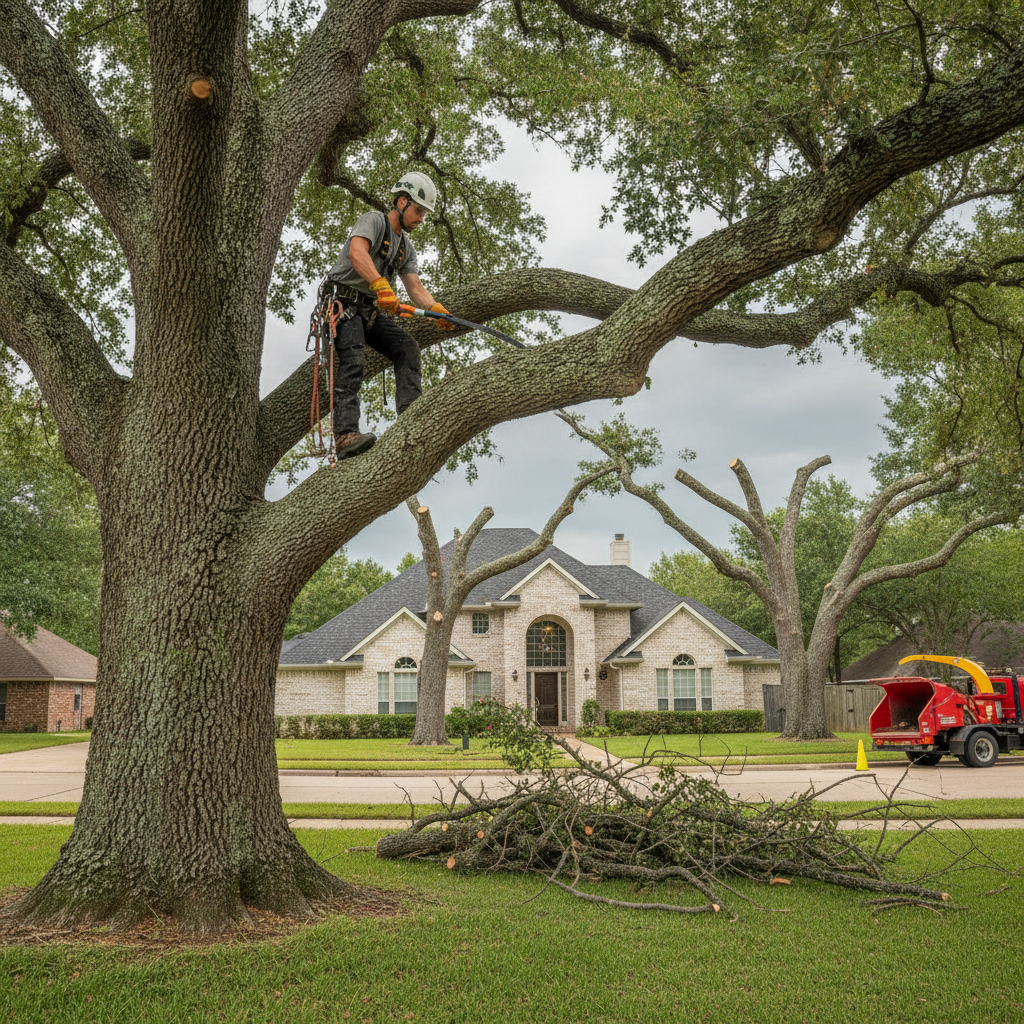
Every spring and summer, the Midwest reminds us how quickly a calm afternoon can turn violent. Thunderstorms roll across Lake Michigan, straight-line winds tear through neighborhoods, and heavy rain soaks the ground until roots lose their grip. If you own a home, a shop, or a commercial property, smart storm preparation Blue Island property owners can rely on starts with the trees standing above your roof, your parking lot, and your power lines.
Most people think of storm readiness as sandbags, flashlights, and a charged phone. Those things matter, but the most expensive storm damage often comes from something much larger: a limb the size of a car crashing through a roof, or a whole tree toppling onto a vehicle or a storefront. The good news is that much of this risk can be reduced long before the first dark cloud appears.
Tree pruning is one of the most underrated forms of protection available to property owners. When done correctly, it lowers wind resistance, removes weak and dying wood, and keeps branches clear of buildings and utility lines. It also keeps your trees healthier and better looking year-round.
In this guide, we walk through why pruning matters, what professionals look for, when to schedule the work, what it costs to skip it, and how to build a simple plan that fits your property. Whether you run a small business, manage a development, or simply love the trees on your lot, you will walk away with practical steps you can use right away.
Storm Preparation Blue Island: Why Pruning Comes First
When a storm hits, trees act like giant sails. Dense canopies catch wind and transfer enormous force down the trunk and into the root system. A tree that has not been thinned or shaped can easily become a hazard when gusts climb past 50 or 60 miles per hour. Pruning reduces that sail effect by letting air move through the canopy instead of pushing against it. For related information, see Prime Tree Care, Inc.
Professional crews such as Prime Tree Care, Inc approach pruning as a structural process, not just a haircut. They look at branch attachment, trunk taper, weight distribution, and the overall balance of the crown. Removing the right limbs at the right angles strengthens the tree and sends growth where it is safest.
Think of pruning as preventive maintenance, similar to changing the oil in your car or servicing a furnace before winter. The cost is small compared to the repair bill that follows a failure, and the benefits show up every season, not just during severe weather.
Storm Preparation Blue Island, IL: Common Tree Hazards
Not every tree problem is obvious from the ground. Some of the most dangerous defects hide in the canopy or inside the trunk. Knowing what to watch for helps you decide when to call for an inspection instead of waiting for a storm to make the decision for you. For related information, see tree care for storm preparedness.
- Dead or hanging branches that can drop without warning
- Co-dominant stems that split into a V shape and tear apart under load
- Limbs growing over roofs, garages, or driveways
- Branches touching or nearing power and phone lines
- Cracks, cavities, or fungal growth on the trunk
- Leaning trees with recently heaved soil at the base
Any one of these issues raises risk. Several together can turn an ordinary thunderstorm into a costly emergency. A quick walk around your property each season, looking up as well as down, can reveal problems early enough to fix them on your schedule instead of the weather’s.
Storm Preparation in Blue Island, Illinois: Local Weather Realities
Northeastern Illinois sees a full spectrum of severe weather. Spring brings fast-moving thunderstorms and the occasional tornado warning, summer delivers derechos and microbursts, and winter adds ice storms and heavy, wet snow that bends branches to the breaking point. Each type of storm stresses trees differently, which is why a year-round mindset beats a last-minute scramble. For additional service details and local availability, readers can visit our site.
Soil conditions play a role too. Clay-heavy ground common across the Chicago region holds water for days after a downpour, loosening the anchor that roots provide. Add compacted soil from construction, sidewalks, and parking areas, and even healthy trees can have a limited root zone to work with.
Established neighborhoods with mature shade trees face another challenge: many were planted decades ago and have never been structurally pruned. Big trees close to older homes and small commercial buildings leave very little margin for error. Understanding how local weather and soil interact with your trees is the foundation of any realistic plan, and it is why tree care for storm preparedness works best when it is tailored to the property rather than copied from a generic checklist.
How Pruning Reduces Wind Damage
Wind damage follows predictable patterns, and pruning targets each one. Crown thinning removes a modest percentage of interior branches so air can pass through the canopy. Crown reduction shortens overextended limbs to lighten the load on the trunk. Crown raising lifts low branches away from roofs, vehicles, and walkways. Deadwooding removes branches that are already compromised.
The key is moderation. Over-pruning, often called topping, is one of the worst things you can do to a tree. It creates weak, fast-growing shoots that attach poorly and break easily in the next storm. It also exposes the tree to disease and sunscald. A skilled arborist makes small, precise cuts at the branch collar to help the tree seal wounds quickly.
If you need an emergency response after a storm has already caused damage, you can visit our site to learn how urgent tree service works. Still, the goal of preventive pruning is to make that call unnecessary in the first place.
Protecting Homes, Vehicles, and Storefronts
A single fallen limb can cause thousands of dollars in damage. Roofs puncture, gutters tear away, siding cracks, windows shatter, and cars get crushed. For business owners, the losses stack higher: a blocked entrance, a damaged sign, a closed parking lot, and lost revenue while repairs drag on.
Pruning creates a buffer zone around structures. Industry guidance often recommends keeping branches several feet clear of rooflines and maintaining a healthy gap between the canopy and the building. That clearance does more than prevent impact damage. It also keeps debris out of gutters, reduces moisture on shingles, and limits pest access to your attic.
Parking areas deserve special attention. Customers and employees park beneath trees without a second thought, yet overhanging branches can fail during wind or ice. Lifting the canopy and removing weak limbs above parking spaces is a quick, high-value improvement that protects both people and property.
Power Lines and Utility Safety
Trees and power lines are a risky combination. When branches contact lines during a storm, the result can be outages, sparks, or even fires. Many widespread blackouts begin with a single limb bringing down a line. Keeping trees away from utilities is one of the most effective ways to protect your neighborhood from extended power loss.
Working near energized lines is extremely dangerous and should never be a do-it-yourself project. Trained line clearance professionals understand the required distances, the proper equipment, and the coordination needed with the utility company. Even a branch that looks harmless can carry current if it touches a live wire.
If you notice branches growing toward service lines to your home or business, treat it as a priority. Directional pruning guides growth away from the lines over time, reducing the need for repeated heavy cuts. Planning ahead also helps you avoid the frustration of long outages when the next severe weather system arrives.
The Best Time of Year to Prune
Timing matters for both tree health and storm readiness. For many species, late winter and early spring, before buds break, is an ideal window. Trees are dormant, structure is easy to see without leaves, and wounds close quickly once growth resumes. Pruning at this time also gets the work done before peak storm season.
Some species have special needs. Oaks, for example, should generally not be pruned during the warm months because of disease risk. Spring-flowering trees may be best pruned right after blooming to protect next year’s flowers. Dead or hazardous limbs can come out at any time of year, since safety outweighs seasonal timing.
The table below offers a simple seasonal guide you can use when planning your yearly maintenance calendar.
| Season | Best Pruning Focus | Storm Benefit |
|---|---|---|
| Late Winter | Structural pruning and crown thinning | Stronger frame before storm season |
| Spring | Deadwood removal and clearance cuts | Fewer falling limbs in thunderstorms |
| Summer | Hazard limb removal and inspections | Quick fixes before peak winds |
| Fall | Light cleanup and risk assessments | Preparation for ice and heavy snow |
DIY Pruning vs. Hiring a Professional
Small jobs like trimming low shrubs or snipping a few thin branches within easy reach can be handled by a careful homeowner. Anything involving ladders, chainsaws, large limbs, or work above head height is a different story. Falls and cutting injuries send thousands of people to emergency rooms each year, and tree work is consistently ranked among the most hazardous occupations.
Professionals bring more than equipment. They bring training in tree biology, proper cutting technique, rigging methods, and risk assessment. They also carry insurance, which protects you if something goes wrong. Hiring an uninsured crew can leave you responsible for injuries or damage on your property.
A good arborist will walk the property with you, explain what needs to be done and why, and avoid pushing unnecessary work. If someone suggests topping a tree or removing most of the canopy in a single visit, treat that as a red flag. Quality pruning is deliberate, measured, and focused on long-term health.
The Real Cost of Skipping Maintenance
Routine pruning is a modest, predictable expense. Emergency removal and repair after a failure is neither. A fallen tree can mean crane work, debris hauling, roof repair, fence replacement, and insurance deductibles, all arriving at once and at the worst possible time.
Insurance does not always solve the problem. Some policies limit coverage for trees that were visibly dead or neglected before the storm, and claims can raise future premiums. Documenting regular maintenance, including invoices and inspection notes, helps show that you acted responsibly if a claim ever becomes necessary.
There is also the human cost. Injuries, displaced families, and closed businesses are far more difficult to recover from than a damaged roof. Spending a little each year to keep trees safe is one of the most affordable forms of risk management available, and it adds to curb appeal and property value at the same time.
Building a Simple Yearly Tree Care Plan
You do not need a complicated system to stay ahead of storm damage. A short, repeatable routine is enough for most properties. Start by listing your major trees, noting their species, size, and proximity to structures and lines. Then schedule an annual inspection with a certified arborist, ideally in late winter.
- Walk the property each season and look for new cracks, dead limbs, or leaning
- Photograph your trees yearly so changes are easy to spot
- Keep mulch rings wide and free of piled soil against trunks
- Water deeply during dry spells to keep roots strong
- Address problems quickly instead of waiting for the next storm
If you want a local company to review your property, you can find Prime Tree Care, Inc on the map and see how nearby customers describe their experience.
Your Next Steps
Storms are a fact of life in this part of the country, but heavy damage does not have to be. The trees on your property can be an asset, offering shade, beauty, and value, or a liability waiting for the wrong gust of wind. Pruning is the bridge between those two outcomes, and it is far easier and cheaper to do before a storm than after.
Smart storm preparation Blue Island residents and business owners can trust starts with a clear look at what is overhead. Check for dead limbs, crowded canopies, branches near roofs and lines, and any signs of decay or leaning. Treat each of those findings as a to-do item rather than something to worry about later.
Remember the core ideas covered here: prune with purpose instead of topping, schedule work before peak storm season, keep a safe distance from utilities, hire qualified professionals for anything risky, and keep a simple record of your maintenance. These habits protect your family, your customers, your vehicles, and your investment.
Do not wait for the next warning siren to start thinking about your trees. Schedule an inspection, make a plan, and tackle the highest-risk items first. A few hours of careful work now can save you from weeks of cleanup, stress, and expense later, and it leaves your property healthier, safer, and ready for whatever the forecast brings.