
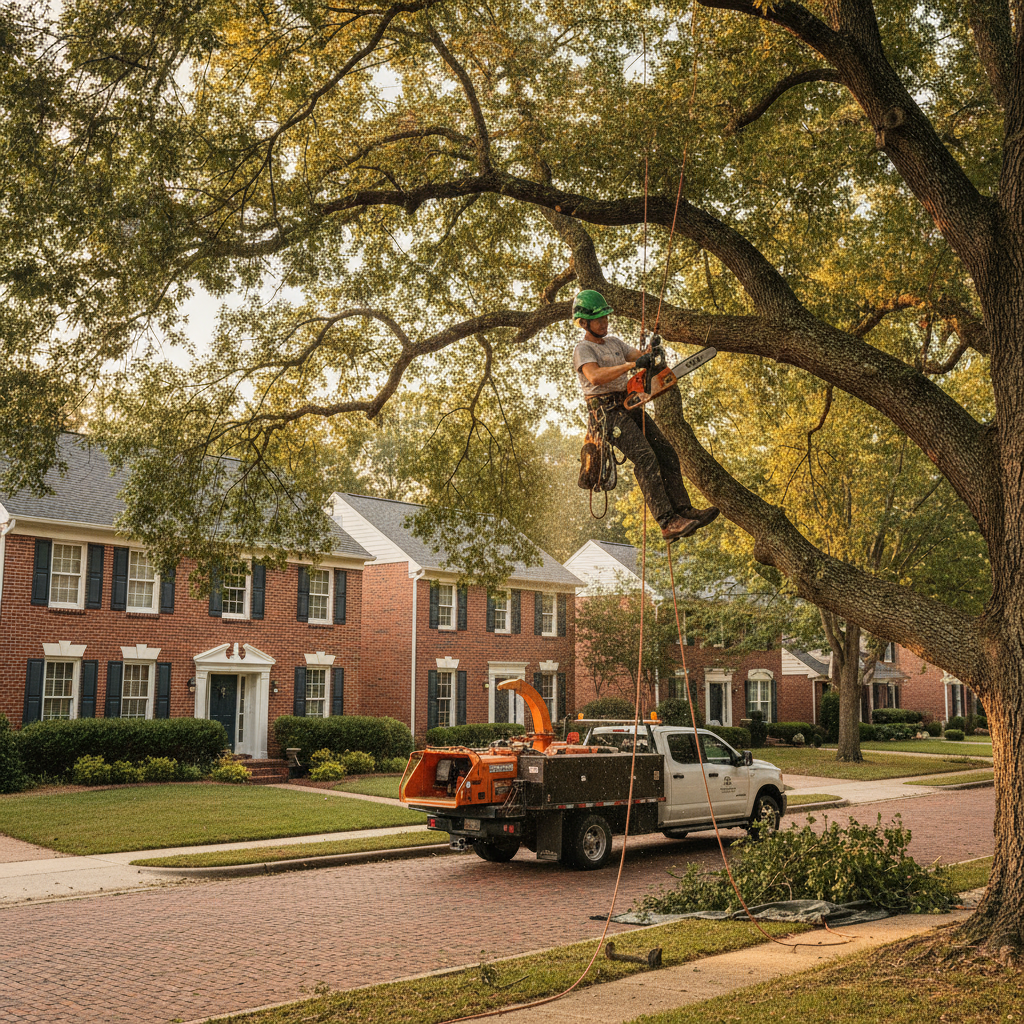
If you own a home or a business property, you already know that trees are a double-edged sword. A healthy, well-placed tree adds shade, curb appeal, and real market value. A neglected or storm-damaged one can crack a roof, take down a power line, or leave you with a legal headache. That is exactly why choosing local tree services Blue Island property owners can trust is one of the smartest decisions you can make for your land, your budget, and your peace of mind.
Tree work is not a place to gamble on the cheapest quote or the flashiest truck. It involves heavy equipment, chainsaws, gravity, and living organisms that respond differently to every cut. The crew you hire needs to understand local soil, regional species, seasonal weather swings, and municipal rules, not just general arborist theory from a textbook.
In this guide, we break down why hiring close to home pays off in speed, safety, cost, and long-term tree health. Whether you manage a small commercial lot, you are a developer prepping a site, or you simply want your backyard oak to survive another decade of Midwest storms, you will find practical, plain-English advice here. We cover emergency response, pruning, lot clearing, permits, pricing, and how to vet a company before you sign anything. By the end, you will know exactly what to look for and what to avoid.
Local Tree Services Blue Island Residents Rely On
When a branch comes down on a fence at 6 a.m., you do not want to wait three days for a company based two counties away. A nearby crew can often be on site within hours, and that speed is the first and most obvious advantage of staying local. Shorter drive times also mean lower travel charges baked into your estimate, which keeps the final bill honest. For additional service details and local availability, readers can visit our site.
Local companies also have a reputation to protect. Their customers are your neighbors, and word travels fast in a tight community. That accountability pushes them to show up when scheduled, clean up thoroughly, and stand behind their work. If something goes wrong, you know where to find them. Many property owners who need rapid help after a storm choose to visit our site to see what a dependable emergency response looks like before trouble strikes, so they are prepared rather than panicked.
Beyond speed and accountability, local crews simply know the terrain. They have seen how clay-heavy soil holds water, how lake-effect winds snap weak limbs, and which species struggle with road salt in winter.
Local Tree Services Blue Island, IL: Safety and Licensing
Tree removal is consistently ranked among the more dangerous trades in the country. A reputable local provider carries general liability insurance and workers’ compensation, and will gladly show you proof. If an uninsured worker is hurt on your property, you could be financially responsible. Always ask for a certificate of insurance and confirm it is current. For related information, see tree maintenance in Blue Island.
Credentials matter too. Look for crews led by ISA-certified arborists or experienced climbers with a documented safety record. Ask how they handle rigging, how they protect your roof and landscaping during a takedown, and what they do about nearby power lines. A professional answer will be specific, calm, and detailed.
Local operators are also more likely to understand municipal requirements and utility coordination in the area. They know when a permit is needed, how to schedule around garbage pickup and street parking, and how to communicate with neighbors who may be affected by noise or blocked driveways. That kind of practical knowledge keeps your project moving and keeps you out of avoidable trouble with the city.
Local Tree Services Blue Island, Illinois: Knowing Local Species
The northern Illinois landscape is full of silver maples, ash, oaks, cottonwoods, and honey locusts. Each one has its own quirks. Silver maples grow fast but have brittle wood that splits in wind. Ash trees across the Midwest have been devastated by the emerald ash borer. Oaks need careful timing for pruning to avoid oak wilt. A crew that works here every day recognizes these patterns instantly. For related information, see Prime Tree Care, Inc.
That regional expertise translates into better decisions. Instead of recommending a full removal when a smart prune would do, a knowledgeable arborist can save you money and keep a mature tree standing. On the flip side, they will tell you honestly when a tree is too far gone and poses a genuine hazard.
Proper pruning is both an art and a science, and doing it at the right time of year makes a measurable difference in tree vigor. If you want to understand what quality structural care involves, look at how tree maintenance in Blue Island is approached by seasoned professionals who plan cuts around species, age, and local weather patterns rather than guesswork.
Faster Emergency Response When Storms Hit
Severe thunderstorms, ice, and high winds are a fact of life here. When a limb crashes through a roof or a trunk blocks a driveway, every hour counts. Water intrusion, damaged gutters, and blocked access all get worse with delay. A local crew can mobilize quickly because they are already in the area, and they often keep emergency equipment staged and ready.
After a major storm, out-of-town companies sometimes flood into the region offering cheap, fast cleanup. Many are unlicensed, uninsured, and gone by the time you discover a problem. Established local businesses are far less likely to cut corners because they intend to be here next year and the year after.
If you are ever in a bind, prioritize safety first. Stay away from downed lines, keep children and pets indoors, and call a trusted professional rather than attempting chainsaw work yourself. A company like Prime Tree Care, Inc offers the kind of structured, professional approach that reduces risk and gets your property back to normal as quickly as possible.
Cost Transparency and Fair Pricing
Price is always a concern, and local providers tend to compete on value rather than gimmicks. Because they are not paying for long-distance fuel, big regional marketing campaigns, or out-of-area crew housing, their estimates are often more straightforward. A good company will walk the property, explain the scope, and provide a written quote that lists exactly what is included.
Watch out for estimates that are dramatically lower than everyone else’s. Low bids often hide skipped cleanup, missing insurance, or poor technique that damages the tree or your property. Ask whether stump grinding, debris hauling, and wood chip disposal are part of the price. Hidden extras are a common source of frustration.
Get at least two or three quotes and compare them line by line. The table below summarizes typical differences between local and out-of-area providers so you can weigh the tradeoffs clearly.
| Factor | Local Provider | Out-of-Area Provider |
|---|---|---|
| Response time | Same day, often within hours | Several days, depends on travel |
| Species knowledge | Strong regional experience | General, may miss local issues |
| Accountability | High, reputation-driven | Variable, hard to reach later |
| Travel charges | Minimal | Often added to the quote |
| Permit familiarity | Knows local rules | May need to research |
Preventive Pruning That Protects Your Property
Most tree emergencies do not come out of nowhere. They are the end result of months or years of neglect: a cracked union, a dead limb hanging over a roof, a root system choked by compacted soil. Regular pruning catches these problems early and costs a fraction of what an emergency removal does.
Good pruning removes dead, diseased, and crossing branches, improves airflow, and shapes the canopy so weight is distributed safely. It also lets sunlight reach the lawn beneath and reduces the sail effect that catches wind during storms. For commercial properties, it keeps signage visible and protects customers walking through a parking lot.
A common mistake is topping, which means chopping the crown off a tree. It looks drastic, weakens the tree, and triggers weak, fast-growing sprouts. A trained local arborist will refuse to top a tree and will explain why. Instead, they use proper thinning and reduction cuts that respect the tree’s natural structure and keep it healthy for years.
Lot Clearing for Developers and Business Owners
If you are preparing land for construction, a new parking area, or a landscaping overhaul, you need more than a chainsaw crew. Lot clearing involves assessing which trees to save, planning access for heavy equipment, handling brush and stumps, and disposing of debris in a way that meets local requirements.
Working with a local contractor streamlines this process. They understand zoning expectations, know how to coordinate with other trades, and can move quickly to keep your project on schedule. Delays on a development site cost real money, so reliable timing is a major advantage.
Smart clearing also preserves valuable specimen trees where possible. Keeping a handful of mature trees can boost property value and make a new development feel established from day one. A thoughtful crew will walk the site with you, flag trees worth saving, and protect their root zones during construction so they survive the disruption.
Permits, Regulations, and Staying Compliant
Many municipalities regulate tree removal, especially for large or protected trees, trees in public rights-of-way, or those near utilities. Skipping the permit step can lead to fines, stop-work orders, and strained relationships with neighbors or officials. It is not worth the risk.
A local company handles this routinely. They know which departments to contact, what documentation is usually requested, and how long approvals typically take. They can also advise on whether a tree is likely to be classified as hazardous, which sometimes speeds up the process.
Utility lines add another layer. Work near energized wires should only be done by qualified line-clearance professionals, and a good local arborist will tell you honestly when a job requires that specialized crew. Never attempt to prune near power lines yourself, and never hire anyone who offers to do it without proper training and authorization.
How to Vet a Tree Company Before You Hire
A little homework up front prevents a lot of regret. Start by checking online reviews across several platforms, and look for patterns rather than single complaints. Pay attention to how the company responds to criticism, since professionalism under pressure says a lot.
- Ask for proof of liability insurance and workers’ compensation.
- Request references from recent local customers.
- Confirm certifications such as ISA arborist credentials.
- Get a written, itemized estimate that covers cleanup and stump work.
- Verify a physical local address, not just a phone number.
You can also confirm a business is genuinely established by looking at its public listing and customer feedback. For instance, you can view the Prime Tree Care, Inc profile to see how a real, verified local business presents its location and reviews.
Supporting the Community Economy
Every dollar you spend with a nearby business circulates through the community. Local tree companies hire neighbors, buy fuel and supplies from nearby vendors, and sponsor youth teams and community events. Choosing them keeps that economic energy close to home instead of sending it to a distant corporate office.
There is also an environmental upside. Shorter travel distances mean fewer emissions per job, and local crews often have a deeper commitment to responsible disposal. Many chip branches into mulch that gets reused in local landscaping, and some mill salvageable trunks into lumber instead of sending everything to a landfill.
Building a long-term relationship with a trusted provider pays dividends too. Over time, they learn your property, track the health of your trees from season to season, and can flag problems long before they become expensive. That continuity is nearly impossible to get from a revolving door of out-of-town contractors.
Seasonal Timing and Planning Ahead
Timing affects both cost and tree health. Late fall through winter is often ideal for pruning many species because the trees are dormant, the structure is easy to see without leaves, and frozen ground reduces turf damage from heavy equipment. Spring and summer are better for certain corrective work and for assessing which limbs are truly dead.
Booking early can also save money. Demand surges after storms and during peak seasons, and the best crews fill their calendars quickly. If you schedule routine work in the off-season, you will often get more flexibility and sometimes better pricing.
Create a simple annual checklist: inspect trees after every major storm, schedule a professional evaluation once a year, and keep notes on any changes you observe, such as new fungal growth, cracks, or leaning. Catching small issues early is the cheapest form of tree care available, and a local pro can help you build a plan that fits your property and budget.
Final Thoughts
Hiring a nearby tree company is not just a convenience, it is a practical strategy for protecting your property, your budget, and your safety. Local crews respond faster, understand regional species and weather, navigate permits with ease, and answer to the community they serve. Those advantages show up in cleaner job sites, fairer quotes, and healthier trees over the long haul.
Remember the essentials as you make your decision. Verify insurance and credentials, insist on a written itemized estimate, and favor companies that offer preventive care rather than pushing unnecessary removals. Plan ahead for seasonal work, address small problems before they become emergencies, and treat your trees as long-term assets instead of afterthoughts.
Whether you are a small business owner trying to protect a storefront, a developer clearing land for your next project, or a homeowner who just wants to sleep soundly during the next thunderstorm, investing in quality local tree services Blue Island residents can count on is a decision that pays off for years. Take the time to compare providers, ask good questions, and choose the team that treats your property like their own backyard. Your trees, your wallet, and your neighbors will all thank you.