
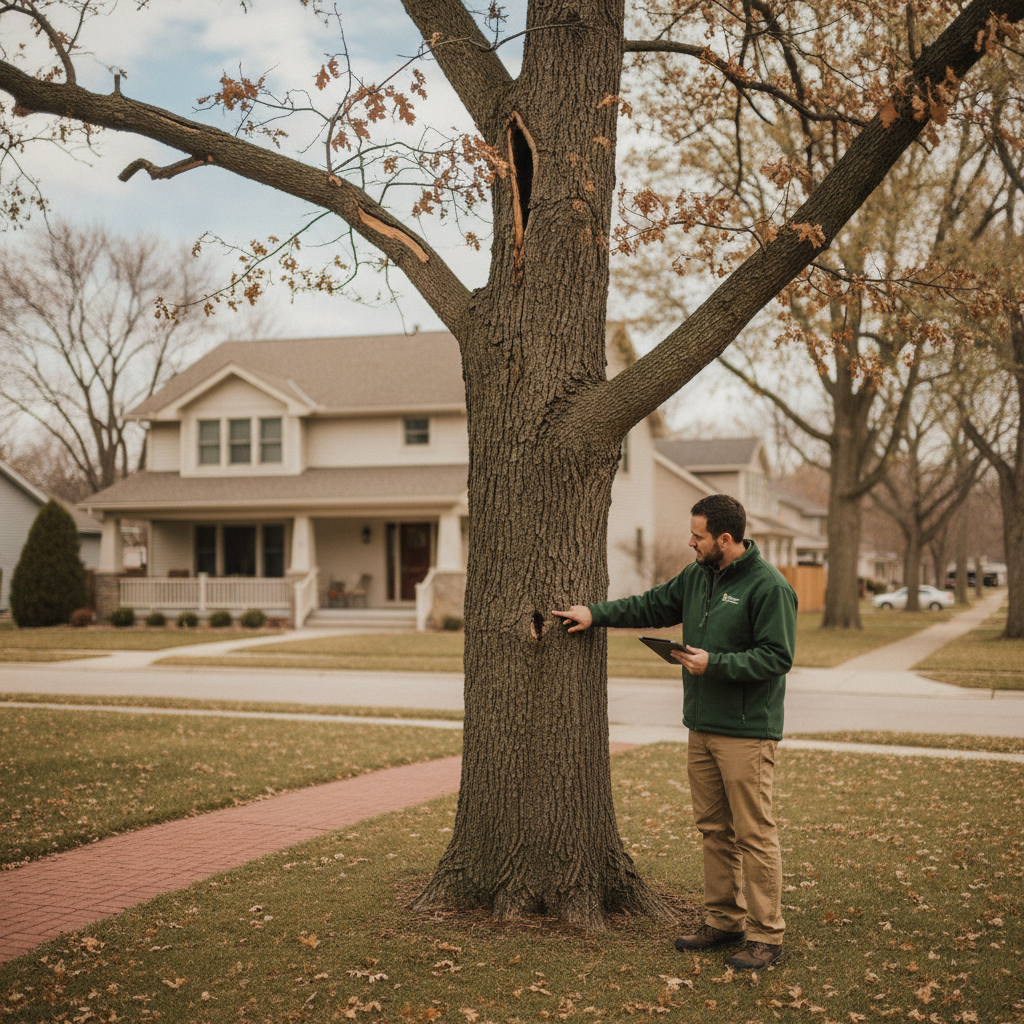
A tree can look perfectly fine one week and become a serious hazard the next. Knowing the warning signs is the difference between a manageable repair and an expensive emergency. If you own a home, run a business, or manage a property, understanding urgent tree care in Blue Island is one of the smartest ways to protect people, buildings, and your budget. Storms rolling off Lake Michigan, heavy clay soils, and aging street trees all combine to create conditions where a small problem can escalate quickly.
Many property owners ignore a leaning trunk or a few dead branches because the tree still has green leaves. That is a costly assumption. Trees are living structures, and they often show distress in subtle ways long before they fail. Fungal growth, cracks in the bark, sudden leaf drop, and shifting soil around the roots are all signals that deserve attention. Catching them early gives you more options, lower costs, and a better chance of saving the tree.
This guide walks you through the most important indicators that a tree needs help right now, how to tell the difference between a cosmetic issue and a true emergency, and what steps to take when you spot trouble. Whether you are a small business owner worried about customer safety, a developer protecting a construction site, or a homeowner with a mature oak in the backyard, you will find practical, plain-language advice you can use today. Let us get started with the basics.
Urgent Tree Care Blue Island: Why Timing Matters
Trees do not announce their problems with a siren. Structural weakness develops slowly inside the wood, and by the time damage is obvious from the outside, the failure window can be very short. That is why timing matters so much. A tree that is dropping large limbs, leaning more each week, or showing fresh cracks may be only days away from collapse, especially when wind or heavy rain arrives. For related information, see Emergency tree services in Blue Island.
Acting quickly protects more than the tree. Falling limbs damage roofs, vehicles, fences, and power lines, and they can injure people. Insurance claims become more complicated when a hazard was visible and ignored. If you see warning signs, it is wise to contact a professional rather than wait. Reaching out to a provider of Emergency tree services in Blue Island gives you a trained set of eyes and the equipment needed to resolve the problem safely, often the same day.
Spotting Urgent Tree Problems in Blue Island, IL
The first step is learning to read what the tree is telling you. Walk around it slowly and look from the roots to the crown. Pay attention to anything that has changed since your last inspection. Healthy trees have consistent leaf color, intact bark, and a stable base. Trees in trouble often break those patterns in ways that are easy to miss if you are not looking carefully. For related information, see tree maintenance and care.
Start at the base. Mushrooms or shelf-like fungus growing on the trunk or roots suggest internal decay. Next, check the trunk for deep vertical cracks, missing bark, or oozing sap. Then look up into the canopy for bare branches, brittle twigs, or a crown that looks thinner than it did last season. Make notes or take photos each season so you can compare changes over time. Even a quick monthly walk-around can reveal problems early, and in many cases that early notice is what separates a simple trimming job from a full removal.
Urgent Tree Care Blue Island Illinois: Clear Warning Signs
Some signs should push you to act immediately. A sudden lean, especially if the soil at the base is heaving or cracking, indicates the root system may be failing. Large dead branches hanging in the canopy, often called widowmakers, can drop without warning. Hollow sections, deep cavities, and wide splits where branches join the trunk all point to structural weakness that no amount of wishful thinking will repair.
Other red flags include sparse or discolored leaves out of season, sprouts growing densely at the base of the trunk, and visible insect activity such as sawdust piles or small exit holes. Any one of these can be manageable on its own, but several together usually mean the tree is under serious stress. Regular tree maintenance and care helps prevent many of these conditions from developing, and it gives you a documented history showing you acted responsibly if a claim ever arises.
Leaning Trees and Root Trouble
Not every leaning tree is dangerous. Some trees grow at an angle for decades and remain perfectly stable. The concern is a tree that begins leaning suddenly or leans more over time. A fresh tilt often means roots have snapped or the soil has shifted, and the tree may be held up by little more than gravity and luck.
Check the ground around the base for raised soil on the side opposite the lean, new cracks in the dirt, or exposed roots that were previously buried. Standing water, compacted soil from construction, and trenching for utilities can all damage root zones. Developers should be especially careful here, since heavy equipment can crush roots long before the tree shows symptoms. If a tree near a structure, driveway, or sidewalk begins to tilt, keep people and vehicles away from the fall zone until a qualified arborist has evaluated it.
Dead and Dying Branches
Dead wood is brittle, unpredictable, and prone to snapping under its own weight. A single dead limb is not always an emergency, but a crown with many dead branches signals decline. Try the simple scratch test on a small twig. If the layer beneath the bark is green and moist, the branch is alive. If it is brown and dry, the branch is dead.
Pay attention to branches that hang over roofs, parking areas, play areas, and walkways. Even a medium limb can cause real damage when it falls from height. Removing deadwood also improves airflow and light, which supports the health of the remaining canopy. Schedule pruning during the dormant season when possible, but do not delay if a hazardous limb is visible. Safety always outranks the ideal calendar, and a prompt cut is almost always cheaper than repairing a damaged vehicle or building.
Cracks, Cavities, and Fungus
Cracks in the trunk or at branch unions deserve serious attention. A shallow surface split in the bark may be cosmetic, but a deep crack that runs through the wood can mean the tree is literally coming apart. V-shaped unions, where two stems grow tightly together, often trap bark inside and create a weak joint that tends to split in storms.
Cavities and hollows are another concern. Some trees live for many years with hollow centers, but the amount of sound wood remaining determines whether the tree is still safe. Fungal fruiting bodies such as conks, brackets, and mushrooms are the visible reproductive structures of decay organisms working inside. When you see them on the trunk or root flare, treat it as evidence that decay is already established. Do not try to judge the severity by eye alone. A professional can use tools like a mallet, resistograph, or sonic tester to measure how much healthy wood remains.
Storm Damage and Sudden Hazards
Severe weather is the most common trigger for urgent calls. Straight-line winds, ice, and heavy rain can snap limbs, split trunks, and uproot entire trees. After a storm, walk your property carefully and look up before you look down. Hanging branches, partially fallen trees, and cracked trunks can shift again without warning, so keep your distance until they are secured.
If a tree or limb is touching a power line, assume the line is live and call the utility company immediately. Never attempt to cut or move anything near electrical wires. Photograph the damage from a safe distance for insurance purposes, then arrange professional help. Rushing to clean up storm debris yourself with a chainsaw is one of the leading causes of homeowner injuries. Trees under tension from a partial fall can spring or roll in unexpected ways, which is exactly why trained crews use rigging and controlled cutting methods.
Quick Reference: Urgency Levels
Not every issue demands a same-day response. Use this table to gauge how quickly you should act and whether to restrict access to the area around the tree.
| Warning Sign | Urgency | Recommended Action |
|---|---|---|
| Sudden lean with heaving soil | Immediate | Clear the area and call a pro today |
| Large hanging or broken limb | Immediate | Keep people away and request emergency removal |
| Deep trunk crack | High | Schedule an assessment within days |
| Fungus on trunk or roots | Moderate | Book an inspection soon |
| Thinning canopy, few dead twigs | Low to moderate | Monitor and plan seasonal pruning |
Disease and Pest Infestations
Pests and diseases can weaken a tree from the inside out. Emerald ash borer, for example, has devastated ash populations across the Midwest, leaving trees that look healthy one summer and brittle the next. Signs include D-shaped exit holes, serpentine tunnels under the bark, and rapid thinning at the top of the canopy.
Fungal diseases, cankers, and wilts present differently, but they often cause leaves to yellow, curl, or drop early. If you notice unusual spots, powdery coatings, or wilting in the middle of summer, take samples or photos and get an expert opinion. Early treatment can sometimes save a tree, while delay may allow the problem to spread to neighboring trees. For businesses and developers, a spreading infestation can affect an entire landscaped property, so a prompt diagnosis protects both safety and investment value.
Protecting People and Property
The first rule of any tree emergency is simple: keep people away. Rope off the fall zone, move vehicles, and keep children and pets indoors until the situation is resolved. A tree can fall farther than most people expect, and branches can swing back or slide after the initial failure.
For commercial sites, document the hazard and the steps you took in response. This record can be valuable for liability and insurance purposes. Check whether your policy covers tree removal and under what conditions, since many policies only pay when a tree has damaged a structure. Developers should also review local tree protection rules before clearing land. Planning ahead for tree preservation or removal avoids delays, fines, and the kind of unexpected hazards that appear when work begins around established roots.
Choosing the Right Tree Professional
When time is tight, it is tempting to hire whoever answers the phone first. Resist that urge long enough to confirm a few essentials. Look for proper liability insurance, workers compensation coverage, and credentials such as ISA certification. Ask for a written estimate and a clear explanation of the work, including cleanup and debris disposal.
Be wary of anyone who pressures you to remove a healthy tree, offers unusually low prices, or insists on topping, a harmful practice that weakens trees over time. Reputable companies explain your options, including pruning, cabling, or monitoring, before recommending removal. Local reviews are a helpful gauge of reliability. You can read feedback and confirm contact details for Prime Tree Care, Inc to see how neighbors rate the quality and responsiveness of the service before you commit.
Prevention and Seasonal Habits
The best emergency is the one that never happens. Build simple habits into your yearly routine. Inspect your trees each spring and fall, and again after every major storm. Mulch around the base with a two to three inch layer, keeping it away from the trunk itself. Water deeply during dry spells, and avoid piling soil or parking vehicles over root zones.
Prune young trees to develop strong structure, since correcting weak form early is far easier than fixing it in a mature tree. Schedule a professional checkup every few years for large or valuable trees, and more often for older specimens near buildings. Keep a simple file with photos, dates, and notes. Over time, this record helps you spot gradual changes and gives any arborist you hire a useful history to work from.
Final Thoughts
Trees are valuable assets that add shade, beauty, and property value, but they demand attention. The warning signs covered here, from sudden leaning and dead limbs to cracks, fungus, pests, and storm damage, are your early alert system. Learning to recognize them lets you respond calmly and quickly instead of scrambling after something has already gone wrong.
Remember the core principles. Look closely and often, treat sudden changes as serious, and never underestimate how fast a compromised tree can fail. Keep people and property out of harm’s way first, then bring in qualified help to assess the situation. Document what you see, understand your insurance coverage, and choose professionals who are insured, certified, and honest about your options.
For homeowners, small business owners, and developers alike, a little vigilance goes a long way. A single inspection can reveal a problem while it is still cheap to fix, and a consistent maintenance routine keeps your landscape healthy for years. Do not wait for the next storm to find out which of your trees are vulnerable. Take a walk around your property this week, make notes, and reach out for expert help the moment something looks wrong. Staying proactive keeps your trees thriving and your community safe.