Every year, homeowners and business owners across the region face the same tough decision: that towering, storm-damaged, or diseased tree has to come down, but how do you do it without putting people or property at risk? Tree removal looks simple from the sidewalk. A saw, a rope, a few cuts, and the problem is gone. In reality, it ranks among the most dangerous jobs in the outdoor trades, with serious injuries and property damage happening far more often than most people realize. Understanding tree removal safety in Blue Island is the first step toward protecting your family, your employees, your customers, and your investment.
Whether you manage a small retail property, oversee a development site, or simply own a home with a mature oak leaning toward the garage, this guide walks you through what matters most. We cover warning signs, hazards, equipment, permits, hiring decisions, and what happens after the tree is gone. You will also find a quick-reference table, practical checklists, and plain-language advice you can use right away.
The goal is simple: help you make informed, confident choices so the job gets done safely, legally, and without expensive surprises. Think of this article as your pre-job briefing, written for real people who have real trees and real deadlines. Let us start with the basics and build from there, one safe decision at a time.
Tree Removal Safety in Blue Island: Why It Matters
Trees can weigh several tons, and a single limb can drop with enough force to crush a vehicle or cause fatal injuries. When a removal goes wrong, the consequences ripple outward: damaged roofs, broken fences, severed power lines, injured bystanders, and lawsuits that follow. Safety is not a bonus feature of the job. It is the job. For related information, see tree services in Blue Island.
Weather in the Midwest adds another layer of risk. Freeze and thaw cycles, summer thunderstorms, and heavy winds weaken trees over time, and many residents here discover problems only after a storm. Professional crews who understand these local patterns can predict how a tree will behave when cut. Many homeowners who search for tree services in Blue Island are really looking for that kind of regional experience, along with proper training and insurance. Treat the project as a risk management decision first and a landscaping task second, and you will avoid most of the mistakes that make headlines.
Tree Removal Safety in Blue Island, IL: Warning Signs to Watch
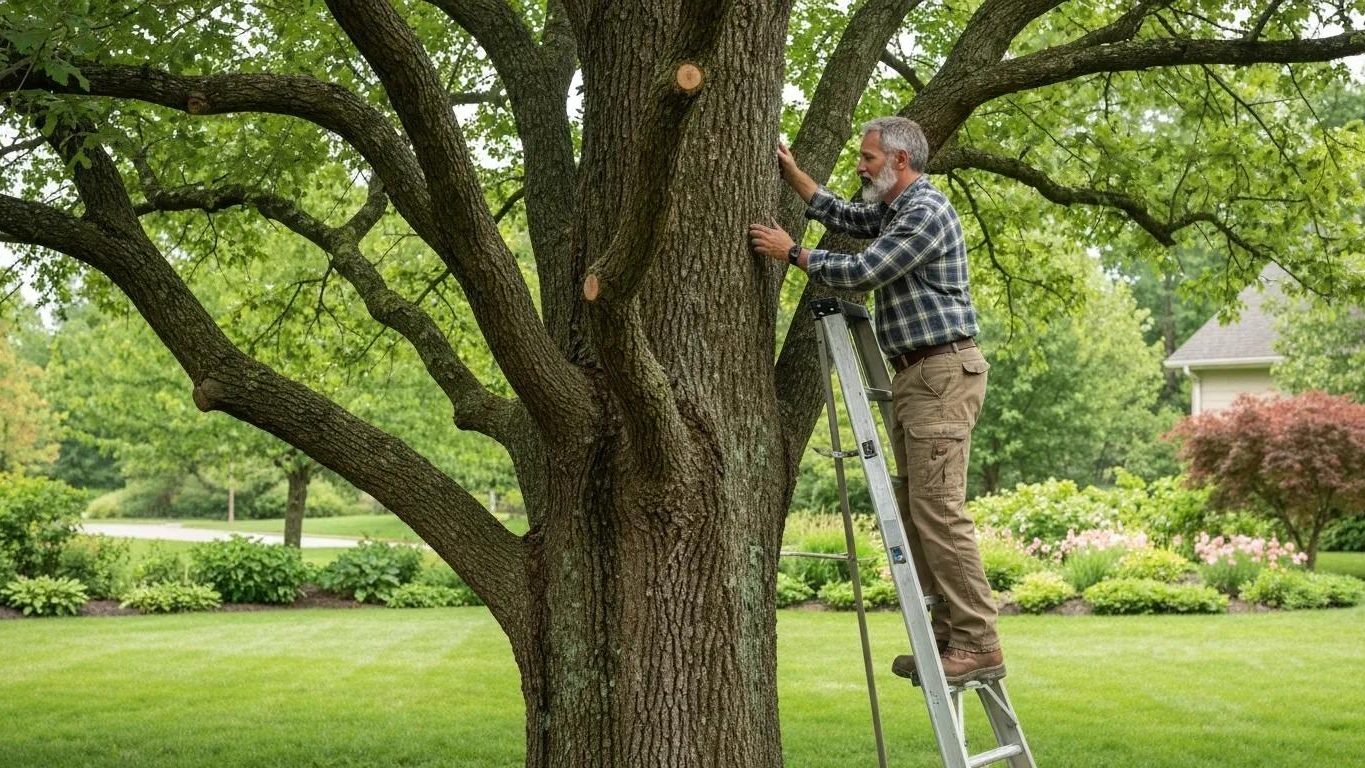
Not every tree needs to come down, but certain red flags tell you the situation is urgent. Learning to spot them can prevent an emergency. Look closely at the trunk, the canopy, and the ground around the base, and take photos over time so you can track changes. For related information, see Tree Removal Safety Blue Island.
- Large cracks or splits running vertically along the trunk
- Mushrooms or fungal growth near the roots or base
- Dead branches throughout the upper canopy
- A noticeable lean that has increased recently
- Raised soil or exposed roots after heavy rain or wind
- Hollow sections or peeling bark that exposes soft wood
If you see two or more of these signs, a professional assessment is smart. A trained arborist can tell whether a tree can be saved through pruning or whether removal is the safer path. Waiting too long often turns a manageable job into a costly emergency, especially when a compromised tree sits near a home, a driveway, or a parking area where people gather daily.
Tree Removal Safety in Blue Island, Illinois: Hazards on Site
Every job site carries hazards, and trees add several unique ones. Falling limbs, unpredictable tension in leaning trunks, kickback from chainsaws, and unstable ground all create danger. Add overhead power lines, nearby buildings, and foot traffic, and the margin for error shrinks quickly. For related information, see Tree Removal Safety in Blue Island.
One of the most overlooked hazards is hidden decay. A tree that looks healthy on the outside may be hollow inside, which changes how it falls. Another is tension, where bent branches or trunks hold stored energy that releases violently when cut. Experienced crews read this tension before making a single cut. If you want a deeper look at how pros approach the work, review the guidance on Tree Removal Safety Blue Island to see how trimming and removal planning overlap. Always treat power lines as live, keep a wide buffer, and never assume a line is dead just because it looks old or damaged.
Essential Safety Gear and Equipment
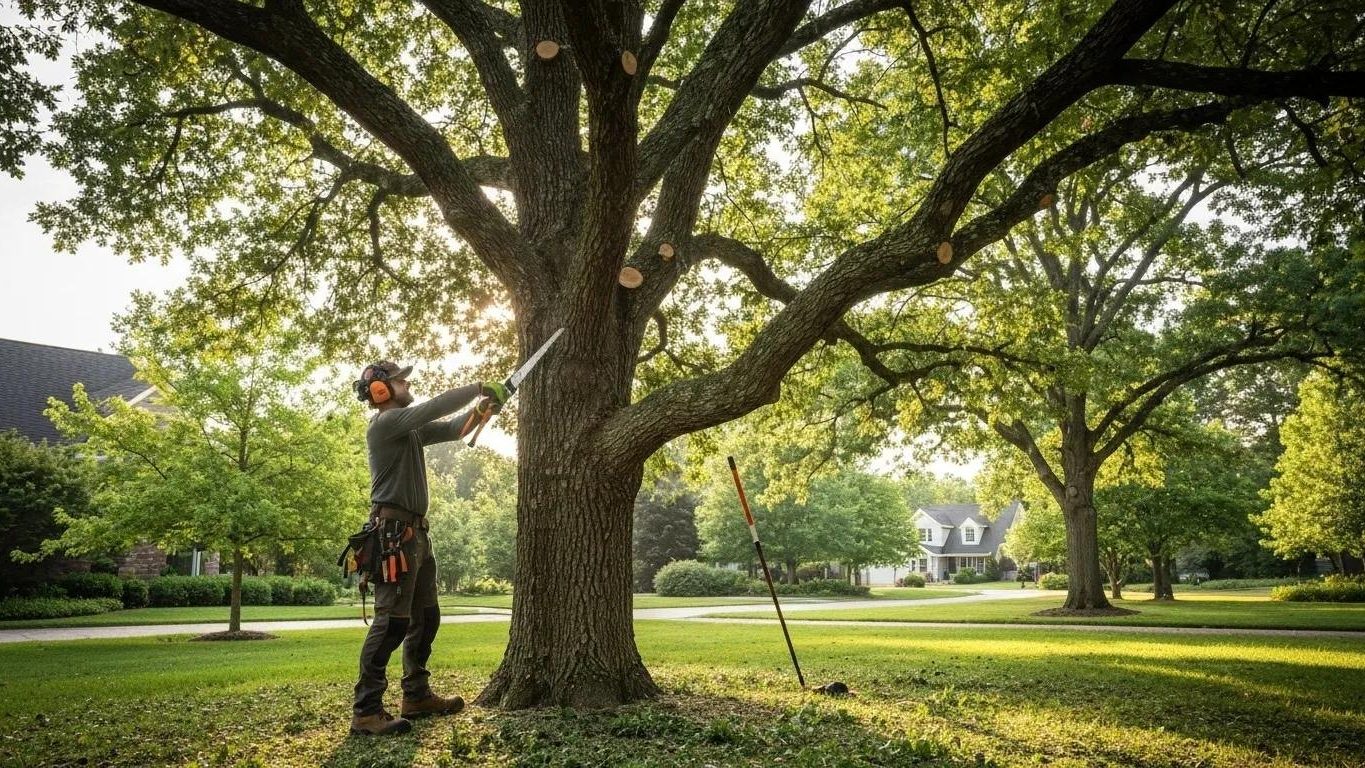
Proper protective equipment is the difference between a close call and a trip to the emergency room. Professionals do not cut corners here, and neither should you if you are supervising or helping with a job. At minimum, anyone working near a removal should wear head protection, eye and ear protection, cut-resistant chaps, steel-toed boots, and sturdy gloves.
Equipment matters just as much. Chainsaws must be sharp, properly tensioned, and equipped with working chain brakes. Ropes, harnesses, and rigging hardware need regular inspection for wear. Aerial lifts and bucket trucks should be operated only by trained personnel. Even small tools, such as wedges and pole saws, can cause injuries when misused. Check that every item is rated for the load it will carry, and retire anything frayed, cracked, or questionable. A crew that talks openly about equipment maintenance is usually a crew that takes safety seriously across the whole job.
Planning the Job Before the First Cut
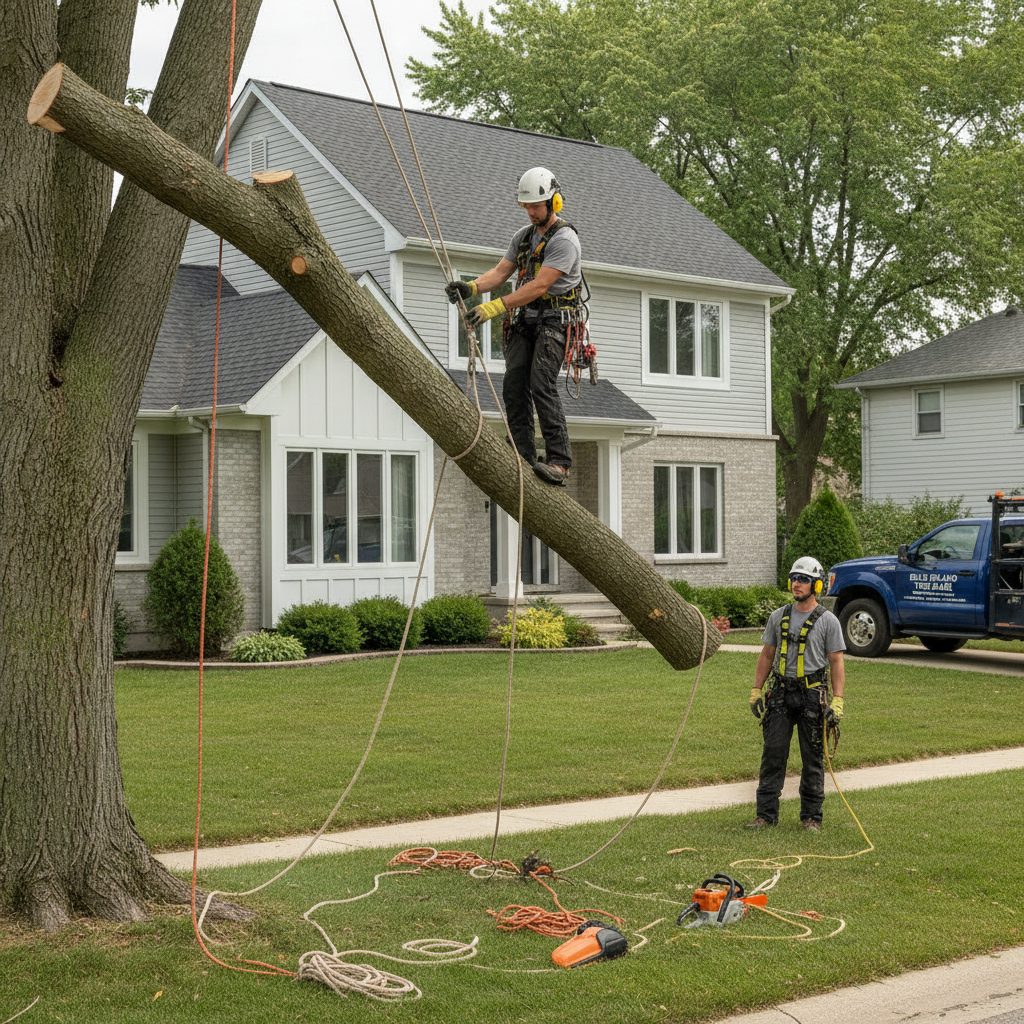
Good tree work begins long before any saw starts. A thorough plan identifies the fall zone, escape routes, rigging points, and anything that could be damaged. Crews walk the site, assess the tree from every angle, and decide whether the tree can be felled in one piece or must be dismantled section by section.
Planning also covers logistics. Where will equipment be staged? Where will debris go? Who needs to be notified, such as neighbors, tenants, or utility companies? Weather matters too. High winds, wet ground, or lightning make a scheduled job unsafe, and responsible crews will reschedule rather than gamble. If you are a business owner, think about customer access and parking. Use cones, tape, and signage to keep people away. A clear, written plan that everyone understands keeps the project calm, predictable, and far safer than improvising on the day.
Permits, Regulations, and Utility Coordination
Many municipalities regulate tree removal, especially for large or protected trees, trees in public rights-of-way, and projects tied to development. Skipping the permit process can lead to fines and delays. Before you schedule work, contact local officials to confirm what applies to your property, and keep copies of any approvals on site.
Utility coordination is equally important. If branches or trunks are near power lines, the utility provider may need to shut off, insulate, or relocate lines before work begins. Only qualified line-clearance professionals should work within the minimum approach distance of energized conductors. Developers should also confirm underground utilities, since root work and heavy equipment can damage buried lines. Call your state’s utility locating service before any digging or stump grinding. A little paperwork up front prevents outages, penalties, and dangerous surprises, and it shows neighbors and inspectors that you handled the project responsibly.
DIY vs. Hiring a Professional
The temptation to save money by doing it yourself is real, but the math rarely works out. A single mistake can cost more than a professional job, not counting medical bills. The table below compares the two approaches so you can weigh your options honestly.
| Factor | DIY Removal | Professional Removal |
|---|---|---|
| Injury Risk | High, especially for tall trees | Lower, trained and equipped crews |
| Equipment | Rented or borrowed, often limited | Specialized rigging and lifts |
| Insurance Coverage | Usually none for mistakes | Liability and workers compensation |
| Time Required | Often multiple days | Typically hours to one day |
| Cleanup | Your responsibility | Usually included |
How to Choose a Qualified Tree Care Company
Not every company that owns a chainsaw is qualified to remove a large tree. Start by asking for proof of liability insurance and workers compensation coverage, and verify both directly with the insurer. Look for certified arborists on staff, since certification signals training in tree biology and safe practices.
Read reviews, ask for local references, and request a written estimate that spells out scope, cleanup, and stump handling. Be cautious of door-to-door solicitors, unusually low bids, or pressure to pay in full upfront. A reputable provider will walk the site, explain the plan, and answer safety questions without hesitation. Established local businesses such as Prime Tree Care, Inc are the kind of operation worth comparing against other bids, since they typically combine licensed crews with transparent pricing. Compare at least three quotes, and weigh safety practices as heavily as price.
Emergency Tree Situations and Storm Damage
After a storm, fallen trees and hanging limbs create some of the most dangerous conditions of all. Trees under tension, tangled in power lines, or resting on structures can shift without warning. Your first move should be to stay back, keep others away, and call for professional help.
If a line is down, assume it is energized and contact the utility provider and emergency services immediately. Do not attempt to cut a tree that is touching a line or leaning on a roof. Document the damage with photos for insurance claims, and ask your provider about emergency response times. Many reputable companies offer storm services, but be wary of out-of-town crews who appear right after a weather event and demand cash. Having a trusted contact saved in your phone before a storm hits can save precious time and prevent rushed, risky decisions when conditions are chaotic and stressful.
Stump Removal, Cleanup, and Site Restoration
Safety does not end when the tree is on the ground. Leftover stumps create trip hazards, attract pests, and can sprout unwanted growth. Stump grinding removes the visible portion and a good chunk of the root system, leaving the area ready for sod, landscaping, or construction.
Cleanup deserves attention too. Branches, sawdust, and wood chips should be removed or repurposed as mulch. Walk the site afterward to check for hidden hazards such as exposed roots, holes, or leftover hardware. For developers, grading and compaction may be needed before building. Homeowners should consider replanting a suitable species in a better location, away from structures and utilities. Choosing the right replacement tree supports long-term safety, shade, and property value, turning a difficult removal into an opportunity to improve the landscape for years to come.
Your Next Steps
Tree removal is one of those jobs where preparation, patience, and professional help pay off enormously. The biggest takeaways are straightforward. Learn the warning signs so you can act before an emergency. Respect the hazards, from hidden decay to energized power lines. Insist on proper gear, a written plan, and the right permits. Compare the true cost of doing it yourself against the protection that insured, trained crews provide.
If you are ready to take action, start by documenting the tree in question and scheduling an assessment with a qualified provider. Ask about insurance, certifications, equipment, cleanup, and stump handling before you sign anything. If you want to read what neighbors say about local providers, you can check reviews for Prime Tree Care, Inc and compare them with other options in the area.
Remember that the cheapest bid is rarely the safest or the best value. A careful, well-planned removal protects people, property, and peace of mind. Whether you run a business, manage a development, or simply want a safer yard, the principles in this guide will help you make smart decisions. Take it one step at a time, lean on experienced professionals, and never be afraid to say no to a shortcut. Your future self will thank you for choosing safety first.