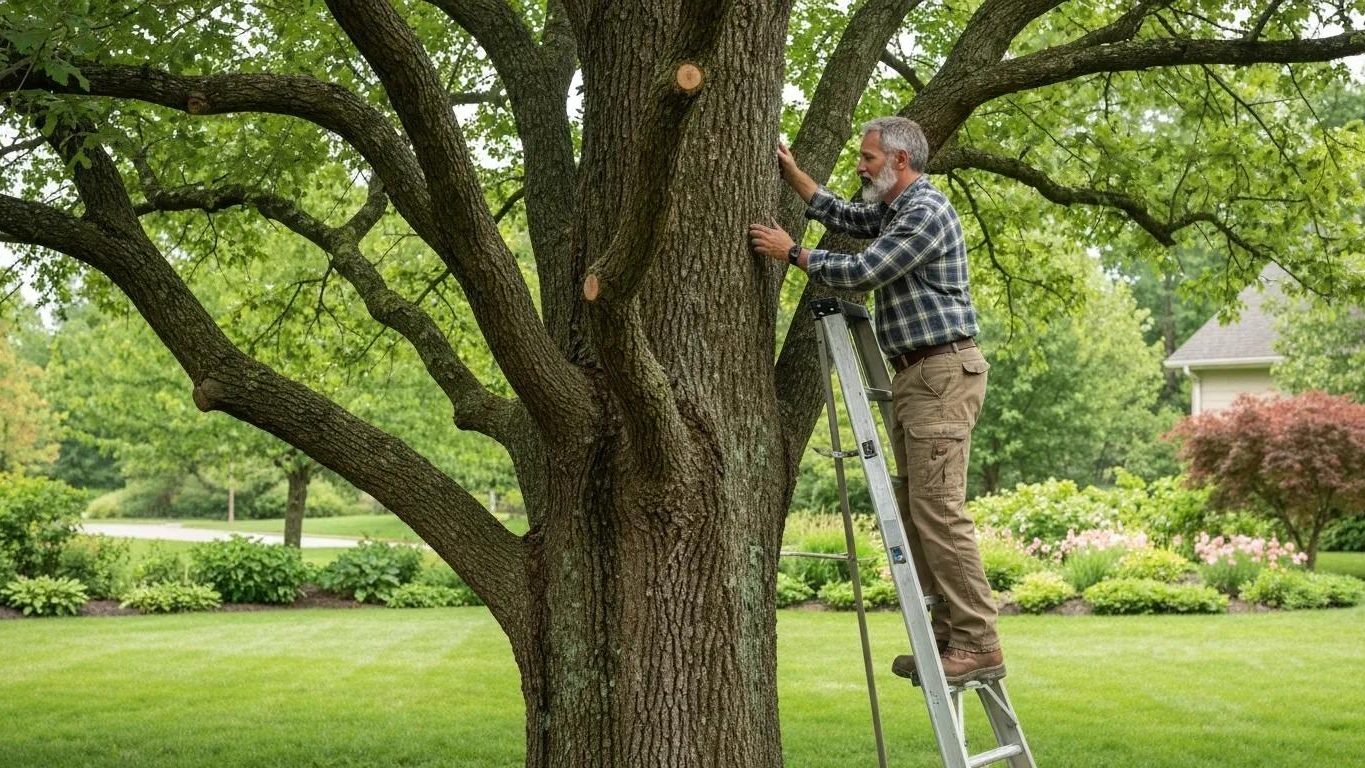
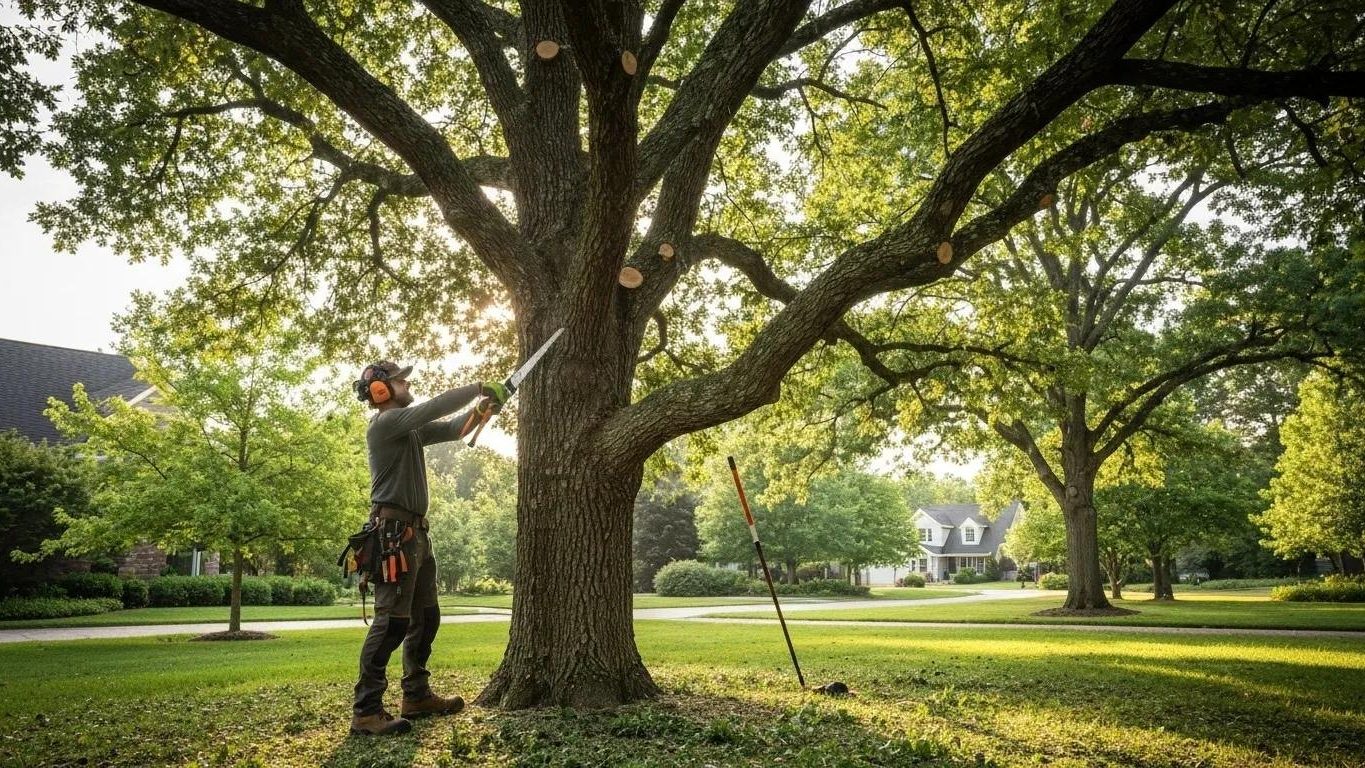
Frost Cracks in Trees: What Winter Splits Mean in Blue Island
Frost cracks in trees are vertical splits in the trunk caused by sharp temperature swings in winter, usually on the sunny south or southwest side. Most trees seal a small crack over the growing season, and there’s no treatment that closes one faster. Keep the tree healthy, skip paint or tar, and have an arborist check it if the crack is deep, keeps reopening or the tree leafs out poorly in spring.
Chicago’s south suburbs get plenty of the weather that causes frost cracks: bright winter afternoons followed by bitter nights, and cold snaps that drop temperatures fast. If you heard a loud crack from the yard on a frigid night or spotted a new split in a maple or linden in Blue Island, here’s what it means, which trees are most at risk, and when a crack becomes a safety concern.
Key Takeaways
Frost cracks form when sun-warmed bark cools quickly at night or during a sudden cold snap.
Thin-barked and young trees, such as maples, lindens, honeylocusts and fruit trees, crack most often.
Don’t paint, tar or seal a crack. Trees seal wounds on their own.
A crack that keeps reopening, goes deep, or comes with dieback or a lean should be checked by an arborist.
What Causes Frost Cracks in Trees?
Frost cracks come from bark and wood shrinking at different speeds. University of Illinois Extension explains that winter sun warms the outer layers of a trunk, especially on the south side. When night falls and temperatures drop quickly, the outer tissue cools and contracts faster than the wood inside. If that stress is greater than the strength of the wood fibers, the trunk splits.
The Morton Arboretum notes that frost cracks can also show up during a sudden cold snap below 15 degrees, or when there’s a big gap between day and night temperatures. They’re most common on the sunny south or southwest side of the trunk.
Is That Loud Pop Really a Tree Exploding?
Not exactly. During deep freezes, you may see stories about “exploding trees.” Illinois Extension says true explosions are very rare. What people usually hear is the release of built-up pressure as the trunk cracks, a sharp sound some compare to a gunshot. The tree is still standing, but it now has an open wound in its bark.
Which Trees Are Most Likely to Get Frost Cracks?
Thin bark gives a trunk less insulation against temperature swings, so thin-barked species crack more often. Illinois Extension lists these common Illinois trees as especially vulnerable:
Maples
Beech
Linden
Honeylocust
Willow
Fruit trees such as apple, cherry and pear
The Chicago Botanic Garden adds sycamores and walnuts to the list. Young trees of any species are more at risk because their bark is still thin. Illinois Extension also notes that trees with old trunk wounds, such as mower damage, may crack more easily.
Are Frost Cracks Dangerous to a Tree?
Sometimes. A small crack that happens once is usually more of a scar than a threat. Illinois Extension says trees with small, infrequent cracks can survive and seal the split over time. The concern is that any crack breaks the bark’s protective seal and lets in moisture, fungi, bacteria and insects.
The Chicago Botanic Garden notes that frost cracks often close in summer and reopen in later winters. When cracking repeats at the same spot, Illinois Extension says the damage can weaken the tree’s structure and make it more likely to break. That’s when a crack moves from cosmetic to a safety question, especially if the tree stands near your house, garage, driveway or a neighbor’s yard.
What Should You Do About a Frost Crack?
There’s no treatment that repairs a frost crack, according to the Chicago Botanic Garden. Your job is to help the tree heal on its own:
Leave the wound alone. Illinois Extension advises against paint, tar or other wound dressings, which interfere with the tree’s natural sealing process.
Water during dry spells. Trees that enter winter short on water are more vulnerable to winter injury. Water in fall until the ground freezes.
Mulch the root zone. The Morton Arboretum suggests a layer of mulch over the roots, kept a couple of inches away from the trunk.
Protect the trunk. Keep mowers and string trimmers away from the base of the tree.
Watch it in spring. If the tree leafs out abnormally, the Chicago Botanic Garden recommends having a certified arborist assess it for safety.
Should You Wrap Your Tree Trunks?
Experts don’t fully agree here. Illinois Extension suggests a white tree wrap on young trees, put on in fall before freezing weather and removed in spring once nights stay above freezing, to reflect sunlight and reduce temperature swings. The Morton Arboretum does not recommend wrapping trunks to prevent frost cracks and focuses on watering and mulch instead. If you do wrap a young tree, take it off every spring so it doesn’t trap moisture or rub the bark.
When Should You Call an Arborist Right Away?
Stay clear of the tree and call for help soon if you see:
A crack that runs deep into the trunk or splits it into two sections
A new lean, or soil heaving or cracking at the base
Large dead branches hanging over the house, driveway or sidewalk
Mushrooms, oozing or soft, crumbly wood along the crack
If a cracked trunk or limb is resting on power lines, stay far away and call your utility or 911.
How Prime Tree Care Can Help
Prime Tree Care provides pruning, trimming, tree removal, stump grinding and emergency storm work for homes in Blue Island and the south suburbs. If you’ve found a frost crack, we can look at the tree, talk with you about whether it’s a cosmetic scar or a structural concern, and recommend next steps. Learn more about our tree service in Blue Island.
Frequently Asked Questions
Will a frost crack heal on its own?
Trees don’t heal the way skin does, but they seal wounds. Illinois Extension notes a tree can seal a crack over time, leaving a scar. The split stays inside the wood, and it may reopen in a future winter.
Can I fill a frost crack with sealant or caulk?
No. Illinois Extension advises against wound dressings like paint or tar, which can interfere with the tree’s natural response.
Does a frost crack mean the tree has to come down?
Not usually. Illinois Extension notes that trees with small, infrequent cracks can survive and seal them. Removal becomes a question when cracks repeat, decay sets in, or the trunk’s structure is weakened near a home or walkway.
When is the best time to have a cracked tree checked?
Anytime you’re worried about safety. Otherwise, late winter or early spring works well, since the crack is often most visible in cold weather and you can see how the tree leafs out.
If you’ve spotted a split trunk in your yard, call Prime Tree Care at 312-498-3984 or contact us online to set up a visit.
A vertical split in a tree trunk after a cold night is often a frost crack. Here is what causes it, which trees are most at risk, and when a crack becomes a safety concern.
Road and sidewalk salt can scorch evergreens and damage tree roots, but the harm usually shows up in spring. Here is how salt hurts trees, what to look for, and how to protect trees in Blue Island this winter.