Salt Damage to Trees: How to Protect Your Blue Island Yard
Salt damage to trees happens when deicing salt from roads, driveways and sidewalks reaches a tree’s roots through melting snow or lands on its branches as spray from passing traffic. You can help prevent it by shoveling before you salt, using less salt, keeping salty snow off planting beds, putting up a burlap screen on the road side of vulnerable trees, and watering heavily in spring to flush salt from the soil.
In Blue Island and the south suburbs, winter means plows, salt trucks and plenty of rock salt on every front walk. The trees along parkways, driveways and busy streets take the brunt of it, and the damage usually doesn’t show until spring. Here’s how salt hurts trees, what to look for, and what you can do this winter.
Key Takeaways
Salt harms trees through the soil and through spray from passing cars.
Symptoms often appear in late winter and spring, mostly on the side of a tree facing the road.
Evergreens are especially vulnerable because they keep their needles all winter.
Using less salt, adding burlap screens and watering in spring can all reduce damage.
How Does Road Salt Damage Trees?
Rock salt (sodium chloride) breaks into sodium and chloride when it dissolves, and both can harm trees in high enough amounts. According to a December 2025 article from University of Illinois Extension, high sodium levels can damage soil structure and make it easier to compact, so water and air have a harder time reaching roots. Chloride can build up in a plant’s growing points to toxic levels.
Salt also holds onto water in the soil. Illinois Extension explains this can create drought-like conditions for trees even when there’s enough moisture in the ground.
The second route is through the air. Spray from cars on salted roads lands on twigs, buds and needles and pulls water out of the plant’s cells. The Chicago Botanic Garden notes that airborne salt is often more damaging than salt in the soil, which eventually leaches out with melting snow and spring rain.
What Are the Signs of Salt Damage to Trees?
Look for damage that’s worse on the side of the tree facing the street, driveway or sidewalk. The Morton Arboretum says symptoms of salt damage appear in spring and include browning of evergreens, leaf scorch, branch dieback and dead areas in turf.
Tree type
What salt damage can look like
When you usually notice
Evergreens (pine, spruce, arborvitae)
Pale, yellow or brown needles, often on the road side, that may drop
Late winter and early spring
Deciduous trees (maple, linden, oak)
Damaged buds, small or scorched leaves, dieback at branch tips
Spring leaf-out and early summer
Any tree near heavy salt use
Dense clusters of twigs called witches’ brooms after tips are killed
Over several seasons
Illinois Extension notes that if the damage isn’t extensive, plants may recover. Salt stress can look like drought, root problems or disease, so a tree that’s declining year after year deserves a closer look.
Which Trees Handle Salt Best?
Some trees tolerate salt better than others, though none are immune. Illinois Extension lists sweet gum, bald cypress, Kentucky coffeetree, common horsechestnut, red oak, juniper and eastern red cedar among plants with tolerance to both salt in the soil and salt spray. It also cautions that even salt-tolerant plants can be damaged by high levels.
If you’re replacing a tree along a busy street or a driveway that gets salted all winter, choosing a more tolerant species gives it a better chance.
How Can You Protect Trees From Salt This Winter?
The steps below come from Illinois Extension, the Morton Arboretum and the Chicago Botanic Garden:
Shovel first, then salt. Clear snow before applying deicer, and don’t use salt as a substitute for shoveling.
Use less. Spread salt evenly instead of in clumps, and focus on steps, slopes and high-risk spots.
Mix in sand or another abrasive for traction so you need less salt.
Consider a gentler deicer. Calcium chloride, magnesium chloride and calcium magnesium acetate are less damaging to plants than rock salt, though they can still cause some harm.
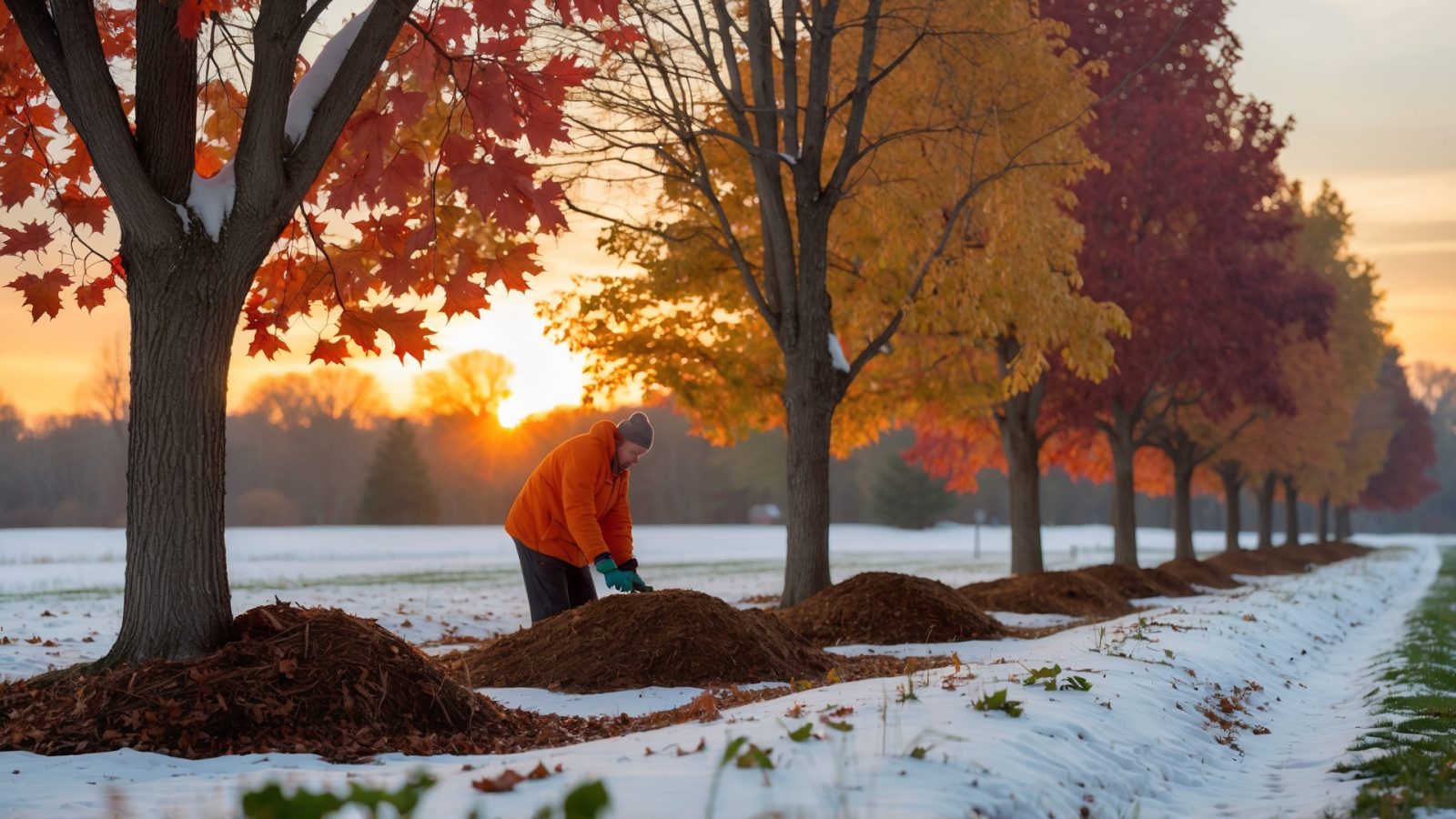
Keep salty snow off planting beds. Spread shoveled snow evenly, away from tree roots and shrubs.
Put up a burlap screen between road-side evergreens and the street. The Morton Arboretum says to use burlap as a screen only and not to wrap trees.
Sweep up leftover salt once pavement is dry so it doesn’t wash into the lawn.
Go easy after March 1. Illinois Extension notes plants become even more susceptible once they begin to break dormancy.
A related tip from the Morton Arboretum and the Chicago Botanic Garden: don’t try to knock ice off branches after an ice storm. Let it melt on its own, since removing it can cause more damage.
What Should You Do in Spring if Salt Damaged a Tree?
Start with water. As the ground thaws, Illinois Extension recommends thoroughly watering soil that took a heavy salt load to leach salt out of the root zone. The Morton Arboretum notes that salt leaches through well-drained soils, but damage can be extensive in poorly drained soils, which are common in clay-heavy yards.
Then give the tree time to leaf out before deciding what’s dead. Branches that stay bare after the rest of the tree has leafed out can be pruned. If a large section of the crown is dead, if the tree is leaning toward the house or street, or if dead limbs hang over a sidewalk or driveway, have an arborist look at it.
How Prime Tree Care Can Help
Prime Tree Care works with homeowners in Blue Island and nearby south suburbs. If a tree near your street or driveway looks thin or scorched this spring, we can take a look and talk through options such as pruning dead wood or, when a tree is beyond saving, removal. Learn more about our tree service in Blue Island, IL.
Frequently Asked Questions
Can a tree recover from salt damage?
Often, if the damage isn’t extensive. Illinois Extension notes that plants may recover, and spring watering helps flush salt from the soil. Trees hit year after year may decline over time.
Why are the needles on my evergreen brown only on the street side?
That pattern is a common sign of salt spray from passing traffic. Illinois Extension notes spray damage most often shows up on the sides of trees facing a road.
Is calcium chloride safe for trees?
It’s less harmful than rock salt, according to the Morton Arboretum, but no deicer is completely safe for plants. Use the smallest amount that does the job.
Should I wrap my evergreens in burlap?
Use burlap as a screen on stakes between the tree and the road rather than wrapping the tree itself, as the Morton Arboretum advises. Remove the screen in spring.
When will I know if my tree was damaged by salt?
Usually in spring. Evergreens may brown in late winter, and deciduous trees may show damaged buds or scorched leaves as they leaf out.
If a tree by the road looks rough after winter, call Prime Tree Care at 312-498-3984 or contact us online to set up a visit.
A vertical split in a tree trunk after a cold night is often a frost crack. Here is what causes it, which trees are most at risk, and when a crack becomes a safety concern.
Road and sidewalk salt can scorch evergreens and damage tree roots, but the harm usually shows up in spring. Here is how salt hurts trees, what to look for, and how to protect trees in Blue Island this winter.