A mature tree can anchor a yard for generations, shading the house, boosting curb appeal, and quietly raising property value. But trees are living things, and they send signals when something is wrong. Learning to read those signals is the heart of good tree health Blue Island homeowners and business owners can rely on. Whether you manage a storefront lot, a small office campus, or a family property, the trees around you deserve the same attention you give your roof, your plumbing, and your parking lot.
The challenge is that tree problems rarely announce themselves loudly. A few thinning leaves in July, a small crack in the bark, or a limb that sags a little lower each season can all point to bigger trouble underneath. By the time damage is obvious, the fix is usually more expensive and more disruptive. Timely pruning, on the other hand, is one of the cheapest and most effective ways to protect your investment.
In this guide, we walk through how to judge the condition of your trees, which warning signs matter most, when the calendar says it is time to prune, and when a tree may be beyond saving. We also cover safety, weather, and how to choose a qualified professional, so you can make confident decisions instead of reactive ones. Think of it as a practical, plain-language roadmap for keeping your trees strong, safe, and good-looking year after year.
Tree Health Blue Island: Why It Matters
Healthy trees do far more than look nice. They cool buildings in summer, break wind in winter, absorb stormwater, and improve air quality. A well-kept canopy can noticeably lower cooling costs, and mature landscaping is one of the features buyers and tenants notice first. For small business owners, a tidy, safe tree line signals care and professionalism to every customer who pulls into the lot. For related information, see tree maintenance.
Poor tree health, by contrast, creates real liability. Dead limbs drop without warning, roots lift sidewalks and driveways, and weakened trunks can fail in a storm and damage vehicles, fences, or buildings. Staying ahead of these risks is where consistent tree maintenance pays for itself. Regular inspections let you catch small issues while they are still inexpensive to correct.
The key idea is prevention. Instead of waiting for a crisis, treat your trees like any other asset that needs scheduled upkeep. A simple annual walk-around, combined with seasonal pruning, will extend the life of most landscape trees by years and keep surprise expenses to a minimum.
Signs of Tree Health in Blue Island, IL
A healthy tree usually shows a full, evenly distributed canopy, leaves of normal size and color for the season, flexible new growth at the branch tips, and intact bark that hugs the trunk. When any of these traits change, pay attention. Early detection is the single biggest advantage you have. For additional service details and local availability, readers can visit our site.
Common signs of stress include leaves that turn yellow or brown out of season, premature leaf drop, and sparse foliage in one section of the crown. Look at the trunk too. Vertical cracks, peeling bark, oozing sap, or soft, crumbly wood all suggest internal problems. Mushrooms growing near the base often indicate root or heartwood decay, which can compromise stability even when the canopy still looks green.
Do not forget the ground around the tree. Heaved soil, exposed roots, or a trunk that has begun to lean can mean the root system is failing. Take photos every few months so you can compare changes over time. A small difference that seems minor today may reveal a clear pattern when you look at pictures from last spring.
When to Prune Trees in Blue Island, Illinois
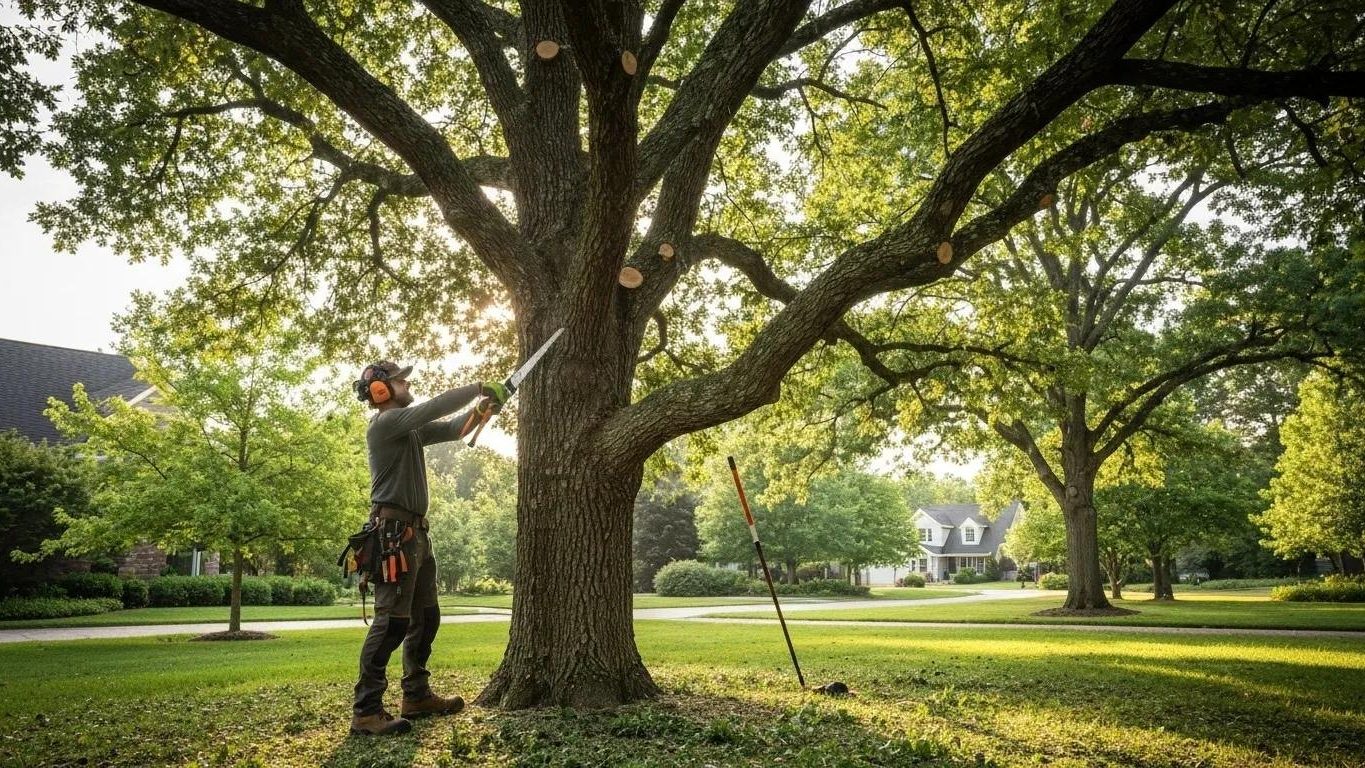
Timing matters as much as technique. For most deciduous trees in this part of the Midwest, late winter to early spring, while the tree is still dormant, is the ideal pruning window. Without leaves in the way, the branch structure is easy to evaluate, cuts heal quickly once growth resumes, and the risk of spreading disease is lower.
There are exceptions. Spring-flowering trees such as lilacs and some magnolias should be pruned right after they bloom, or you will remove next year’s flowers. Oaks are best pruned in the cooler months to avoid attracting beetles that spread oak wilt. Heavy pruning in late summer can trigger tender new growth that does not harden off before frost, so it is usually avoided.
Dead, broken, or hazardous branches are the big exception to every calendar rule. Remove those any time of year. If you are unsure about timing for a specific species, it is smart to visit our site and ask a certified professional before making the first cut.
Seasonal Pruning Calendar for Local Trees
A simple calendar removes the guesswork. The table below summarizes general timing for common tree types, though individual species and conditions can shift the schedule slightly.
| Tree Type | Best Pruning Time | Key Note |
|---|---|---|
| Maple and Birch | Late summer or fall | Heavy sap flow if cut in early spring |
| Oak | Dormant season | Avoid spring and summer cuts |
| Ash and Elm | Late winter | Monitor closely for pest damage |
| Flowering Ornamentals | Right after blooming | Protects next season’s flowers |
| Evergreens | Late winter to early spring | Light shaping only |
Use this as a starting point and adjust after an inspection. Storm damage, disease, or sudden decline can override the calendar at any time.
Warning Signs Your Tree Needs Attention
Some symptoms deserve prompt action rather than a wait-and-see approach. Deadwood in the upper canopy is one of the clearest, because brittle limbs can fall without warning. Branches that rub against each other create wounds that invite insects and decay. Limbs hanging over a roof, power line, or walkway are hazards even when they look healthy.
Watch for the following red flags:
- Large dead or hanging branches, especially over structures or parking areas
- Included bark, where two trunks form a tight V-shaped union that tends to split
- Sudden leaning or fresh soil cracks around the base
- Excessive sprouts at the base or along the trunk, a sign of stress
- Visible insect activity such as small exit holes, sawdust, or webbing
If you spot two or more of these at once, treat it as urgent. Multiple stress indicators often mean the problem is advanced, and a professional assessment can tell you whether pruning, treatment, or removal is the right call.
Common Pests and Diseases to Watch For
The Midwest has its share of tree pests. The emerald ash borer has devastated ash populations across the region, leaving telltale D-shaped exit holes and canopy thinning from the top down. Gypsy moth caterpillars can strip foliage in a single season, and Dutch elm disease continues to threaten elms with wilting, yellowing leaves that spread branch by branch.
Fungal problems are just as common. Anthracnose, apple scab, and powdery mildew show up as spotted, curled, or discolored leaves, usually after wet springs. Most are cosmetic on established trees, but repeated infections weaken a tree over time. Cankers, which appear as sunken or swollen patches on bark, can girdle branches and kill them.
Good pruning is often part of the treatment. Removing infected limbs, opening the canopy for airflow, and sanitizing tools between cuts all slow the spread. Prompt action keeps a minor infestation from becoming a property-wide problem and protects neighboring trees too.
How Weather and Soil Affect Your Trees
Chicago-area weather is hard on trees. Freeze-thaw cycles crack bark, summer thunderstorms bring high winds, and heavy clay soil common across the region drains slowly and compacts easily. Compacted soil starves roots of oxygen, which is one of the most overlooked causes of slow decline in urban trees.
Drought stress is another quiet threat. A tree that looks fine in July may drop leaves early or suffer dieback the following year. During dry spells, deep watering once a week is far better than frequent light sprinkling. Aim to soak the soil several inches down across the full drip line, not just near the trunk.
Mulch helps on both ends of the spectrum. A two to four inch layer of wood chips holds moisture, moderates soil temperature, and reduces competition from grass. Keep it pulled back a few inches from the trunk, because piling mulch against the bark invites rot and pests. Think of it as a donut, never a volcano.
DIY Pruning Versus Hiring a Professional
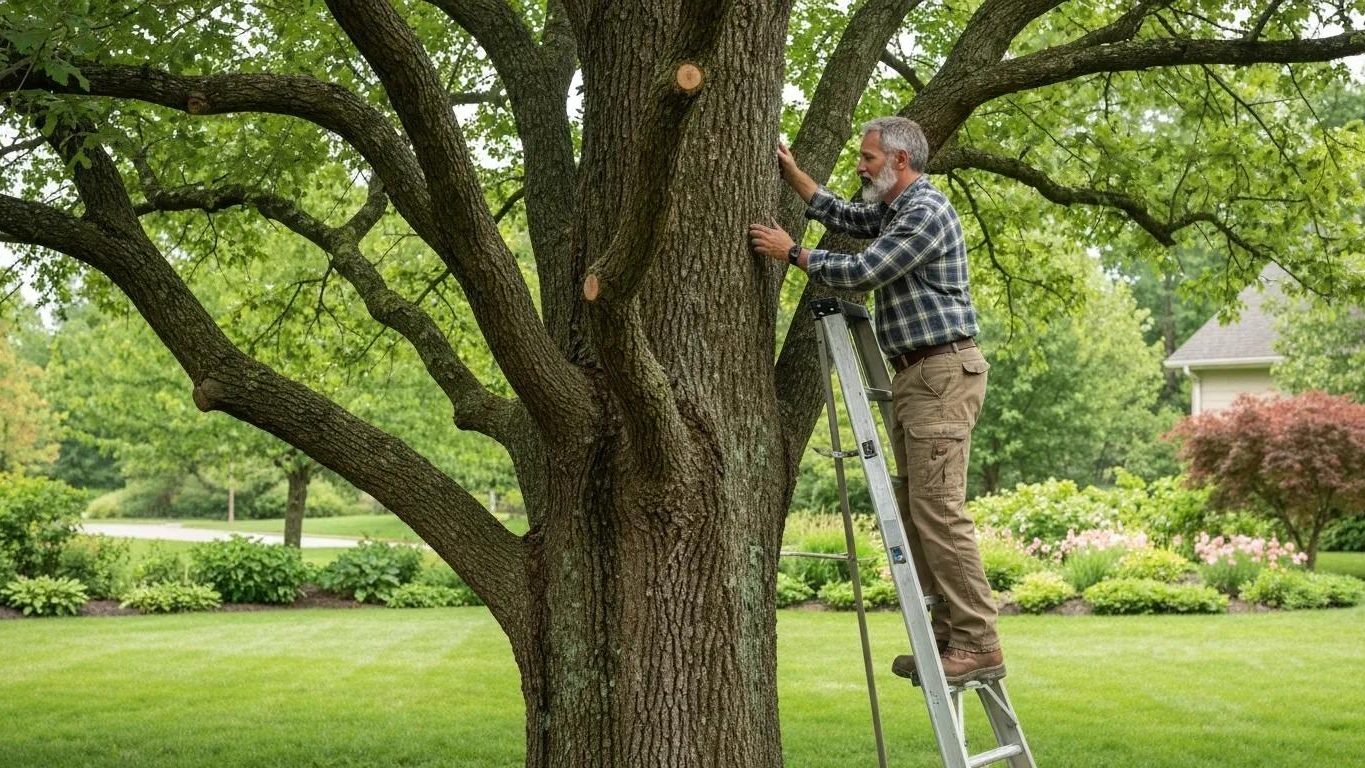
Small jobs are reasonable to tackle yourself. Trimming low branches on a young tree, cutting back shrubs, or removing a twig you can reach from the ground with hand pruners is well within most owners’ abilities. Use sharp, clean tools and make cuts just outside the branch collar, the slightly swollen ring where a branch meets the trunk.
Anything involving a ladder, a chainsaw, or a large limb is a different story. Tree work is consistently ranked among the more dangerous residential jobs, and mistakes can injure people, damage property, or permanently harm the tree. Work near power lines should never be attempted by anyone other than a qualified utility-certified crew.
Another risk is topping, the practice of chopping major limbs back to stubs. It is tempting because it looks like quick progress, but it produces weak, fast-growing shoots and opens large wounds that rot. A trained arborist knows how to thin, reduce, and shape a canopy without sacrificing structure, which protects both safety and long-term health.
Choosing a Qualified Tree Care Provider
Not every person with a truck and a chainsaw is a trained arborist. Start by asking about certification, such as credentials from the International Society of Arboriculture, along with proof of liability insurance and workers’ compensation. If a crew cannot show both, you could be financially responsible for any accident on your property.
Ask for a written estimate that spells out exactly which trees will be worked on, what cuts will be made, and how debris will be handled. Be cautious of anyone who pushes topping, uses climbing spikes on trees that are staying, or demands full payment before starting. Reputable companies explain their approach and welcome questions.
Local reputation counts, too. Check reviews, ask neighbors, and look for a business with a visible track record in the community. Established providers such as Prime Tree Care, Inc are easy to evaluate through customer feedback and years in the field, which makes your decision far less of a gamble.
When Pruning Is Not Enough
Pruning can solve a surprising number of problems, but it cannot save every tree. A trunk with extensive decay, a major structural split, or a root system compromised by construction or disease may be beyond repair. Continuing to invest in a failing tree can be more costly than replacing it, and keeping a hazardous tree in place is a safety risk.
An arborist will typically weigh several factors: the percentage of live canopy remaining, the extent of internal decay, the tree’s location relative to buildings and people, and its species and age. A hazardous tree beside a busy entrance demands a different decision than a declining tree in a far corner of a large lot.
If removal is recommended, consider it a chance to plant smarter. Choose species suited to the site, give young trees enough room to mature, and avoid planting too close to foundations or utilities. A thoughtful replacement plan keeps your landscape healthy and attractive for the decades ahead.
Building a Year-Round Tree Care Routine
The easiest way to protect your trees is to make care a habit instead of an emergency response. In winter, schedule dormant pruning and inspect for storm damage. In spring, watch for new growth, check for leaf disease, and apply mulch. Summer is the time for deep watering and monitoring pests, and fall is ideal for a final inspection before harsh weather arrives.
Keep a simple log that records dates, observations, and any work performed. Over time, this record makes it far easier to spot trends and gives a professional useful context during a visit. Even a few lines in a notebook or phone note can save guesswork later.
For commercial properties, build tree care into your annual maintenance budget alongside paving, lighting, and landscaping. Predictable, scheduled spending beats surprise bills after a storm, and it demonstrates to customers and tenants that the grounds are well managed.
Final Thoughts
Strong, attractive trees are never an accident. They are the result of regular attention, good timing, and a willingness to act on early warning signs. When you understand what a healthy canopy looks like, learn the signals of stress, and prune at the right time of year, you protect your property, your budget, and the people who spend time under those branches.
Remember the essentials. Inspect your trees at least once a year and after major storms. Prune most species during dormancy, with exceptions for flowering and oak varieties. Remove dead or hazardous limbs right away, water deeply during dry spells, and mulch correctly. Leave high, heavy, or risky work to trained, insured professionals, and know when a tree has simply reached the end of its useful life.
Whether you own a home, run a small business, or manage a property portfolio, steady tree care is one of the most cost-effective things you can do. Start with a simple walk-around this week, take a few photos, and note anything that looks off. A little attention now keeps your trees healthy, your property safe, and your landscape something you can be proud of for years to come.