
To remove tree limbs safely yourself, first decide if the job’s within your limits—avoid big limbs, power lines, or high cuts. Inspect the tree for decay, dead wood, and safe drop zones. Use sharp loppers, a hand saw or pole saw, plus eye, head, and hand protection. Set ladders securely, never overreach, and cut with an undercut then top cut to prevent tearing. Manage falling branches and cleanup carefully, and you can learn smart ways to handle each step.
Key Takeaways
- Assess the tree and limb size, height, decay, and nearby power lines; hire a professional for large, high, or compromised branches.
- Use proper tools and PPE: sharp saws or pole saws, helmet, eye protection, gloves, sturdy boots, and snug clothing.
- Identify the branch collar and use a three-cut method (undercut, top cut, final trim) to prevent bark tearing and protect tree health.
- Set up a safe work zone: clear and mark the drop area, plan escape routes, and never cut with people, pets, or property beneath.
- For higher limbs, use a rated extension ladder or manageable pole saw, maintain three points of contact, and avoid overreaching or working in strong wind.
Know When You Should (And Shouldn’t) Remove Tree Limbs Yourself
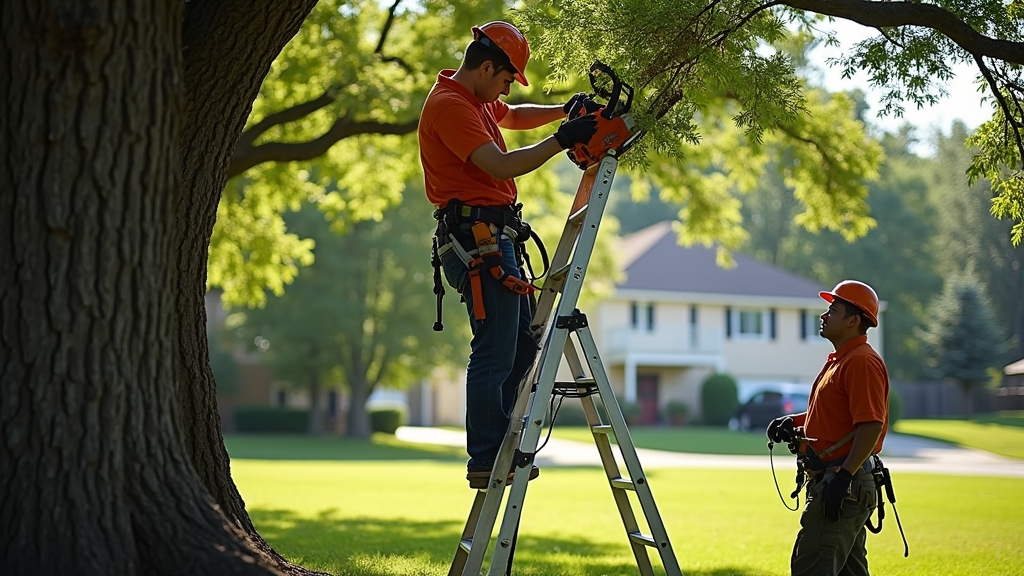
Before you grab a saw, pause and ask yourself whether this is a DIY job or one that belongs to a professional. Start by considering your safety. If you’d need to climb higher than a standard ladder, work near power lines, or handle branches thicker than your wrist, you shouldn’t do it yourself.
Larger cuts can kick back, crush you, or shatter windows as they fall.
Next, look at your experience and tools. If you’ve never used a pruning saw or chainsaw, a tree isn’t the place to learn. Professionals bring ropes, rigging, and insurance you probably don’t have.
If you’ve never handled cutting tools, a living tree is the worst classroom imaginable.
Finally, think about long‑term tree health, not just quick clearance. Minor limb overgrowth that you can reach from the ground with a hand saw is usually safe to tackle.
But if the limb supports many others or anchors a main section of canopy, call an arborist for professional guidance.
Inspect the Tree and Plan Your Cuts

Once you’ve decided the job’s within your limits, slow down and study the tree from several angles. Start with overall tree health: look for dead sections, bark wounds, fungus, and large cracks in the trunk or major branches. If you see significant decay or cavities, don’t cut; call a professional.
Next, do a limb assessment. Identify which branches must go for safety or clearance and which you can leave for balance. Trace each target limb back to its parent branch and locate the branch collar—the slightly swollen area where they meet. Plan to cut just outside that collar so the tree can seal the wound.
Now look at what’s beneath and around every target limb. Picture the exact path it will fall. Check roofs, fences, wires, and plants, and choose a drop zone that keeps people and property out of harm’s way.
Recheck your plan before any cutting.
Gather the Right Tools for Safe Tree Limb Removal
Even simple limb cuts can go wrong fast if you’re using the wrong gear, so start by assembling tools that keep you both effective and protected.
You don’t need every gadget in the catalog; you need the right tool types for the limbs you planned to cut. For small branches, a sharp hand saw or bypass loppers gives you control. For thicker limbs, a well‑maintained pruning saw or chainsaw with fresh chain works better. Always match the tool’s reach to the branch height, so you’re cutting from a stable stance, not overreaching. Alongside cutting tools, put on safety equipment before you even touch the tree. Use this quick guide to double‑check your essentials:
| Category | Key items | Purpose |
| Cutting tools | Saw, loppers | Clean cuts |
| Support gear | Pole saw | Safer, secure reach |
| Safety equipment | Helmet, eye protection | Stop impact, debris |
| Clothing | Boots, sleeves | Slips, scrapes |
Set Up a Safe Tree Limb Work Zone
Before you make any cuts, you need to clear the drop zone so falling limbs don’t hit anything or anyone.
You’ll protect people and property by moving vehicles, furniture, pets, and bystanders well outside the danger area.
You’ll also plan safe escape routes so you can move quickly and confidently if a limb falls in an unexpected direction.
Clear The Drop Zone
A safe limb removal job starts with clearing a proper drop zone—the ground area where branches will land.
Begin drop zone preparation by looking straight up and tracing where each limb will likely fall. Mark that footprint on the ground with flags, cones, or bright rope so you always know the no‑standing area.
Remove anything that could catch or deflect a falling limb: tarps, garden tools, ladders, loose boards, toys, or uneven scrap wood. Rake away sticks and rocks that might trip you while you move.
For better tree limb safety, create at least two clear walking paths into and out of the zone so you’re never boxed in. Keep your cutting tools stored just outside the marked area for quick access between cuts.
Protect People And Property
Once the drop zone’s marked, turn your focus to keeping people and property out of harm’s way. Establish a visible boundary with cones, tape, or rope and tell everyone to stay out until cutting’s finished.
Use this quick checklist to organize your tree limb safety setup and property protection steps:
| Priority | Action |
| People | Clear children, pets, and bystanders from the yard and nearby sidewalk. |
| People | Assign one adult as a spotter to watch for anyone entering the work zone. |
| Property | Move vehicles, grills, and furniture beyond the far edge of the drop zone. |
| Property | Lay down plywood or thick pads to shield roofs, decks, and fragile landscaping. |
Keep distractions low so you can stay alert. Stop work immediately if anyone wanders near the boundary.
Plan Safe Escape Routes
Even when you’re confident in your cut, you still need a clear way out if the limb shifts or falls unpredictably, so plan at least two escape routes before you start the saw.
Visualize where the limb might swing, bounce, or roll, then build an escape plan that keeps you moving away from that path.
Use simple route mapping on the ground:
- Identify two paths that angle back from the tree at about 45 degrees, free of tools, roots, and debris.
- Clear snow, mud, or tripping hazards so you can move quickly without looking down.
- Stand so you’re already facing an escape route, saw on the outside, and practice taking two fast steps along it before you cut if needed today.
Make Proper Pruning Cuts on Small Limbs
Start small by learning to make clean, precise cuts on limbs under about 2 inches thick, since these are where most homeowners do their pruning. With good pruning techniques, you protect limb health and the tree’s defenses. First, locate the branch collar, the swollen ring where the limb meets the trunk or larger branch. You’ll cut just outside this collar, never flush with the trunk.
Use this simple guide as you work:
| Step | What You Do |
| 1 | Stand where you can see the collar clearly. |
| 2 | Support the limb with one hand if possible. |
| 3 | Saw from the underside slightly, then finish from the top. |
| 4 | Leave a small stub outside the collar; don’t cut into it. |
Keep strokes smooth so you don’t tear bark or crush tissue.
Remove Medium Tree Limbs Safely From the Ground
Tackling medium limbs—roughly 2 to 6 inches thick—raises the stakes for both safety and technique, because they’re heavier, under more tension, and can kick back or tear the trunk if you cut them wrong.
Start by planning ground removal: identify where the limb will fall, clear that zone, and choose a path to retreat. Wear eye protection, gloves, hard hat, and sturdy boots to keep tree limb safety front and center.
Use a sharp pruning saw or chainsaw you can handle confidently from the ground. Stand to the side of the limb, never directly beneath it, and keep both feet planted. For heavier branches, reduce weight first by cutting off smaller side shoots.
- Make a shallow undercut a foot from the trunk to prevent bark tearing.
- Finish with a top cut slightly farther out so the limb drops cleanly.
- Make a final pruning cut at the branch collar.
Use Ladders and Pole Saws Safely
When branches are out of reach, you’ll need to choose the right ladder and use a pole saw correctly to stay safe.
You’ll set up and climb your ladder in a controlled way, then handle the pole saw so it cuts branches without pulling you off balance.
With a few key steps, you can prevent falls and injuries while still reaching high limbs.
Choosing the Right Ladder
Although removing limbs might tempt you to grab any ladder you own, choosing the right one is critical for staying stable and safe. Start by understanding ladder types: step, extension, and multi-position.
For most tree work, you’ll rely on a sturdy extension ladder rated for outdoor use and your weight plus tools. Check the duty rating label; aim for Type I or stronger.
Keep ladder safety in mind every time you set up. Place the feet on firm, level ground and follow the 4-to-1 rule: for every four feet of ladder height, move the base one foot away from the trunk.
- Inspect rails, rungs, and feet before every climb
- Lock all braces and extensions fully
- Tie off the ladder whenever possible for added security
Proper Pole Saw Handling
Before you start cutting with a pole saw, learn how to control its weight, balance, and reach. Stand with feet shoulder‑width apart, keep your core tight, and grip the pole lightly but firmly. Start cuts with the saw at chest level, then guide it upward; don’t muscle the tool or overextend.
Understand pole saw types so you choose a length and power source you can actually manage. Keep the bar aligned with the limb, and let the chain do the work using smooth, shallow strokes for steadier, smoother overhead control and accuracy.
| Focus | What to Do | Why it Matters |
| Grip | Use two hands, relaxed | Reduces fatigue, twitching |
| Angle | Cut at slight upward angle | Maintains control of kerf |
| Care | Follow maintenance tips | Keeps cuts predictable |
Preventing Falls And Injuries
Even if you handle a pole saw well, most serious accidents happen because people misjudge their footing, reach, or balance. Treat fall prevention as seriously as cutting technique.
Before climbing, inspect your ladder; make sure every foot sits flat, the locks engage, and the angle is about 75 degrees. Never lean your ladder on weak branches or unstable ground.
Keep injury awareness high by planning every cut from the ground first. If a limb requires you to stretch, reposition the ladder or use a longer pole saw instead of reaching.
- Maintain three points of contact on the ladder at all times.
- Keep your belt buckle between the rails; don’t overreach.
- Descend immediately if wind, fatigue, or dizziness increases while using ladders.
Control Falling Limbs and Protect Your Property
Two priorities guide every cut you make: where the limb will fall and what it might hit. Before you saw, study the area beneath the branch. Identify roofs, fences, vehicles, and windows at risk of property damage, then reposition anything movable. Clear people and pets from the drop zone.
Plan how you’ll control the limb falling. For small branches, cut them into short sections you can hold with one hand while sawing with the other, always standing to the side of the cut.
For larger limbs, use a sturdy rope: throw it over the limb, tie a secure knot, and have a helper hold tension from a safe distance to guide the fall.
Make a shallow undercut first, then finish from the top so the limb snaps cleanly instead of tearing and swinging unpredictably. Stop immediately if wind or limb movement becomes hard to manage for you alone.
Dispose of Cut Tree Limbs Safely
Once the branches are on the ground, you still need to handle them safely and legally.
You’ll check your local rules for curbside or bulk pickup so you don’t block sidewalks or create hazards.
You’ll also look at eco-friendly options like chipping, composting, or green-waste recycling to keep limbs out of the landfill.
Curbside and Bulk Pickup
Before you drag a pile of branches to the curb, learn your local rules so haulers can actually take them. For standard curbside pickup, cities usually require limbs to be cut to a specific length, bundled with twine, and kept under a weight limit.
Check whether your hauler accepts mixed brush or only tree limbs.
- Call your waste department and confirm size limits, bundle rules, and pickup days.
- Ask if you need to schedule bulk disposal or place limbs out on regular trash day.
- Keep branches clear of mailboxes, drains, and vehicles so the truck’s grabber can reach them safely.
If curbside options are limited, ask about drop-off days at your local transfer station.
Clarify fees, container requirements, and holiday changes before piling more.
Eco-Friendly Recycling Options
Instead of sending every branch to the landfill, you can turn those limbs into useful, eco-friendly materials right at home or through local programs.
Start by cutting branches into manageable pieces, then separate straight, clean sections for reuse as garden stakes or simple edging.
For composting tree limbs, chip or saw them into small chunks so microorganisms can break them down faster; add nitrogen-rich materials like grass clippings to balance the mix.
Mulch creation is another smart option: run limbs through a chipper and spread the chips around trees and beds to retain moisture and suppress weeds.
If you lack equipment, look for municipal wood-waste sites, community gardens, or landscapers who accept clean, untreated branches.
Ask about free pickup or drop-off to simplify recycling.
Common Tree Limb Removal Mistakes to Avoid
Although removing branches might look straightforward, several common mistakes can damage your tree, your property, or you. You avoid many problems by slowing down and planning each cut.
First, never rush into limb removal without inspecting the tree’s overall health, lean, and nearby hazards like power lines, sheds, or fences.
Second, don’t ignore basic safety guidelines: wear eye and ear protection, gloves, helmet, and secure, non-slip boots.
- Cutting from the top down in one pass, which can cause the limb to split, tear bark, and drop unpredictably.
- Sawing through the trunk flare or cutting flush with the trunk, which prevents proper healing and invites decay or disease.
- Working from an unstable ladder, reaching too far, or standing under the branch you’re cutting, which greatly increases your risk of serious injury.
Frequently Asked Questions
How Much Does DIY Tree Limb Removal Actually Save Compared to Hiring an Arborist?
You might save several hundred dollars with DIY, but exact amounts vary by tree size and location; realistic cost comparison must also weigh equipment expenses, your time, liability risks, and safety considerations that professionals manage.
Are There Specific Times of Year When Limb Removal Improves Fruit or Flower Production?
Yes, you’ll boost fruit and flower production when you match pruning techniques to seasonal timing: prune most fruit trees in late winter, spring bloomers after flowering, and summer bloomers in late winter or early spring.
How Can I Tell if My Neighbor’s Tree Limbs Encroaching My Yard Can Be Removed?
You can usually trim encroaching limbs back to your property lines, but you’ll want to confirm a survey, review local ordinances, discuss plans with your neighbor, and consult an arborist to avoid harming tree health.
Will Removing Certain Limbs Increase My Home’s Risk During High Winds or Storms?
Yes, removing certain limbs can increase risk if you unbalance the canopy, reduce wind resistance, or create weak stubs. You should consult an arborist, prioritize your storm preparedness, and avoid cutting large, structurally important branches.
How Do Local Ordinances or HOA Rules Affect Which Tree Limbs I Can Remove?
Local ordinances and HOA rules limit which limbs you can cut; you must follow tree removal regulations, respect property line considerations, obtain approvals, and avoid altering neighboring protected trees without written consent and permits first.
Final Thoughts
By taking time to plan your cuts, choose the right tools, and work methodically, you can safely handle small, manageable tree limbs and protect your home and landscape. Respect your limits—especially with high, heavy, or structurally important branches—and remember that some work is best left to experienced professionals.
If a limb is large, near power lines, or close to your roof, step back and call the experts at Prime Tree Care, Inc. Their team provides complete tree removal service in Blue Island, including safe tree removal, tree trimming, and stump removal, so you don’t have to take unnecessary risks or worry about long-term damage to your trees.
When you prepare your work zone carefully, control falling branches, and avoid common mistakes—and partner with local tree removal experts in Blue Island, IL for any job that feels too big, high, or risky—you’ll keep yourself, your home, and your trees safer for years to come while still enjoying the savings and confidence that smart DIY projects can offer. To schedule an inspection, request a quote, or get help with urgent issues, contact Prime Tree Care, Inc today.