
For storm-damaged trees, start by removing broken or hanging branches to reduce risks. Always use sharp, clean tools and cut branches at a slight angle to promote healing. Avoid stubs that attract pests. If you encounter large branches, cut them in sections to prevent bark tearing. Don’t forget to wear protective gear while you prune. By following these techniques, you can help your trees recover effectively. You’ll discover even more tips to enhance your tree care if you keep going.
Key Takeaways
- Assess the tree for significant damage, including broken branches and leaning trunks, before starting any pruning activities.
- Use sharp, clean tools to make precise cuts and minimize further injury to the tree.
- Remove hazardous branches first, cutting them in sections to prevent bark tearing and ensure safety.
- Cut at a slight angle to encourage healing and avoid leaving stubs that attract pests.
- Consult a professional arborist for extensive damage or if you’re unsure about the tree’s health.
How to Assess Storm Damage on Your Trees

After a storm, your trees might look battered, but evaluating the damage is crucial for their recovery. Start with a thorough damage assessment. Check for broken branches, torn bark, or leaning trunks.
Look closely at the canopy; if you see significant leaf loss or discoloration, it could indicate stress affecting tree health.
Next, inspect the root system. If roots are exposed or damaged, that’s a serious concern. Use a shovel to carefully uncover any buried roots, ensuring they’re intact and healthy.
Don’t forget about the trunk. Look for cracks or splits, as these can compromise stability and overall health.
If you notice extensive damage, it’s wise to consult a professional arborist. They can provide expert guidance to help restore your trees while ensuring their long-term health.
Prioritizing this assessment now will set the stage for effective recovery later.
Effective Pruning Techniques for Storm-Damaged Trees
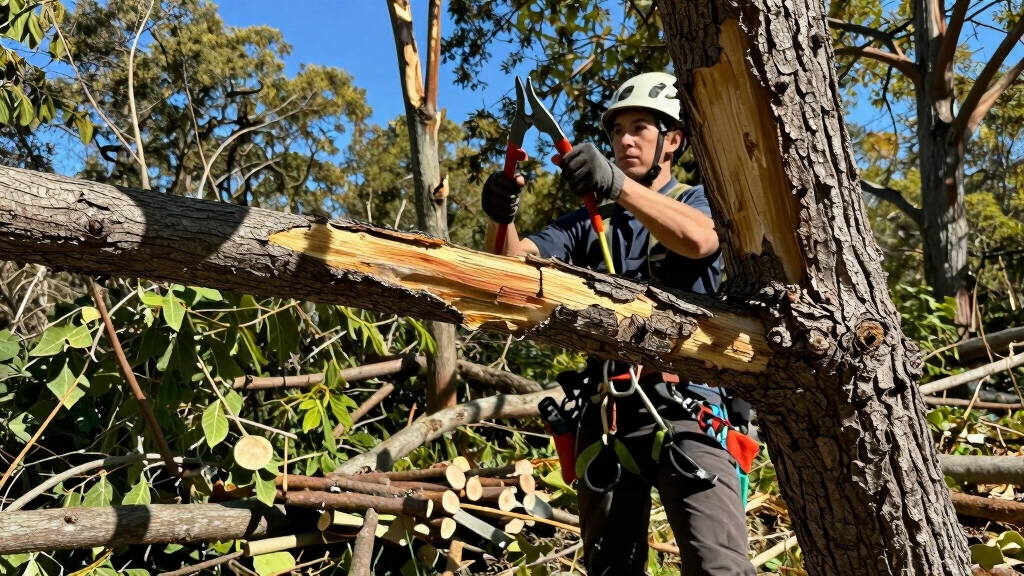
When evaluating storm-damaged trees, effective pruning is essential for their recovery and long-term health. Start by examining the damage; remove any broken or hanging branches that pose a risk.
Always prioritize pruning safety—use sharp, clean tools and wear protective gear like gloves and goggles.
Always prioritize safety during pruning: use sharp tools and wear protective gear like gloves and goggles.
Cut branches at a slight angle to promote healing and avoid leaving stubs that can invite pests. Focus on removing unhealthy or weak limbs, which can hinder tree recovery.
If you encounter large branches, it’s best to cut them in sections to prevent tearing the bark.
Take your time and don’t rush the process; proper pruning can greatly enhance the tree’s ability to recover.
Regularly inspect your trees, especially after storms, to keep them healthy and thriving.
When to Call a Professional for Tree Care
How do you know when it’s time to call a professional for tree care? If your tree has suffered significant storm damage, it’s vital to get a professional assessment. Look for signs like large broken branches, leaning trunks, or visible decay.
These issues can threaten not just the tree’s health but also your property and safety.
If you’re unsure how to assess the damage, a certified arborist can provide the expertise you need. They’ll evaluate the tree’s condition and recommend the best course of action, whether it’s pruning, cabling, or removal.
Trusting a professional guarantees you’re making informed decisions, especially if the tree poses a risk.
Don’t hesitate to reach out if you notice any of these warning signs. Prioritizing tree health and safety is essential, and getting help early can prevent more extensive damage down the line.
Frequently Asked Questions
Can I Prune Storm-Damaged Trees in Winter?
Yes, you can prune storm-damaged trees in winter. Winter pruning helps promote tree recovery by minimizing stress and encouraging new growth in spring. Just make sure the tree is dormant and avoid cutting live branches.
How Do I Prevent Future Storm Damage?
To prevent future storm damage, focus on storm preparedness by regularly inspecting your trees and enhancing tree resilience through proper pruning, watering, and fertilization. Strong, healthy trees are less likely to suffer during severe weather.
What Tools Are Best for Pruning Trees?
For pruning trees, use sharp hand pruners, loppers, and saws. Prioritize pruning safety with gloves and goggles, and guarantee tool maintenance by cleaning and sharpening regularly. This keeps your tools effective and your pruning safe.
Are There Specific Tree Species More Prone to Damage?
Yes, some species are more vulnerable to damage due to lower tree resilience. Weak-wooded trees like willows and soft maples often suffer more in storms, while stronger species like oaks tend to withstand better.
How Do I Care for Trees After Pruning?
After pruning, you should monitor tree health closely. Water your trees regularly and avoid fertilizing immediately. Pruning timing matters; wait for the right season to guarantee proper healing and encourage strong growth.
Final Thoughts
Storm-damaged tree pruning is all about safety, clean cuts, and smart decision-making. Removing hazardous limbs quickly helps reduce risk, while proper cuts support healing and long-term recovery. Just remember: not every storm-damaged tree is a DIY job—large broken limbs, split trunks, or trees leaning toward structures can become dangerous fast, and the safest choice is often professional help.
Prime Tree Care, Inc is ready to step in when the damage is beyond basic pruning. Whether you need urgent help through our emergency tree service, corrective tree pruning, or full tree removal, our team can assess the situation and handle it safely. You can also explore our full range of tree care services to stay ahead of future storm risks.
If you’re unsure whether your tree can be safely pruned—or if it poses a hazard—contact Prime Tree Care, Inc today through our Contact Us page to schedule an inspection and get expert guidance.