
You can protect your landscape from plant diseases by acting early with arborist diagnostics, spotting subtle leaf, twig, and bark changes before they spread. You then use targeted pruning, strict tool sanitizing, and safe disposal of infected debris to stop pathogens. Next, you improve soil health, fix drainage, and fine‑tune watering to strengthen roots. Finally, you manage pests, choose disease‑resistant plants, and apply integrated treatments with an arborist’s help, and there’s more you can apply.
Key Takeaways
- Use professional arborist diagnostics and site assessments to identify diseases early, preventing misdiagnosis and unnecessary chemical use.
- Apply targeted pruning with sterilized tools, removing only infected wood and disposing of debris safely to stop pathogen spread.
- Maintain rigorous tool sanitization using isopropyl alcohol or bleach between cuts on suspect branches to prevent cross-contamination.
- Improve soil health and water management through aeration, drainage solutions, and mulching to strengthen trees’ natural disease resistance.
- Implement integrated treatments—accurate diagnosis, pruning, soil improvement, calibrated fertilization, and monitored fungicide or pest control—to restore and maintain tree health.
Detect Plant Diseases Early With Arborist Diagnostics
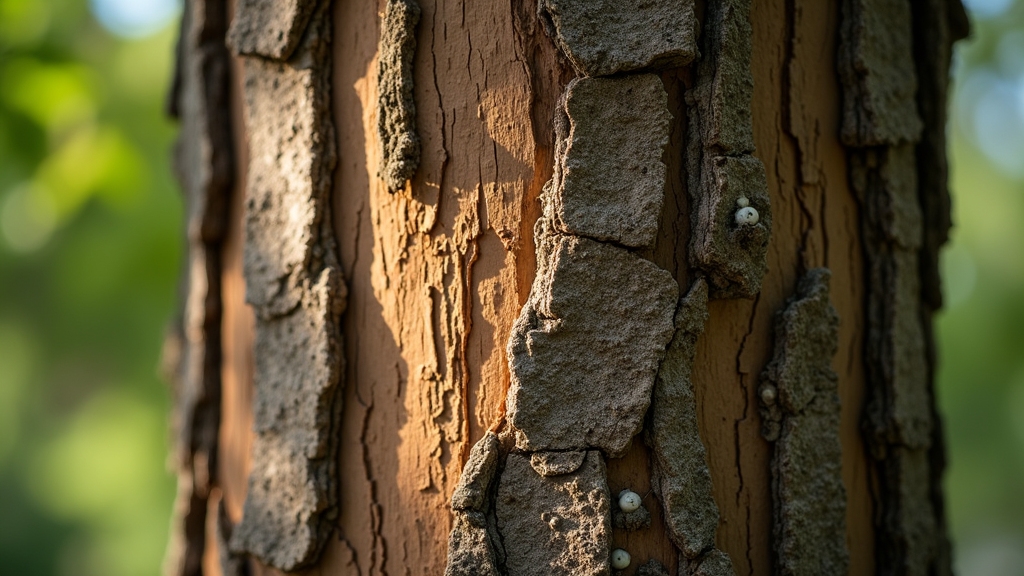
Even when a tree still looks healthy, arborist diagnostics can uncover early signs of disease that you’d never spot on your own.
By looking beyond obvious damage, an arborist helps you catch early symptoms while problems are still manageable. They study leaf color patterns, twig dieback, cankers, and subtle changes in growth that point to specific pathogens or environmental stress.
During a site visit, the arborist asks about recent weather, soil changes, and maintenance habits.
Then they combine that history with specialized diagnostic tools: soil probes, moisture meters, resistance drills, and sometimes lab tests of tissue or root samples.
These methods reveal what’s happening inside the tree and below ground, where you can’t see.
With a clear diagnosis, you avoid guessing, misusing chemicals, or overlooking hidden issues that could spread through your landscape.
Early, accurate information lets you prioritize care and protect nearby plants from disease and decline.
Use Targeted Pruning to Remove Infected Growth
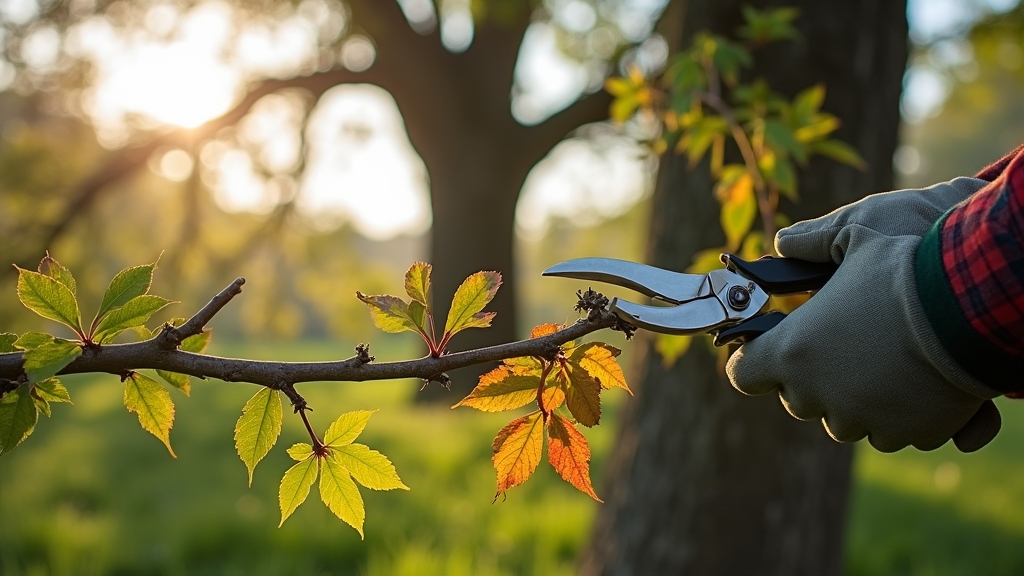
When you spot diseased branches early, you can stop pathogens from spreading deeper into your trees.
You’ll use precise pruning cuts to remove only the infected wood while protecting healthy tissue.
Then you’ll handle and dispose of the contaminated material correctly so it doesn’t reintroduce disease to your landscape.
Identifying Diseased Branches
Although a tree can hide problems beneath healthy foliage, diseased branches usually reveal themselves through subtle but consistent warning signs you can learn to spot.
Begin by scanning the canopy for irregular patterns: isolated sections with sparse leaves, dead twigs, or sudden leaf wilting that doesn’t match seasonal change.
Next, examine the bark. Look for cracks, sunken areas, oozing sap, or fungal growth. Branch discoloration, such as dark streaks or unusual staining beneath the bark, often signals internal decay.
Gently bend suspect twigs; healthy wood flexes and stays green inside, while diseased wood snaps easily or shows brown, dry tissue.
Finally, compare questionable branches with healthy ones to confirm that color, vigor, and leaf density differ clearly from the surrounding canopy under similar conditions.
Proper Pruning Techniques
Once you’ve pinpointed which branches are diseased, the next step is to remove them with precise, targeted cuts. Start by sterilizing your tools, then prune back to healthy wood, cutting at a slight proper angle just outside the branch collar so the tree can seal the wound efficiently.
Avoid leaving stubs or cutting flush against the trunk; both slow healing and invite new infections. Pay close attention to seasonal timing: many trees respond best to pruning during late winter dormancy, when pathogens and insects are less active and the tree can direct energy into recovery.
Use deliberate, single motions rather than sawing back and forth, and always support heavier limbs to prevent tearing the remaining tissue. This protects structure and minimizes additional stress overall.
Disposing Infected Material
Even after you’ve removed diseased branches with careful pruning, the job isn’t finished until you handle the infected debris correctly.
Treat every leaf, twig, and fruit as a potential source of reinfection. Don’t toss it on your regular compost pile; most home composting techniques don’t reach temperatures high enough to kill pathogens. Instead, double‑bag small quantities and place them in the trash, or follow your municipality’s guidelines for responsible disposal, such as designated green‑waste bins.
For larger volumes, consider chipping only if your arborist confirms the material can be safely reused as mulch.
Never leave prunings on‑site or dump them in natural areas, where wind, water, and tools can spread spores to healthy plants. Burning may be allowed locally but always check fire regulations.
Sanitize Tools and Debris to Stop Disease Spread
Because plant pathogens hitchhike easily on blades, gloves, and fallen clippings, sanitizing tools and debris is one of the most effective steps you can take to stop disease from spreading through your landscape. You’ll apply consistent tool sanitization methods whenever you cut suspect branches or move between trees. First remove sap and soil, then disinfect blades, saw bars, and drill bits with 70% isopropyl alcohol or a 10% bleach solution. Let metal surfaces stay wet with the solution for thirty seconds before wiping or air‑drying. Combine cleaning with debris disposal techniques that keep pathogens away from plants. Bag infected pieces and send them to the trash; never toss them onto piles or compost.
| Task | Cleaner | Timing |
| Pruners | Alcohol | Between-cuts |
| Saws | Bleach | After-tree |
| Gloves | Soap | End-of-day |
Improve Soil Health to Boost Disease Resistance
To build trees that resist disease, you need to treat soil health as your first line of defense.
When you optimize soil structure, roots can access air, water, and nutrients more effectively, strengthening a tree’s natural immunity.
Optimize Soil Structure
While fungicides and pruning can control symptoms, long-term disease resistance starts underground with healthy, well-structured soil. You optimize soil structure by relieving soil compaction, improving aggregation, and balancing air and water. Use an air spade, vertical mulching, or radial trenching instead of deep tilling that severs roots. Then layer organic amendments—composted wood chips, leaf mold, or manure—over the root zone, never against the trunk. They soften, increase porosity, and stabilize moisture, so roots explore deeper and tolerate stress.
| Practice | Structural Benefit |
| Mulch ring | Reduces crusting |
| Air spading | Loosens compacted layers |
| Vertical mulching | Adds pores for gas exchange |
| Raised beds | Improve drainage on wet sites |
| Root-zone fencing | Prevents compaction |
Enhance Microbial Activity
As soil structure improves, the next step is energizing the living community that actually defends roots: beneficial microbes.
You enhance microbial activity by feeding and protecting this underground workforce. Focus on microbial diversity, because a wider range of organisms fills more ecological roles and blocks more pathogens.
Apply gentle, carbon‑rich soil amendments such as finished compost, compost teas, and mulched leaves rather than high‑salt synthetic fertilizers. These materials supply food, moisture, and habitat for fungi and bacteria that partner with roots.
Avoid broad‑spectrum fungicides and unnecessary tilling, which disrupt fungal networks. Maintain moderate soil moisture and keep soil covered with organic mulch, so microbes stay active year‑round and your trees gain stronger, more resilient immune responses over time, reducing disease pressure and failure risks.
Manage Water and Drainage to Prevent Root Diseases
Healthy roots start with careful water management and effective drainage, because saturated or compacted soil starves roots of oxygen and invites fungi that cause rot.
You first evaluate how water moves across and through your site. Notice puddling, soggy low spots, or constantly wet mulch; these signal poor infiltration and rising disease risk.
Practice water conservation by irrigating deeply but infrequently, letting the upper soil dry slightly between cycles. Use drip lines or soaker hoses rather than overhead sprinklers to keep foliage dry and encourage deeper rooting.
Mulch two to three inches thick, but keep it pulled back from trunks so root collars stay aerated.
When water lingers, explore drainage solutions such as redirecting downspouts, installing French drains, or loosening compacted soil with core aeration.
On slopes, contouring shallow swales or terraces slows runoff, allowing moisture to soak in evenly while protecting roots from chronic saturation and decay.
Choose and Use Fungicides Safely With Arborist Guidance
Because fungicides can protect plants or harm them depending on how they’re used, you should always pair treatment with an arborist’s diagnosis and guidance. An arborist confirms the disease, selects the product, and plans fungicide application so you don’t waste or injure trees.
Together you’ll read labels, match active ingredients to the pathogen, and decide whether to treat foliage, soil, or trunk. The arborist will time treatments to weather and stage.
| Step | Your role | Arborist’s role |
| 1 | Describe symptoms | Verify disease |
| 2 | Provide details | Select fungicide |
| 3 | Follow mixing rates | Calibrate equipment |
| 4 | Keep records | Adjust plan |
You’ll practice safety precautions: wearing gloves, eye protection, respirator if needed, mixing outdoors, avoiding drift near water, and storing leftovers away from children and pets.
Control Pests That Spread Common Plant Diseases
While leaf spots and wilts get your attention, many plant diseases actually ride in on insects and mites, so controlling these pests becomes part of disease management—not just cosmetic care. You target the vectors to break disease transmission pathways before infections explode.
Begin with accurate identification. Aphids, leafhoppers, borers, and scale each spread specific pathogens, so you and your arborist tailor pest management to their biology and timing.
Target insect vectors first—each pest spreads distinct diseases, so time your controls to their life cycles.
- Inspect foliage and bark weekly, watching for honeydew, frass, stippling, and curling leaves.
- Prune out infested branches promptly, disinfecting tools between cuts to avoid mechanical spread.
- Use horticultural oils or soaps when populations are low, minimizing impacts on predators and pollinators.
- Introduce or conserve beneficial insects, such as lady beetles and lacewings, to suppress soft-bodied pests.
- Reserve targeted insecticides for severe outbreaks, choosing products and application methods your arborist confirms as safest for trees and surrounding ecosystems and nearby landscapes.
Choose Disease-Resistant Plants With Arborist Help
With an arborist’s guidance, you’ll first pinpoint the main disease pressures in your area so you’re not guessing which threats matter most.
From there, you can match tree and shrub species to your site’s light, soil, and moisture conditions so resistance isn’t wasted in the wrong spot.
Your arborist also helps you verify that so‑called “disease-resistant” varieties have proven, reliable resistance traits—not just marketing claims.
Identifying Local Disease Pressures
Although many tree diseases sound similar on paper, the threats in your neighborhood can be very different from those a few miles away, which is why pinpointing local disease pressures matters before you plant.
You and your arborist start by mapping what’s attacking trees around you, then connect it to measurable conditions:
- Local climate records that reveal stress periods and infection windows
- Environmental factors like shade, drainage, and nearby structures
- Soil composition tests that show nutrient gaps and waterlogging risks
- Tree diversity surveys indicating which species fail repeatedly
- Pest prevalence monitoring that tracks insects spreading fungi or blight.
Matching Species To Site
How do you turn that local disease knowledge into trees that actually thrive on your property? Your arborist starts by performing a site assessment, looking at soil type, drainage, light, wind, and existing vegetation.
They compare those factors with the main pathogens in your area, then narrow choices to species with proven tolerance and strong species compatibility with your yard’s conditions.
You’ll talk through goals—shade, screening, wildlife value, or appearance—and your arborist will match each purpose with several suitable tree options.
They’ll also consider root space, nearby structures, utilities, and traffic patterns so chosen trees stay healthy and safe as they mature.
Verifying True Resistance Traits
Before you invest in “disease‑resistant” plants, an arborist helps confirm those claims are real and relevant to your yard.
They look past marketing labels and focus on proven genetic resistance, tested in conditions similar to yours. Through careful trait evaluation, they distinguish between plants that merely tolerate infection and those that truly limit disease spread and damage.
An arborist will help you verify resistance traits by checking:
- Independent trial data from universities or extension services
- Whether resistance targets the specific pathogens present on your property
- How resistance performs under your soil, light, and moisture conditions
- If multiple genes, not a single weak point, provide the defense
- Maintenance practices needed so genetic advantages aren’t lost
This process keeps your plant investments resilient, realistic, and cost‑effective.
Use Integrated Arborist Treatments to Revive Sick Trees
When a tree starts declining from disease, integrated arborist treatments give you a structured way to revive it instead of guessing and reacting too late.
You start with a thorough diagnosis: confirming the pathogen, evaluating root health, and noting soil compaction, moisture, and nutrient balance. From there, you apply tree revitalization techniques in layers rather than relying on a single product.
You might combine targeted pruning, careful sanitation of tools and debris, soil aeration, and calibrated fertilization with disease‑specific fungicides or bactericides when necessary. These holistic treatment approaches address both the visible symptoms and the underlying stress factors that made the tree vulnerable.
You also adjust irrigation patterns, mulch depth, and nearby plant competition so the root zone can function properly. By coordinating each step, you help the tree regain vigor, rebuild natural defenses, and recover more reliably from complex disease pressures than with isolated, one-time treatments alone.
Plan Long-Term Monitoring and Arborist Checkups to Prevent Disease
Integrated treatments only work long term if you keep an eye on the tree’s recovery and catch new problems early. You’ll need long term strategies that combine regular observation with scheduled arborist checkups.
Between visits, track subtle changes in foliage density, bark texture, and annual growth so you and your arborist can compare notes and adjust care.
- Schedule seasonal health inspections to reassess soil conditions, canopy structure, and pest pressure.
- Document photos and notes after storms, drought, or pruning so trends become clear over several years.
- Ask your arborist to set thresholds for concern, such as dieback percentage or leaf-spot coverage.
- Review previous recommendations annually and confirm which preventive maintenance tasks remain unfinished.
- Align monitoring plans with nearby trees and landscape changes that may alter wind, shade, or disease exposure.
This ongoing partnership helps you respond quickly, avoid avoidable removals, and keep treatments effective for decades to come.
Frequently Asked Questions
How Much Do Professional Arborist Disease Treatments Typically Cost per Visit?
You typically pay $75–$300 per arborist visit, but costs vary with tree size, disease severity, location, and other cost factors, plus chosen treatment options like injections, sprays, soil work, or follow‑up inspections per problem diagnosed.
Does My Homeowner’s Insurance Ever Cover Tree Disease Diagnosis or Removal?
Your homeowner’s policy rarely covers tree disease diagnosis or removal; insurance coverage usually applies only when a diseased tree actually damages a covered structure. You’ll want to check exclusions, endorsements, and tree health maintenance riders.
What Certifications or Licenses Should a Qualified Arborist Have?
You should look for an ISA Certified Arborist credential, proof of continuing education, and appropriate state or municipal license types; understanding certification importance helps you verify expertise, safety training, and legal compliance before hiring anyone.
Can I Treat Serious Tree Diseases Myself, or Is a Professional Always Required?
You can treat minor tree diseases yourself, but serious cases need a professional. Start with careful tree disease identification, then choose self treatment options. If you see rapid decline, structural weakness, or mushrooms, call arborist.
How Do I Prioritize Which Diseased Trees to Save on a Limited Budget?
You prioritize trees by ranking their tree health, safety risk, and sentimental or landscape value, then matching that list to a realistic budget assessment, saving high‑value, treatable trees first and removing hopeless, hazardous ones selectively.
Final Thoughts
When you partner with a qualified arborist, you don’t just react to plant diseases—you stay ahead of them. Early diagnostics, targeted pruning, strict tool sanitizing, and healthier soil and water management all work together to protect your trees before problems spiral. Add in smart pest control, disease-resistant plant choices, and integrated treatment plans, and you give your landscape the best chance to recover from current infections and resist new ones over time.
If you’re in Blue Island or the surrounding Illinois communities, the team at Prime Tree Care, Inc. can help you put these arborist solutions into action. Their comprehensive tree services include expert tree pruning, careful tree removal when disease or decay becomes a safety risk, and responsive emergency tree service when sudden problems appear. As local tree care experts in Blue Island, they can diagnose plant diseases on-site, design a tailored treatment plan, and guide long-term monitoring so your trees stay healthier year after year.
Don’t wait for minor symptoms to turn into costly removals. For a professional assessment, disease management plan, or ongoing health checkups for your trees and shrubs, contact Prime Tree Care, Inc. today and get experienced arborist support to keep your landscape thriving.